Plastic Manufacturing Guide
Outer Turning: Design, Material, and Quality Checks Buyers Should Know
Practical guide to External Turning Service | Precision CNC Plastic Turning: material choices, process controls, quality checks, sourcing questions, and SEO-focused plastic processing terminology.
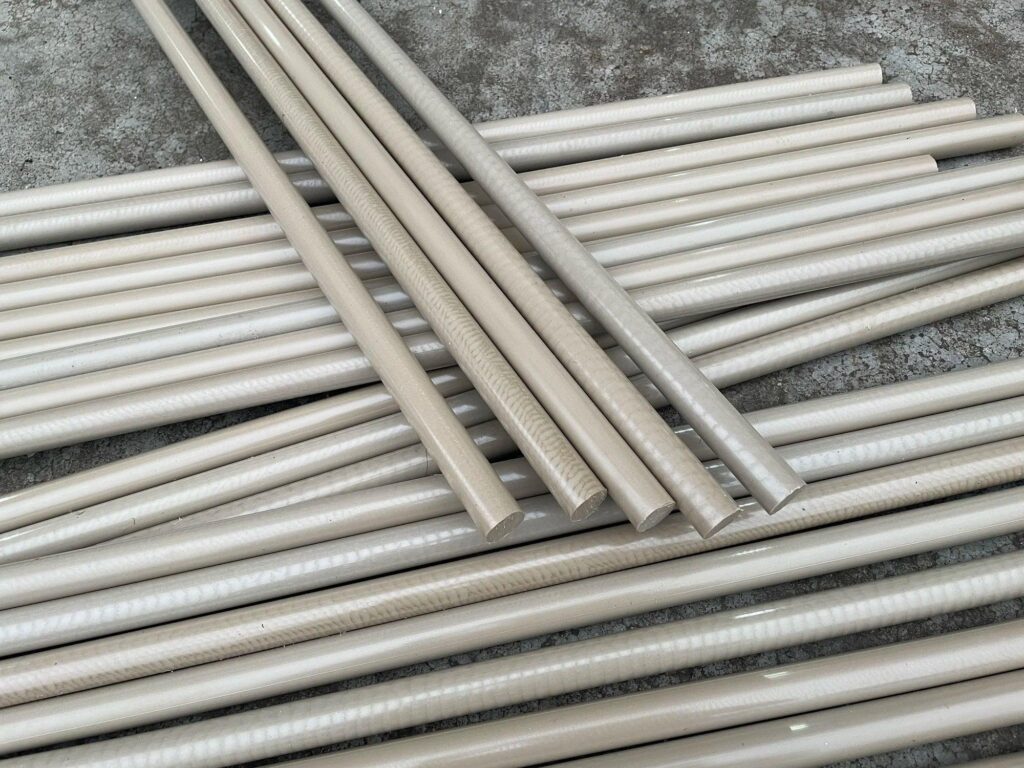
In the world of precision plastic processing, machining operations play an essential role in achieving tight tolerances and superior surface finishes that molding processes alone cannot guarantee. One of the most fundamental and widely used machining methods for plastic components is outer turning, also known as external diameter turning or cylindrical turning. This subtractive plastic manufacturing process removes material from the external surface of a rotating plastic workpiece using a stationary cutting tool, producing parts with precise outer diameters, concentricity, and surface quality. For B2B engineers, procurement professionals, and quality managers, understanding the nuances of outer turning—design considerations, material behavior, achievable tolerances, and critical quality checks—is essential to specifying components that meet performance requirements without unnecessary cost. This guide provides a comprehensive, practical overview of outer turning for plastic parts, helping buyers make informed decisions when sourcing machined components.
What Is Outer Turning for Plastic Parts?
Outer turning is a machining operation performed on a lathe or turning center. The plastic workpiece rotates about its central axis while a single-point cutting tool traverses axially along the workpiece, removing material from the outside diameter to achieve a desired cylindrical shape. Outer turning can produce straight diameters, stepped diameters, tapers, contours, and even threads on plastic rods, tubes, or pre-formed blanks. Unlike plastic injection molding process or plastic extrusion process, which shape molten material, outer turning is a secondary operation often used to refine parts that have been rough-molded, cast, or extruded, or to produce components directly from plastic bar stock.
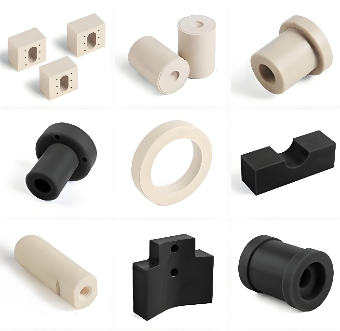
Common plastic parts manufactured by outer turning include precision shafts, rollers, bushings, insulators, spacers, valve components, and custom cylindrical fittings. The process is highly repeatable and can achieve tolerances that are challenging for many primary plastic manufacturing processes. For low to medium volumes or for parts requiring extremely tight geometric control, outer turning is often the most cost-effective and reliable solution.
Advantages of Outer Turning for Custom Plastic Components
When specifying plastic processing methods for cylindrical parts, outer turning offers distinct advantages that justify its use over molding or other machining techniques.
Key Advantages:
- Exceptional dimensional accuracy: Outer turning routinely achieves tolerances of a few thousandths of an inch or better, depending on material and machine capability.
- Superior surface finish: With proper tool geometry and cutting parameters, turned plastic surfaces can achieve mirror-like finishes without secondary polishing.
- Geometric flexibility: Outer turning easily produces stepped diameters, chamfers, grooves, radii, and tapers on the same setup.
- Low tooling cost: Unlike injection molding, which requires expensive steel molds, turning requires only standard carbide or high-speed steel inserts—ideal for prototypes and low-to-medium production volumes.
- Short lead times: Parts can be machined within days of receiving material and a completed drawing.
- No draft or parting line constraints: Molding requires draft angles and deals with parting line mismatch. Outer turning produces true cylindrical geometry without these limitations.
- Material compatibility: Works with virtually all machinable thermoplastics, including acetal, nylon, polycarbonate, PTFE, PEEK, UHMWPE, and many others.
- Excellent concentricity: When performed on a lathe with proper workholding, outer turning ensures that external diameters are concentric with internal features or centers.
Comparison Table: Outer Turning vs. Molding for Cylindrical Plastic Parts
| Feature | Outer Turning | Injection Molding |
|---|---|---|
| Tooling cost | Low (standard inserts) | High (custom mold) |
| Lead time for first part | Hours to days | Weeks to months |
| Part size range | Highly flexible (small to large diameter, any length limited by machine) | Limited by mold size and press tonnage |
| Typical tolerance achievable | ±0.001″ to ±0.005″ | ±0.005″ to ±0.015″ (mold-dependent) |
| Surface finish (Ra) | 8–32 µin typical, finer possible | Varies widely; requires polished mold |
| Draft angle required | No | Yes (typically 1–3°) |
| Suitable volume | Low to medium (one to thousands) | High (tens of thousands+) |
| Material waste | Some (chip removal) | Minimal (runner waste) |
This comparison demonstrates that outer turning is not a replacement for high-volume molding but is often the right choice for precision, low-volume, or geometrically demanding cylindrical components.
Design Considerations for Outer Turned Plastic Parts
To achieve reliable, cost-effective turned plastic parts, buyers and designers must follow specific design guidelines that account for the unique behavior of plastic materials under machining.
Key Design Parameters:
- Minimum wall thickness: While turning can produce very thin walls, too thin a wall can cause part deflection, chatter, or breakage. For most engineering plastics, a minimum wall thickness of 0.03″ to 0.06″ is recommended for general applications. Thinner walls require specialized workholding and reduced cutting forces.
- Undercuts and grooves: External grooves (e.g., for O-rings or retaining rings) are easily produced with form tools or grooving inserts. Specify width, depth, and corner radii.
- Threads: External threads can be single-point turned or produced with thread chasers. For plastics, avoid sharp thread roots; specify rounded root radii to reduce stress concentration.
- Tapers and angles: Specify included angle and length of taper. Clear labeling of datums is essential.
- Chamfers and radii: For stress reduction and ease of assembly, specify edge breaks on sharp corners.
- Concentricity and runout requirements: If the turned diameter must be concentric with a bore or another diameter, clearly specify the geometric tolerance. For example, “concentricity of outer diameter to inner bore within 0.002″ TIR.”
- Surface finish: Specify Ra (arithmetical mean roughness) or RMS values. Typical turned plastic finishes range from 16 to 63 µin Ra. Smoother finishes require finer feeds, sharper tools, and slower speeds.
Bullet List: Design Rules to Avoid Defects in Outer Turning
- Avoid sharp internal corners at diameter changes – radius transitions to reduce stress risers.
- Maintain uniform wall thickness where possible – abrupt thickness changes can cause differential shrinkage and machining distortion.
- Provide sufficient clamping surface – at least 0.25″ of solid material for chuck jaws or collet grip.
- Avoid extremely long, unsupported lengths – length-to-diameter ratios exceeding 4:1 often require a tailstock center or steady rest.
- Specify material with consistent machinability – filled or reinforced plastics (e.g., glass-filled nylon) can cause rapid tool wear and rougher finishes.
- Consider residual stress – extruded or molded rod stock may have locked-in stresses that cause warpage during turning; specify stress-relieved material when possible.
By adhering to these design guidelines, buyers can minimize machining difficulties, reduce scrap, and ensure that turned plastic parts meet functional requirements.
Materials Compatible with Outer Turning
Almost all thermoplastic materials can be turned on a lathe, but their machinability varies significantly. Understanding material-specific characteristics helps in setting realistic expectations for tolerance, finish, and cycle time.
Highly Machinable Plastics (Excellent for Outer Turning)
| Material | Key Properties | Typical Applications |
|---|---|---|
| Acetal (POM, Delrin) | Excellent dimensional stability, low moisture absorption, good stiffness | Precision gears, bushings, bearing retainers, valve seats |
| Nylon (PA 6, PA 66) | Tough, wear-resistant, good fatigue life | Rollers, wear pads, spacers, insulators |
| PTFE (Teflon) | Very low friction, chemical inertness | Seals, bearings, electrical insulators |
| UHMWPE | High abrasion resistance, impact strength | Wear strips, chain guides, chute liners |
| Polycarbonate (PC) | High impact strength, clarity | Machine guards, transparent fittings, isolators |
Moderately Machinable Plastics
| Material | Notes | Recommendations |
|---|---|---|
| PEEK | Very high strength and temperature resistance; requires sharp tooling and high rigidity | Use carbide tools, avoid overheating; excellent for medical and aerospace |
| Polysulfone (PSU) | Good thermal stability; can be brittle | Use positive rake tools; avoid interrupted cuts |
| PVC (rigid) | Prone to melting if heat builds; corrosive gases | Use sharp tools, coolant mist; ensure good ventilation |
| Polypropylene (PP) | Soft, gummy; can produce stringy chips | Use high rake angles, sharp edges, positive chip breakers |
Challenging Materials (Requires Expertise)
- Glass-filled or carbon-filled plastics: Highly abrasive; cause rapid tool wear. Use diamond-coated or polycrystalline diamond (PCD) tools. Expect reduced tool life and potential fiber pull-out on surfaces.
- Polyimide (Vespel): Very expensive, brittle; requires specialized low-stress tooling.
- Thermosets (phenolic, epoxy, polyester): Machinable but produce abrasive dust; use dust extraction.
For food processing plastics (e.g., acetal, PTFE, UHMWPE) turned components such as rollers or guide rails must meet FDA requirements. Specify food-contact grade material and request certification.
When using recycled plastics from plastic recycling process streams, note that recycled material may have inconsistent filler content or degraded polymer chains, affecting machined surface finish. Always test machine a sample batch before committing to production.
Applications of Outer Turning in Plastic Components
Outer turning is used across industries to produce precision cylindrical plastic parts that must meet tight tolerances and functional requirements.
Common Applications:
- Industrial machinery: Precision rollers, guide pins, bushings, bearing housings, feed screws (augers), conveyor components.
- Medical devices: Handle components, syringe plunger rods, surgical instrument shafts, implant trial components (PEEK or acetal).
- Electrical and electronics: Standoffs, insulators, coil forms, terminal connectors, sensor housings.
- Aerospace and defense: Lightweight structural spacers, custom fasteners, radome components.
- Automotive: Sensor bodies, throttle body shafts, fuel system components (e.g., acetal rollers for fuel pumps).
- Fluid handling: Valve stems, pump pistons, seal gland components, plastic process equipment fitting adapters.
- Custom tooling and fixturing: Locating pins, nest bushings, custom mandrels for plastic processing operations.
Because outer turning is a secondary operation, it is often combined with other plastic manufacturing processes. For example, a part might be injection molded as a near-net shape and then outer-turned on critical diameters to achieve precise concentricity and surface finish. Alternatively, a rod extruded via plastic extrusion process can be cut to length and turned into custom bushings. This hybrid approach balances the economics of molding with the precision of machining.
Quality Checks Buyers Should Require
When sourcing outer turned plastic parts, buyers must specify quality requirements that reflect the unique challenges of plastic machining. Unlike metals, plastics are viscoelastic and thermally sensitive, so standard metal-turning quality plans may not be adequate.
Mandatory Quality Checks:
- Dimensional inspection of outer diameters: Use micrometers or optical comparators. Measure at multiple axial positions and circumferential orientations to verify roundness and taper.
- Geometric tolerances: Include concentricity, runout, cylindricity, and perpendicularity of shoulders to the axis. Specify measurement method.
- Surface finish measurement: Use a profilometer to confirm Ra or Rz values. Note that plastic surfaces can be smeared rather than cut; a turned plastic surface that appears glossy may hide tool marks.
- Visual inspection for defects: Look for chatter marks, gouges, burns (melted or discolored plastic), built-up edge smears, fiber pull-out (for filled materials), and cracks at corners.
- Workholding witness marks: Collet or chuck jaw marks on the surface are often unavoidable but should be within specified location and depth limits.
- Thread verification (if applicable): Use go/no-go ring gages.
Bullet List: Red Flags in Turned Plastic Parts
- Burned or melted appearance – indicates excessive heat from dull tooling or incorrect speeds/feeds.
- White stress marks near chucking points – suggests excessive clamping force or material creep.
- Whiskers or burrs – typical of soft plastics like PP or UHMWPE; indicates need for sharper tools or post-process deburring.
- Fish-scale or wavy surface pattern – machine spindle or toolholder vibration (chatter).
- Inconsistent diameter along length (taper) – machine misalignment or part deflection.
- Visible tool marks on a supposed smooth finish – feed rate too high or tool nose radius too large.
Quality Documentation to Request:
- First Article Inspection Report (FAIR): Full dimensional report per ASME Y14.5 or customer drawing, including critical and non-critical dimensions.
- Material certification: Certificate of conformance (CoC) with specific grade, lot number, and property data (tensile strength, hardness, etc.).
- Process control documentation: For high-volume orders, request SPC (Statistical Process Control) charts on key diameters.
- Inspection plan: Define sampling frequency (e.g., AQL 1.0, C=0), measurement tools, and acceptance criteria.
By specifying these quality checks, buyers can ensure that outer turned plastic parts meet both dimensional and functional requirements over the entire production run.
Manufacturing Process of Outer Turning
Understanding the process steps helps buyers appreciate the factors that influence cost, lead time, and quality.
: Material Selection and Preparation
The buyer specifies material grade and form (rod, tube, or pre-molded blank). Rod is most common. The supplier verifies material certification and checks for defects (cracks, voids, warpage).
: Workholding Setup
The plastic workpiece is secured in a chuck, collet, or on a mandrel. For delicate or thin-walled parts, soft jaws or low-pressure collets are used to avoid distortion. For long parts, a tailstock center or steady rest supports the free end.
: Tool Selection
Single-point cutting tools are selected based on material. Carbide tools with polished or diamond-like coatings (DLC) are common for plastics. High positive rake angles (15–30°) reduce cutting forces. Sharp edges are essential to shear rather than tear the plastic.
: Machining Parameters
Spindle speed (surface footage), feed rate, and depth of cut are optimized for each material. Plastics generally require high speeds and moderate feeds. Coolant (mist or air blast) is often used to prevent heat build-up, as plastics have low thermal conductivity.
: Rough and Finish Turning
Rough turning removes the bulk of material in a few passes, leaving 0.010″ to 0.030″ for finish turning. Finish turning uses a light depth of cut and fine feed to achieve specified tolerance and surface finish.
: Secondary Features (if required)
Grooves, threads, chamfers, and tapers are machined using form tools, single-point threading, or grooving inserts.
: Part Removal and Deburring
The finished part is removed from the lathe. Burrs or sharp edges are removed manually or with a deburring tool. Some soft plastics (nylon, polypropylene) may require cryogenic deburring or tumbling.
: Inspection and Packaging
Parts are cleaned (to remove cutting fluid or chips), inspected against the quality plan, and packaged for shipment.
For high-precision or high-volume production, CNC lathes with live tooling, bar feeders, and automated part catchers are standard. You can explore our range of plastic processing equipment including CNC turning centers and tooling solutions on our solutions page.
FAQ – Outer Turning for Plastic Parts
What tolerances can outer turning achieve on plastic parts?
In general, outer turning on a good-quality CNC lathe can achieve tolerances of ±0.001″ to ±0.003″ on diameter for most engineering plastics. With careful process control and rigid workholding, ±0.0005″ is possible on stable materials like acetal. Tolerances should be specified in the drawing; tighter tolerances increase cost.
Can outer turning produce square shoulders or sharp corners?
No practical machining produces a perfectly sharp external corner. Always specify a small radius (e.g., 0.005″ to 0.010″) or a 45° chamfer. Sharp corners are stress risers and difficult to measure.
Is outer turning suitable for glass-filled plastics?
Yes, but expect faster tool wear and a rougher surface finish (exposed glass fibers). Use polycrystalline diamond (PCD) or diamond-coated tools for acceptable tool life. Inform your supplier about glass content; it significantly affects pricing.
How does outer turning compare to plastic extrusion process for producing long cylindrical parts?
Extrusion is best for continuous lengths of constant cross-section (rods, tubes). Outer turning is better for short lengths with varying diameters, steps, tapers, or grooves. For high volumes of constant-diameter rods, extrusion followed by cut-to-length is more economical.
Can I use outer turning to finish parts that were plastic injection molding process near-net shape?
Yes, this is a common hybrid strategy. Mold the part with extra material on critical diameters, then turn them to final size and concentricity. This avoids the cost of a precision steel mold while achieving tolerances that molding alone cannot.
What surface finish can I reasonably expect from outer turning?
For most unfilled plastics, a standard turning operation with a sharp finishing tool and fine feed produces 16–32 µinch Ra. With polishing or diamond turning, finishes down to 4 µinch Ra are possible. Specify your requirement; mirror finishes add cost and cycle time.
Does material orientation affect turned part quality?
Yes. Extruded rod often has an internal grain structure. Machining across the grain can produce a different surface texture than machining with the grain. For critical parts, specify that turning be performed on stress-relieved, annealed stock.
Is outer turning compatible with plastic recycling process materials?
Yes, but with caution. Recycled plastics may have variations in melt flow and filler distribution, leading to inconsistent surface finish or unexpected tool wear. Always request a machinability trial on the specific recycled lot before committing to high-volume production.
Buyer’s Checklist for Sourcing Outer Turned Plastic Parts
Before sending an RFQ for outer turned plastic components, ensure you have provided the following information to potential suppliers:
- Material specification: Full trade name and grade (e.g., Delrin 150, Nylon 6/6, PTFE unfilled), plus any certifications (FDA, UL, RoHS).
- Detailed drawing: Include outer diameter dimensions with tolerances, length, step locations, groove details, thread specification, chamfers, and surface finish callouts.
- Geometric tolerances: Concentricity, runout, cylindricity, perpendicularity, and measurement datum references.
- Quantity: Total annual volume and order frequency (affects price and lead time).
- Raw material form: Rod diameter and length, or specify that supplier must source the material.
- Quality requirements: First article inspection plan, sampling frequency, AQL level, required documentation (material certs, inspection reports).
- Secondary operations: Deburring, cleaning, packaging, marking (laser or pad printing).
- Delivery timeline and packaging specifications.
By providing a complete and clear specification, buyers reduce the risk of miscommunication, rework, and delays. Outer turning is a mature, highly capable process, but it demands attention to detail—especially with plastic materials that behave differently than metals.
Have a related manufacturing question?
Send your drawing, material, quantity, finish and application requirements for a manufacturing review.