Industry News Archive
Accumold Webinar Explores How Micro 3D Printing Speeds Product Development
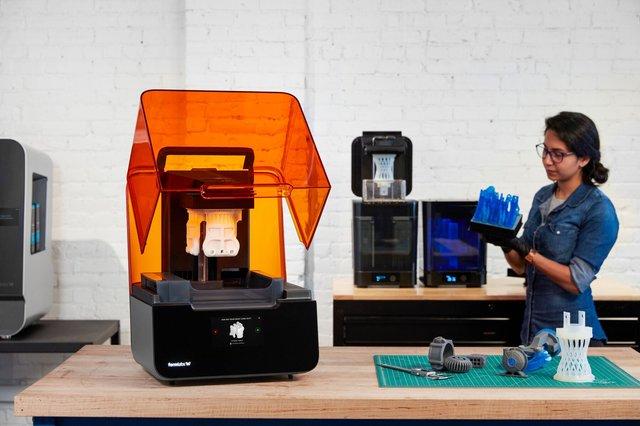
A recent Accumold webinar illustrated how micro-scale 3D printing can significantly compress product development timelines for intricate, miniature parts.
Key Advantages of Micro 3D Printing in Prototyping
The webinar highlighted several ways micro 3D printing bypasses traditional manufacturing bottlenecks. Instead of waiting weeks for micro-mold tooling, engineers can produce functional prototypes in hours, enabling rapid design validation. Material options have expanded to include biocompatible and high-temperature resins, broadening the scope of testable concepts. Iterations that once required costly retooling now involve simple digital file adjustments and quick reprints.
- Eliminates the need for initial mold fabrication, slashing lead times from weeks to days.
- Enables complex internal features and lattices impossible with conventional subtractive methods.
- Supports low-volume production without amortizing expensive tooling costs.
- Accelerates design-for-manufacturability feedback through physical, functional testing early in the cycle.
Applications Across Critical Industries
Accumold’s expertise in micro molding provided a foundation for exploring how additive manufacturing complements traditional processes. Medical device manufacturers are using the technology for custom surgical guides and microfluidic chips, where rapid iteration directly impacts patient outcomes. Electronics firms leverage it for connector prototypes and miniaturized sensor housings that demand micron-level precision. Aerospace suppliers value the ability to produce lightweight, topology-optimized brackets without the long procurement cycles of machined parts.
By integrating 3D Printing Services for Rapid Prototyping and Custom Plastic Parts into their workflows, companies can identify design flaws earlier and bring validated products to market faster. As the technology matures, further adoption across regulated industries is expected to shorten development cycles even more, making micro 3D printing a staple in the manufacturing toolkit.
Why This Matters
Micro 3D printing bridges the gap between concept and production for miniature parts, reducing the time and cost of iteration. This accelerates innovation in fields like MedTech and microelectronics, where getting functional prototypes into testing quickly can determine market leadership and regulatory success.
FAQ
How does micro 3D printing reduce product development time?
It eliminates the need for hard tooling, allowing engineers to produce physical prototypes directly from CAD files within hours. This enables rapid testing and multiple design iterations without the weeks-long wait and high costs associated with traditional micro mold fabrication.
What industries benefit most from micro 3D printing?
Medical device, electronics, and aerospace sectors see significant advantages. Micro 3D printing is used for surgical tools, microfluidic chips, sensor housings, and lightweight aerospace components where small sizes and complex geometries are critical and time-to-market is urgent.
What are the limitations of micro 3D printing compared to micro injection molding?
Micro 3D printing may have more limited material selection and lower throughput for high-volume production. Surface finish and mechanical properties can also differ from injection-molded parts, often requiring post-processing for final-use applications.
Can micro 3D printing be used for production parts, not just prototypes?
Yes, for low-volume or custom production runs, micro 3D printing is increasingly viable. It is particularly useful when part complexity makes molding impractical or when frequent design changes preclude expensive tooling investments.
Sources
Source: "3D Printing" – Google News