Industry News Archive
New 3D-Printable Elastic Polymer Demonstrates Unexpected Strength
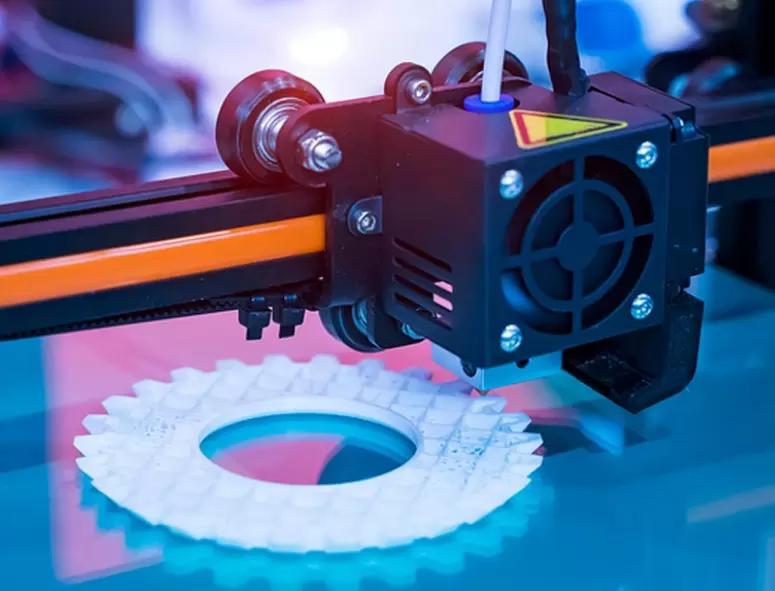
Additive manufacturing continues to reshape production across sectors, driven by steady advances in printable materials. While rigid thermoplastics have long dominated the landscape, flexible materials are gaining ground. Now, a newly developed elastic polymer for 3D printing is turning heads for its surprising mechanical strength, challenging long-held trade-offs between flexibility and durability.
The Challenge of Elasticity and Strength in 3D Printing
Standard filaments like PLA and ABS deliver stiffness and dimensional accuracy but little give. On the other hand, thermoplastic elastomers (TPE) and thermoplastic polyurethanes (TPU) bring flexibility, yet often at the expense of tensile strength and tear resistance. This compromise has limited the use of 3D-printed elastic parts in demanding applications.
Designers and engineers have sought a material that can stretch and bend without breaking, while still handling mechanical loads. The difficulty lies in polymer chain architecture: achieving both high elasticity and strength requires precise control over crosslinking and molecular weight distribution.
Properties of the Novel Polymer
The new polymer retains excellent elasticity but offers markedly improved toughness compared to existing flexible filaments. It exhibits higher tensile strength and greater resistance to tearing, allowing it to withstand repeated deformation cycles without permanent damage. Such durability is critical for functional prototypes and end-use components.
Importantly, the material can be processed on standard fused deposition modeling (FDM) printers without requiring specialized hardware. This compatibility makes it accessible for a wide range of users, from professional labs to desktop enthusiasts.
Potential Applications in Industry
The combination of stretchability and strength opens doors to applications that were previously unworkable with printed elastomers. Soft robotics, wearable technology, and ergonomic grips could benefit directly. Medical models and custom orthotics also stand to gain from a material that mimics the mechanical behavior of biological tissues more closely.
Manufacturing of custom gaskets, seals, and vibration-dampening mounts becomes more viable with a strong, flexible filament. Service providers offering 3D Printing Services for Rapid Prototyping and Custom Plastic Parts may find new opportunities as clients request elastic parts with higher load-bearing requirements.
Implications for Additive Manufacturing
This development underscores the rapid pace of polymer formulation research aimed at expanding the functional envelope of 3D printing. It highlights how materials science is bridging the gap between prototyping and production for flexible components.
Broader adoption of such materials could reduce the need to switch to injection molding or other traditional processes for small-batch elastomeric items. As the technology matures, the line between custom and mass manufacturing continues to blur.
The emergence of a strong, elastic 3D-printable polymer marks a significant step in material capabilities for additive manufacturing, offering new opportunities for industries requiring flexible and durable parts.
Why This Matters
The ability to 3D print elastic parts with high strength addresses a critical gap in additive manufacturing, where flexible materials often lack durability. This advancement could enable the production of functional end-use components in industries like healthcare and consumer goods, reducing reliance on traditional manufacturing methods for elastomeric parts.
FAQ
Why are elastic polymers important in 3D printing?
Elastic polymers allow the creation of flexible and stretchable objects not possible with rigid materials. They open up applications in wearables, medical devices, and soft robotics where compliance is essential.
How does this new polymer compare to other flexible 3D printing materials?
It offers a better balance of elasticity and tensile strength compared to typical thermoplastic elastomers, making it less prone to tearing and deformation under load.
What type of 3D printers can use this material?
The polymer is designed for compatibility with standard fused deposition modeling printers, making it accessible for both professional and desktop 3D printing setups.
What industries will benefit most from this material?
Medical device manufacturing, footwear, automotive, and consumer electronics are among the sectors that could leverage strong, printable elastic polymers for custom parts and prototypes.
Sources
Source: "3D Printing" – Google News