Technical Capability & RFQ
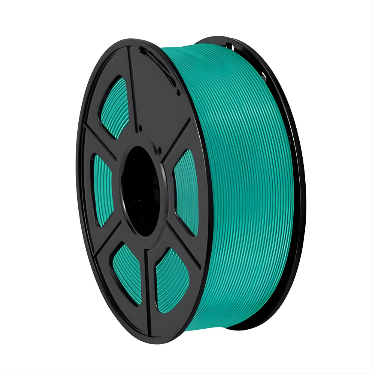
3D Printing Filament Supplier for PLA, ABS, PETG, TPU and Engineering Materials
Discuss This PartCapability decision data
Technical fit for 3D printing filament selection
Use this capability summary to decide whether the process fits the part before discussing tooling, lead time or price.
- Best fit
- FDM users comparing filament by printability, stiffness, toughness, flexibility, weathering or temperature exposure.
- Design focus
- Printer temperature range, nozzle and bed setup, moisture control, diameter consistency and part orientation all affect results.
- Material direction
- PLA, ABS, ASA, PETG, TPU, nylon, PC and filled grades have distinct drying, warpage, strength and service behavior.
- Volume and cost logic
- Spool size, drying and storage, failed-print risk and repeat supply consistency matter in addition to price per kilogram.
- Inspection focus
- Check diameter tolerance, ovality, moisture, winding, color consistency, contamination and batch traceability.
- Compare against
- Choose the polymer family first, then compare grade, diameter, color, drying requirement and validated printer settings.
Product Description
We supply 3D printing filament materials for FDM printing, prototyping, product development, education, engineering testing and industrial printing applications.
Available filament options include common materials for easy printing as well as engineering materials for strength, heat resistance, flexibility, weather resistance and special performance needs.
Manufacturing Capabilities
| Diameters | 1.75 mm and 3.0 mm filament options |
| Common materials | PLA, ABS, PETG, TPU, TPE, PC, PA nylon, ASA and POM |
| Engineering options | PPS, PEEK, carbon fiber reinforced, flame-retardant, conductive and anti-static materials |
| Use cases | Prototyping, functional models, industrial parts, education, design studios and engineering applications |
Materials and Options
- PLA for easy printing, low shrinkage and general prototypes.
- ABS for stronger functional models and heat-resistant parts.
- PETG for toughness, chemical resistance and clear parts.
- TPU/TPE for flexible components, covers and seals.
- PA, PC, PPS and PEEK for more demanding engineering applications.
Typical Applications
3D printing filament is used for FDM prototypes, educational models, functional testing, fixtures, creative design, industrial samples, replacement parts and engineering development.
Example Project
A customer needed filament options for both appearance prototypes and flexible protective covers. We recommended PLA for concept models, PETG for stronger test parts and TPU for flexible covers, then helped compare printability and performance.
Quality Control
- Drawing and requirement review before production.
- First article inspection before batch work.
- Dimensional checks for critical features and assembly areas.
- Appearance inspection for surface defects, color variation and processing marks.
- Protective packaging and final confirmation before shipment.
What We Need for a Quote
Please send 3D files, 2D drawings, material requirements, quantity, target tolerance, surface finish, color, application environment and any inspection standard. If the design is still early, we can help compare process options before production.
FAQ
Which filament is easiest to print?
PLA is usually the easiest choice for basic FDM printing because it has low shrinkage and stable printing behavior.
Which filament is better for functional parts?
PETG, ABS, nylon, PC and reinforced materials are often better for functional parts depending on strength, heat and environment.
Do you provide engineering-grade filament?
Yes. Options can include nylon, PC, PPS, PEEK, carbon fiber reinforced, flame-retardant and anti-static materials depending on requirement.
Related Services
Technical Parameters
| Material | Key Features | Typical Applications |
|---|---|---|
| **PC Filament** | High strength, heat resistant, impact resistant | Structural parts, engineering prototypes |
| **PA Nylon Filament** | Toughness, abrasion resistance | Mechanical gears, industrial parts |
| **POM Filament** | Low friction, wear resistance | Precision mechanical accessories |
| **ASA Filament** | UV resistant, anti-aging, outdoor durability | Outdoor products, automotive exterior parts |
| **PPS Filament** | Flame retardant, high-temperature resistance | Industrial electronics, engineering assemblies |
| **PEEK Filament** | Ultra-high performance engineering plastic | Aerospace, medical, semiconductor industries |
Samples
Related Manufacturing Capabilities
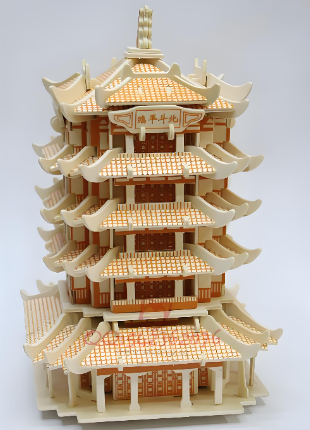
FDM 3D Printing
Home/Products/3D printing/FDM 3D Printing FDM (Fused Deposition Modeling) 3D printing is one of the most widely used additive manufacturing technologies for producing…
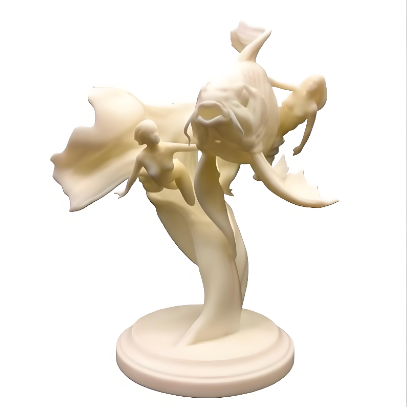
SLA 3D Printing Service for High-Precision Resin Prototypes
Home/Products/3D printing/SLA 3D Printing Service for High-Precision Resin Prototypes Our SLA 3D printing service produces high-detail resin prototypes with smooth surfaces, sharp…
SLS 3D Printing Service for Functional Nylon Parts
Home/Products/3D printing/SLS 3D Printing Service for Functional Nylon Parts Our SLS 3D printing service produces strong nylon prototypes and low-volume plastic parts…
Is this process a fit for your part?
Send your drawing, material, quantity, finish and application requirements for a manufacturing review.