Capability decision data
Technical fit for FDM 3D printing
Use this capability summary to decide whether the process fits the part before discussing tooling, lead time or price.
- Best fit
- Fast, economical concept and functional prototypes where visible layer lines are acceptable.
- Design focus
- Build orientation, supports, overhangs, raster direction, wall count and infill influence strength and finish.
- Material direction
- Common filament families include PLA, ABS, ASA, PETG, TPU and nylon, each with different printing and service behavior.
- Volume and cost logic
- No tooling is needed; machine time rises with part size, resolution, support and infill.
- Inspection focus
- Inspect layer bonding, warp, support scars, dimensions, holes, surface and orientation-dependent strength.
- Compare against
- Compare with SLA for fine appearance, SLS for support-free nylon geometry and CNC machining for stock-material properties.
Product Description
FDM (Fused Deposition Modeling) 3D printing is one of the most widely used additive manufacturing technologies for producing functional plastic prototypes, engineering components, and low-volume production parts. The process works by melting thermoplastic filament and depositing it layer by layer to create durable three-dimensional parts. As a professional plastic parts manufacturer, we provide reliable custom FDM 3D printing solutions for industrial, automotive, consumer, and engineering applications. Whether you require non-standard plastic manufacturing or small-batch plastic parts customization, we deliver fast production, stable quality, and cost-effective manufacturing support.
Advantages of FDM 3D Printing
- Cost-Effective Manufacturing
Ideal for rapid prototyping and low-volume production with minimal setup cost. - Wide Material Selection
Compatible with engineering thermoplastics for functional applications. - Fast Production Turnaround
Quickly produces prototypes and customized parts directly from CAD files. - Good Mechanical Strength
Suitable for functional testing and engineering applications. - Flexible Design Capability
Produces complex geometries and customized structures without tooling.
Our FDM 3D Printing Process
CAD File Evaluation
We review and optimize 3D models for wall thickness, support structures, print orientation, and functional performance.
Material Preparation
Engineering-grade thermoplastic filament is selected according to strength, flexibility, temperature resistance, and application requirements.
Layer-by-Layer Printing
The heated nozzle extrudes molten filament layer by layer to create the final component with controlled dimensional accuracy.
Support Removal & Finishing
Support structures are removed, followed by optional sanding, polishing, painting, or assembly operations.
Inspection & Quality Verification
Finished components undergo dimensional inspection and visual quality checks before delivery.
Common Materials for FDM 3D Printing
| Material | Key Benefits | Typical Applications |
|---|---|---|
| PLA | Easy printing, good surface quality | Concept models and prototypes |
| ABS | Impact resistance and durability | Functional engineering parts |
| PETG | Chemical resistance and strength | Industrial and mechanical parts |
| Nylon (PA) | Wear resistance and toughness | Gears and mechanical assemblies |
| TPU | Flexible and elastic | Protective covers and soft components |
| Polycarbonate (PC) | High strength and heat resistance | Technical engineering parts |
Industry Applications
- Rapid Product Prototyping
Fast development and validation of new product designs. - Industrial Engineering Parts
Functional mechanical components and customized tooling. - Automotive & Robotics Components
Lightweight engineering parts for testing and assembly verification. - Custom Consumer Products
Personalized plastic products and low-volume production items.
Quality Control & Precision Manufacturing
- Dimensional Accuracy Inspection
Precision measuring tools verify part dimensions and assembly fit. - Layer Adhesion Monitoring
Printing parameters are optimized to improve structural strength and durability. - Surface Quality Inspection
Components are checked for warping, stringing, and print defects. - Material Performance Verification
Mechanical performance is evaluated according to application requirements.
Cost Optimization & Production Efficiency
- No Mold Tooling Required
Eliminates expensive mold costs for prototypes and low-volume orders. - Rapid Production Cycles
Accelerates product development and reduces manufacturing lead time. - Efficient Material Usage
Additive manufacturing minimizes material waste compared with subtractive machining. - Flexible Custom Manufacturing
Supports one-piece prototypes through small-batch production efficiently.
Why Choose Us
As a trusted plastic parts manufacturer, we specialize in FDM 3D printing, non-standard plastic manufacturing, and small-batch plastic parts customization. From CAD optimization and material selection to printing, finishing, and quality inspection, we provide complete additive manufacturing solutions for functional engineering plastic components.
Send us your 3D files or technical requirements today for a free engineering evaluation and custom FDM 3D printing consultation.
FAQ: FDM 3D Printing Service (Fused Deposition Modeling)
What layer resolution is available in FDM printing and how does it affect surface finish?
FDM layer heights typically range from 0.1 mm to 0.3 mm. Finer layers produce smoother surfaces and better curved geometry reproduction but increase print time. Layer lines are always visible on FDM parts and require sanding or coating to eliminate for cosmetic applications.
Which FDM materials are best for functional mechanical testing?
ABS, ASA, and PETG are the most widely used functional FDM materials. Nylon offers high impact toughness and fatigue resistance. Carbon-fiber filled composites significantly increase stiffness and are used for tooling and structural jigs. TPU is used for flexible functional prototypes.
How does infill percentage affect FDM part strength?
Higher infill increases tensile and compressive strength but also increases material use and print time. 20% infill is typical for lightweight non-structural parts. 50–80% is used for functional prototypes. 100% solid infill is used for parts under compressive or bending load.
What is the significance of FDM print orientation for part strength?
FDM parts are weakest in the Z (build) direction because layers are bonded by adhesion rather than by continuous material. For functional prototypes, the print orientation should be chosen so the primary load direction aligns with the XY plane rather than the Z axis. We discuss orientation during file review for functional applications.
Can FDM parts be used as tooling jigs or fixtures?
Yes. FDM in ABS or PETG produces rigid enough fixtures for inspection gauges, assembly aids, welding fixtures, and drill guides. Carbon-fiber FDM produces stiff, dimensionally stable fixtures for light machining or measurement. FDM tooling is significantly faster and cheaper to produce than machined metal tooling for most jig and fixture applications.
Related products: 3D Printing Services for Rapid Prototyping and Custom Plastic Parts, 3D Printing Filament Supplier, Plastic Surface Finishing & Assembly Services, Multi-Component / Overmold Compression Molding Service | Functional Composite Components.
Technical Parameters
| Parameter | Typical Value / Range |
|---|---|
| Process Type | Fused Deposition Modeling (FDM) |
| Supported Materials | PLA, ABS, PETG, Nylon (PA), TPU, PC |
| Layer Thickness | 0.1 mm – 0.4 mm |
| Dimensional Accuracy | ±0.1 mm – ±0.3 mm |
| Maximum Build Size | Up to 1000 mm x 1000 mm x 1000 mm |
| Surface Finish | Layered / Sanded / Polished |
| Nozzle Diameter | 0.2 mm – 1.0 mm |
| Heat Resistance | Material dependent |
| Production Volume | Prototype to low-volume production |
| MOQ | 1 piece and above |
| Secondary Services | Sanding, Painting, Assembly, Thread Inserts |
| Note | Final specifications depend on material type, printing orientation, and component geometry. |
Samples
Related Manufacturing Capabilities
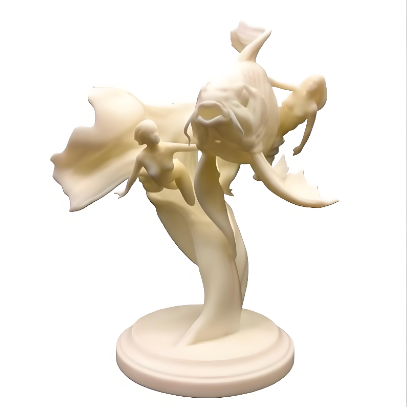
SLA 3D Printing Service for High-Precision Resin Prototypes
Home/Products/3D printing/SLA 3D Printing Service for High-Precision Resin Prototypes Our SLA 3D printing service produces high-detail resin prototypes with smooth surfaces, sharp…
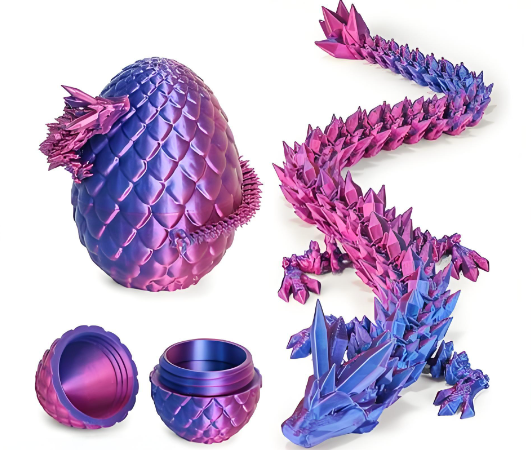
SLS 3D Printing Service for Functional Nylon Parts
Home/Products/3D printing/SLS 3D Printing Service for Functional Nylon Parts Our SLS 3D printing service produces strong nylon prototypes and low-volume plastic parts…
Plastic 3D Printing Services for Prototypes and Custom Parts
Home/Products/3D printing/Plastic 3D Printing Services for Prototypes and Custom Parts Our plastic 3D printing service supports rapid prototypes, visual models, functional test…
Is this process a fit for your part?
Send your drawing, material, quantity, finish and application requirements for a manufacturing review.