Industry News Archive
Manual Injection Molding Could Make 3D-Printed Tooling More Viable
The Rise of 3D-Printed Molds in Injection Molding
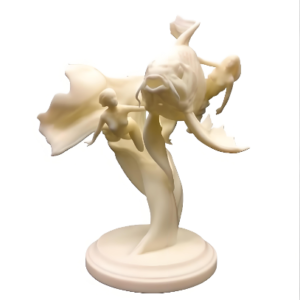
The use of additive manufacturing to create injection mold inserts has grown steadily over the past decade. By printing mold cavities directly from digital files, manufacturers can drastically reduce lead times and tooling costs for prototypes and small batches. However, the delicate nature of many 3D-printed materials under the high pressures and temperatures of conventional injection molding has limited widespread adoption.
Standard injection molding machines exert tremendous clamping force and inject molten plastic at high speed, which can quickly degrade or fracture 3D-printed molds made from photopolymers or low-melt-temperature filaments. Even with advanced materials like PEI or PEEK, layer adhesion issues and surface finish problems often result in short mold life or inconsistent part quality.
A Manual Approach to Resolve Technical Hurdles
The concept of manual injection molding—sometimes referred to as hand-operated or plunger-style injection molding—offers a way to sidestep these challenges. Rather than relying on massive hydraulic or electric presses, a manual machine uses a lever or plunger that an operator controls, allowing for more gradual and controlled filling of the mold cavity. This gentler process reduces stress on the mold and makes fragile 3D-printed inserts far more durable.
Because the operator can vary speed and pressure in real time, manual injection molding is particularly well-suited for the variable characteristics of 3D-printed molds. Issues such as uneven cooling, micro-cracks, or surface roughness can be compensated for by adjusting the injection profile on the fly. This human-in-the-loop approach brings a level of adaptability that automated industrial equipment often lacks.
Benefits for Prototyping and Low-Volume Runs
Combining manual injection molding with 3D-printed mold inserts opens up new possibilities for designers and small-scale manufacturers. One key advantage is the ability to produce small runs of functional plastic parts without the expense of machining metal molds. For startups or internal R&D teams, this means iterating on part designs overnight and testing them with real injection-molded thermoplastics rather than relying solely on 3D-printed prototypes that may not replicate end-use material properties.
Another benefit is the reduced barrier to entry. While a full-scale injection molding setup requires significant capital and floor space, manual machines are compact and affordable. A workshop with a desktop 3D printer and a manual injection molder can go from CAD to final part in a single day. This approach aligns well with 3D Printing Services for Rapid Prototyping and Custom Plastic Parts, as the same digital model can be used for both mold and part geometry.
Integrating with Existing Manufacturing Workflows
Manual injection molding does not replace high-volume production; instead, it fills a niche between pure 3D printing and traditional manufacturing. Once a design is validated using 3D-printed molds and manual injection, scaling up can proceed smoothly by moving to Injection Molding Services for Custom Plastic Parts with steel or aluminum tooling. The knowledge gained from the manual process—such as optimal gate locations, wall thicknesses, and material behavior—directly informs the design of permanent molds.
Material selection also becomes more flexible. While manual machines typically work with common thermoplastics like ABS, polypropylene, and TPE, some models can handle higher-temperature materials, provided the 3D-printed mold can withstand the heat. Innovations in high-temp resins and metal-filled filaments are expanding the workable range, though the mold’s longevity remains the limiting factor.
Challenges and Considerations
Despite its promise, manual injection molding with 3D-printed molds is not without drawbacks. Cycle times are longer than automated systems, making it unsuitable for production runs above a few hundred units. The quality of parts depends heavily on operator skill, and achieving consistent fill can be difficult. Mold release and cooling also require careful attention, as 3D-printed materials often have lower thermal conductivity than metal.
Surface finish on the final part is another concern. Layer lines from the printed mold can transfer to the injected part, necessitating post-processing. For applications where aesthetics are critical, manual injection may be followed by sanding or coating—adding steps that erode the initial time savings.
Future Developments on the Horizon
The intersection of manual injection molding and 3D-printed tooling is still evolving. Research into tougher photopolymers and composite 3D-printing materials specifically designed for mold making is underway. Meanwhile, some companies are developing hybrid systems that combine manual actuation with basic sensors to provide feedback on pressure and temperature, reducing the reliance on operator intuition. As these technologies mature, the barrier to entry for custom injection molding could lower even further, empowering more product designers to bring functional plastic parts to market faster and with less upfront investment.
Why This Matters
The combination of manual injection molding and 3D-printed molds tackles a persistent bottleneck in product development: the high cost and lead time of traditional tooling. By enabling low-risk, low-volume production runs with materials that match final product specifications, this approach helps designers validate form, fit, and function more accurately than with 3D-printed prototypes alone. It also democratizes access to injection molding for smaller enterprises, potentially accelerating innovation cycles across consumer goods, medical devices, and automotive components.
FAQ
Why are 3D-printed molds not commonly used in injection molding?
Standard injection molding machines exert high pressure and temperature, which can quickly degrade or fracture 3D-printed molds. These molds often suffer from layer adhesion issues and lower thermal conductivity, leading to short lifetimes and inconsistent part quality in automatic processes.
How does manual injection molding work?
Manual injection molding uses a hand-operated plunger or lever to inject molten plastic into a mold. The operator controls the speed and pressure, allowing for a gentler, more adjustable fill that suits the delicate nature of 3D-printed molds.
What are the benefits of manual injection molding for prototyping?
It enables the production of small batches of functional parts with end-use materials, without the high cost of metal tooling. Designers can iterate rapidly by printing new molds overnight and then testing them with real thermoplastics, bridging the gap between 3D-printed mockups and full-scale manufacturing.
Can manual injection molding be used for production runs?
It is best suited for low-volume runs of a few hundred parts due to longer cycle times and the skill-dependent nature of the process. For high-volume production, it serves as a validation step before transitioning to automated injection molding with metal molds.