Industry News Archive
AI Is Connecting The 3D Printing Industry To Build A Creator Ecosystem
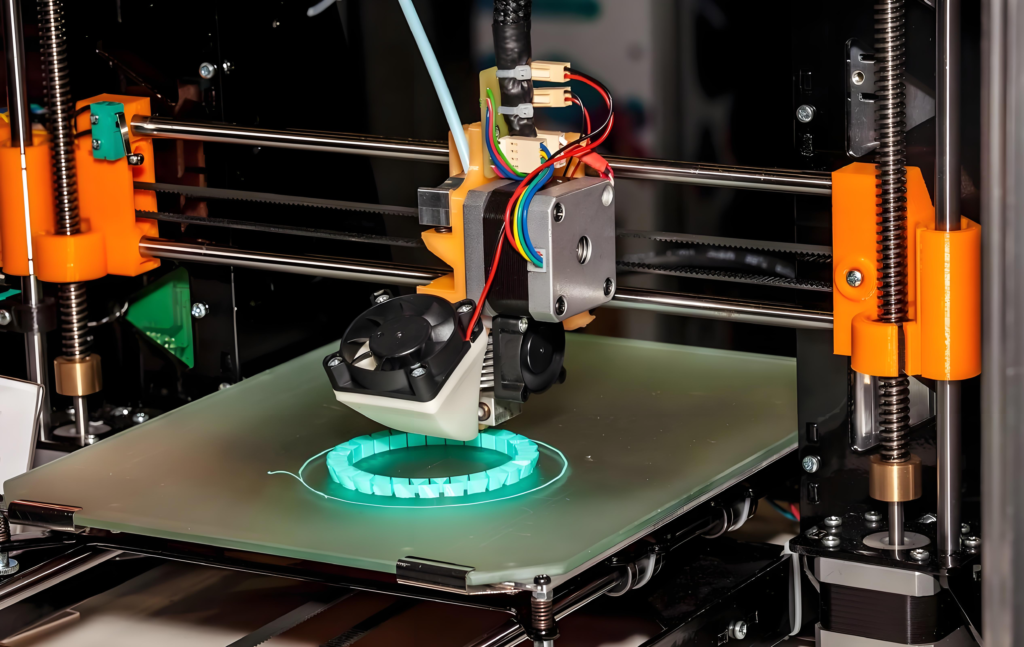
Additive manufacturing has steadily evolved from a niche prototyping tool into a versatile production technology spanning aerospace, healthcare, automotive and consumer goods. The industry now stands at a transformative juncture as artificial intelligence begins to weave together disparate players—designers, software platforms, material suppliers and service bureaus—into a unified creator ecosystem.
The latest development sees AI-driven platforms enabling real-time collaboration, automated design optimization and intelligent matchmaking between creators and manufacturers. By leveraging machine learning algorithms, these systems can predict printability, suggest material choices and even generate complex geometries that were previously impractical or impossible to produce.
The Rise of AI in Additive Manufacturing
Software is redefining every stage of the 3D printing workflow. At the design phase, generative AI tools empower engineers and artists to input functional requirements and receive multiple validated designs in return. These algorithms consider stress points, weight reduction and material usage, drastically cutting iteration cycles. During pre-processing, AI automatically corrects mesh errors, optimizes support structures and arranges build plates for maximum efficiency—tasks that once consumed hours of skilled labor.
Machine monitoring systems harness computer vision to detect anomalies in real time, adjusting parameters mid-print to reduce failure rates. Post-processing, often a bottleneck, benefits from robotic arms guided by neural networks that can identify and remove supports or perform surface finishing autonomously. This convergence of machine intelligence with additive manufacturing is not merely incremental; it is dissolving barriers between isolated islands of expertise.
Building a Creator Ecosystem
The concept of a creator ecosystem in 3D printing mirrors the platform models seen in digital content—think app stores or video sharing sites—but applied to physical goods. AI acts as the connective tissue, matching designers who have no manufacturing capability with service providers who have idle capacity. Blockchain-integrated smart contracts reward creators automatically when their designs are produced, fostering a marketplace where intellectual property is protected and monetized seamlessly.
Online hubs now feature recommendation engines that suggest complementary designs, materials or post-processing services. Social features built around project sharing and collaborative editing are lowering the entry barrier for hobbyists while offering industrial users a faster path from concept to part. As algorithms learn from each interaction, the ecosystem becomes more efficient and tailored to both supply and demand sides.
Impacts on Rapid Prototyping and Production
For businesses, AI-enhanced creator networks simplify the journey from concept to functional prototype. Designers can submit initial sketches to an AI assistant, receive feasibility analyses, and instantly connect with providers of 3D Printing Services for Rapid Prototyping and Custom Plastic Parts. This dramatically shortens development timelines, reduces miscommunication, and enables iterative testing with minimal overhead.
On the manufacturing floor, AI-driven scheduling and predictive maintenance keep printers running optimally. Mass customization, long a holy grail of additive manufacturing, becomes viable when an intelligent platform can route unique orders to the most suitable printer and material combination, balancing cost and speed without human intervention. Small and medium enterprises gain access to capabilities once reserved for large corporations with in-house engineering teams.
Challenges and Future Outlook
Despite the promise, hurdles remain. Data privacy concerns arise when design files are shared across networks, and algorithmic bias in material selection or design evaluation could reinforce suboptimal standards. Interoperability between different machine types and software suites is still fragmented, though industry consortia are working on open protocols. Moreover, the skills gap in AI literacy for manufacturing professionals needs urgent attention through training and certification programs.
Looking forward, the integration of AI with 3D printing is poised to deepen. Digital twins of entire factories will simulate production runs before any physical material is used. Metaverse interfaces may allow designers to collaborate in virtual spaces and see their creations printed remotely. As the technology matures, the creator ecosystem will likely redefine not only how objects are made but who gets to make them, democratizing manufacturing on a global scale.
Why This Matters
The integration of AI into 3D printing goes beyond efficiency gains—it fundamentally shifts who can participate in manufacturing. By lowering entry barriers, protecting intellectual property and automating complex tasks, an AI-powered creator ecosystem accelerates innovation cycles and could remake supply chains, making localized, on-demand production broadly accessible.
FAQ
How is AI currently used in 3D printing?
AI is applied in generative design to automatically create optimized part geometries, in pre-processing for correcting mesh errors and arranging build plates, in real-time monitoring to detect and correct print defects, and in post-processing for automated support removal and surface finishing. These uses improve speed, quality, and reliability across the workflow.
What is a creator ecosystem in the context of 3D printing?
A creator ecosystem connects designers, service providers, material suppliers, and manufacturers through digital platforms. AI matches design files with the best production resources, handles licensing and payment, and fosters collaboration, much like an app store for physical objects.
What are the benefits of AI for small 3D printing businesses?
Small businesses gain access to automated design optimization, easier customer acquisition via matchmaking algorithms, and reduced need for deep technical expertise. AI-driven scheduling and maintenance predictions also lower operational costs and increase utilization rates of printers.
What challenges does AI pose for the 3D printing industry?
Challenges include ensuring data security across shared platforms, potential bias in AI recommendations, achieving interoperability between diverse hardware and software, and closing the skills gap so that manufacturing professionals can effectively use AI tools.
Sources
Source: "3D Printing" – Google News