Technical Capability & RFQ
Plastic 3D Printing Services for Prototypes and Custom Parts
Discuss This PartCapability decision data
Technical fit for Plastic 3D printing
Use this capability summary to decide whether the process fits the part before discussing tooling, lead time or price.
- Best fit
- Prototype and low-volume parts where iteration speed and geometric freedom matter more than production-rate economics.
- Design focus
- The correct process depends on surface, strength direction, feature size, supports, build envelope and end-use conditions.
- Material direction
- Filaments, photopolymer resins and powder-bed nylons have different behavior; process and material must be chosen together.
- Volume and cost logic
- Tool-free production is useful for early or changing designs, while build time and finishing increase with size and complexity.
- Inspection focus
- Review dimensions, orientation, layer or surface artifacts, post-processing, fit and the limits of the selected print material.
- Compare against
- Choose among FDM, SLA and SLS first, then compare CNC machining or molding when stock properties or repeat volume matter.
Product Description
Our plastic 3D printing service supports rapid prototypes, visual models, functional test parts and small-batch custom plastic components using SLA, SLS and FDM processes.
3D printing is useful when you need fast design validation, complex geometry, low tooling cost and flexible iteration before CNC machining or injection molding.
Manufacturing Capabilities
| Processes | SLA resin printing, SLS nylon printing and FDM thermoplastic printing |
| Use cases | Appearance models, functional prototypes, assembly tests and small-batch parts |
| Materials | Resin, nylon PA12, PLA, ABS, PETG, TPU and engineering filament options |
| Finishing | Support removal, sanding, painting, polishing, dyeing and assembly support |
Materials and Options
- SLA resin for smooth surface and fine detail.
- SLS nylon for strong functional prototypes and complex shapes.
- FDM PLA/ABS/PETG for economical concept and fit-check parts.
- TPU for flexible prototypes and soft components.
Typical Applications
Plastic 3D printed parts are used for product development, engineering validation, presentation models, medical device prototypes, automotive test parts, fixtures and low-volume custom components.
Example Project
A customer needed several enclosure concepts before opening a mold. We printed SLA samples for appearance review, adjusted the design after assembly testing and helped compare CNC and injection molding options for the next stage.
Quality Control
- Drawing and requirement review before production.
- First article inspection before batch work.
- Dimensional checks for critical features and assembly areas.
- Appearance inspection for surface defects, color variation and processing marks.
- Protective packaging and final confirmation before shipment.
What We Need for a Quote
Please send 3D files, 2D drawings, material requirements, quantity, target tolerance, surface finish, color, application environment and any inspection standard. If the design is still early, we can help compare process options before production.
FAQ
Which 3D printing process should I choose?
SLA is best for smooth and detailed appearance models, SLS is stronger for functional nylon parts, and FDM is economical for simple prototypes.
Can 3D printed parts replace injection molded parts?
Sometimes for prototypes or low-volume use. For high-volume production or specific material performance, injection molding is usually better.
Can you finish printed parts?
Yes. Sanding, painting, polishing, dyeing and assembly support can be provided depending on the process.
Related Services
Technical Parameters
| Model | FDM-300 | SLA-250 | SLS-400 | DLP-150 | Multi-Material-500 |
|---|---|---|---|---|---|
| -------------------------- | ---------------------- | ---------------------- | -------------------------- | ---------------------- | ----------------------- |
| Printing Technology | FDM / FFF | SLA | SLS | DLP | FDM + Multi-nozzle |
| Build Volume | 300×300×400 mm | 250×250×300 mm | 400×400×500 mm | 150×150×200 mm | 500×500×500 mm |
| Layer Resolution | 50-300 µm | 25-100 µm | 50-200 µm | 25-50 µm | 50-200 µm |
| XY Resolution | 100 µm | 50 µm | 100 µm | 50 µm | 100 µm |
| Z-Axis Resolution | 50 µm | 25 µm | 50 µm | 25 µm | 50 µm |
| Print Speed | 20-150 mm/s | 10-80 mm/s | 50-200 mm/s | 10-50 mm/s | 20-120 mm/s |
| Nozzle Diameter | 0.2-0.8 mm | N/A | N/A | N/A | 0.2-0.8 mm |
| Supported Materials | PLA, ABS, PETG, TPU | Photopolymer Resin | Nylon, PA12, TPU | Photopolymer Resin | PLA, ABS, PETG, TPU, PC |
| Laser / Light Source | N/A | 405 nm Laser | 50-100 W CO₂ / Fiber Laser | 405 nm DLP Projector | N/A |
| Heated Bed | Yes | Optional | N/A | N/A | Yes |
| Connectivity | USB, Wi-Fi, Ethernet | USB, LAN | LAN, Wi-Fi | USB | USB, Wi-Fi, Ethernet |
| Machine Dimensions (L×W×H) | 700×600×1000 mm | 600×600×1200 mm | 1200×900×1600 mm | 400×400×800 mm | 1000×900×1500 mm |
| Total Weight | 60 kg | 80 kg | 250 kg | 50 kg | 300 kg |
| Control System | Touchscreen + Software | Touchscreen + Software | Software Controlled | Touchscreen + Software | Touchscreen + Software |
Samples
Related Manufacturing Capabilities
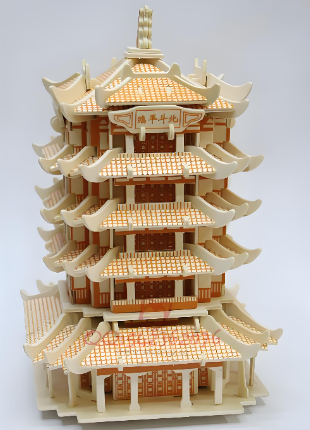
FDM 3D Printing
Home/Products/3D printing/FDM 3D Printing FDM (Fused Deposition Modeling) 3D printing is one of the most widely used additive manufacturing technologies for producing…
SLA 3D Printing Service for High-Precision Resin Prototypes
Home/Products/3D printing/SLA 3D Printing Service for High-Precision Resin Prototypes Our SLA 3D printing service produces high-detail resin prototypes with smooth surfaces, sharp…
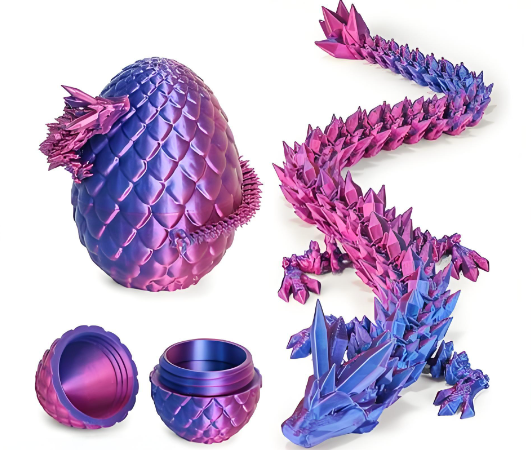
SLS 3D Printing Service for Functional Nylon Parts
Home/Products/3D printing/SLS 3D Printing Service for Functional Nylon Parts Our SLS 3D printing service produces strong nylon prototypes and low-volume plastic parts…
Is this process a fit for your part?
Send your drawing, material, quantity, finish and application requirements for a manufacturing review.