Technical Capability & RFQ
SLS 3D Printing Service for Functional Nylon Parts
Discuss This PartCapability decision data
Technical fit for SLS 3D printing
Use this capability summary to decide whether the process fits the part before discussing tooling, lead time or price.
- Best fit
- Complex nylon prototypes and low-volume functional parts that benefit from support-free powder-bed building.
- Design focus
- Powder escape, wall thickness, holes, nesting, orientation and thermal distortion must be considered.
- Material direction
- PA12 and related powder systems are common; filled or flexible grades change surface and mechanical behavior.
- Volume and cost logic
- No mold is required and nesting improves build use, while machine time, powder refresh and finishing affect cost.
- Inspection focus
- Check dimensions, warp, powder removal, surface texture, porosity and mechanical directionality.
- Compare against
- Compare with SLA for smoother appearance, FDM for simple low-cost models and injection molding for repeat production.
Product Description
Our SLS 3D printing service produces strong nylon prototypes and low-volume plastic parts with complex geometry, good durability and no support-structure marks.
SLS is useful for functional testing, snap-fit parts, lightweight structures, ducts, brackets, housings and short-run production where injection mold tooling is not yet needed.
Manufacturing Capabilities
| Process | Selective Laser Sintering for nylon plastic powder |
| Material | PA12 nylon and selected functional nylon options |
| Advantages | No support structures, strong mechanical performance and complex internal features |
| Finishing | Cleaning, blasting, dyeing, smoothing and assembly support |
Materials and Options
- PA12 nylon for strong functional prototypes and production samples.
- Glass-filled nylon for selected parts that need higher stiffness.
- Dyeing options for black or other appearance requirements.
Typical Applications
SLS printed parts are used for automotive prototypes, functional brackets, drone parts, medical device housings, industrial fixtures, ducts, clips, hinges and low-volume custom nylon components.
Example Project
A customer needed a lightweight nylon bracket with internal ribs and curved surfaces. We printed the part by SLS, cleaned the powder, checked hole positions and supplied samples for load and assembly testing.
Quality Control
- Drawing and requirement review before production.
- First article inspection before batch work.
- Dimensional checks for critical features and assembly areas.
- Appearance inspection for surface defects, color variation and processing marks.
- Protective packaging and final confirmation before shipment.
What We Need for a Quote
Please send 3D files, 2D drawings, material requirements, quantity, target tolerance, surface finish, color, application environment and any inspection standard. If the design is still early, we can help compare process options before production.
FAQ
Why choose SLS for functional parts?
SLS nylon has better toughness than many resin prints and can produce complex shapes without support structures.
Can SLS parts be used as end-use parts?
Yes, for some low-volume and moderate-load applications. Final suitability depends on load, temperature, environment and surface requirements.
Is SLS surface smooth?
SLS has a slightly grainy nylon surface. It can be blasted, dyed or post-processed depending on the appearance target.
Related Services
Technical Parameters
| Parameter | Typical Value / Range |
|---|---|
| Process Type | Selective Laser Sintering (SLS) |
| Supported Materials | PA12, PA11, Glass-Filled Nylon, TPU |
| Layer Thickness | 0.08 mm – 0.15 mm |
| Dimensional Accuracy | ±0.1 mm – ±0.3 mm |
| Maximum Build Size | Up to 700 mm x 380 mm x 580 mm |
| Surface Finish | Matte / Fine Powder Texture |
| Tensile Strength | 45 – 55 MPa (material dependent) |
| Heat Resistance | Up to 180°C (material dependent) |
| Production Volume | Prototype to low-volume production |
| MOQ | 1 piece and above |
| Secondary Services | Sanding, Dyeing, Polishing, Painting, Assembly |
| Note | Final specifications depend on material type, part geometry, and printing orientation. |
Samples
Related Manufacturing Capabilities
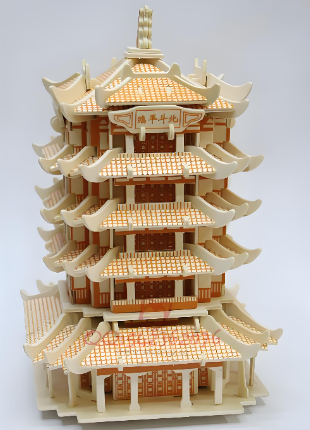
FDM 3D Printing
Home/Products/3D printing/FDM 3D Printing FDM (Fused Deposition Modeling) 3D printing is one of the most widely used additive manufacturing technologies for producing…
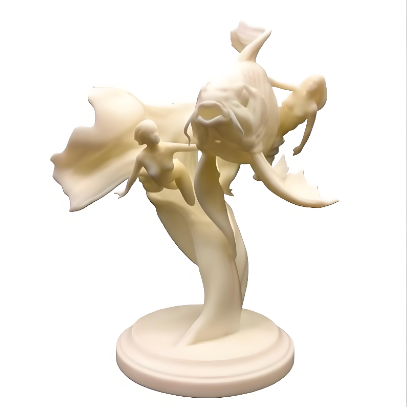
SLA 3D Printing Service for High-Precision Resin Prototypes
Home/Products/3D printing/SLA 3D Printing Service for High-Precision Resin Prototypes Our SLA 3D printing service produces high-detail resin prototypes with smooth surfaces, sharp…
Plastic 3D Printing Services for Prototypes and Custom Parts
Home/Products/3D printing/Plastic 3D Printing Services for Prototypes and Custom Parts Our plastic 3D printing service supports rapid prototypes, visual models, functional test…
Is this process a fit for your part?
Send your drawing, material, quantity, finish and application requirements for a manufacturing review.