
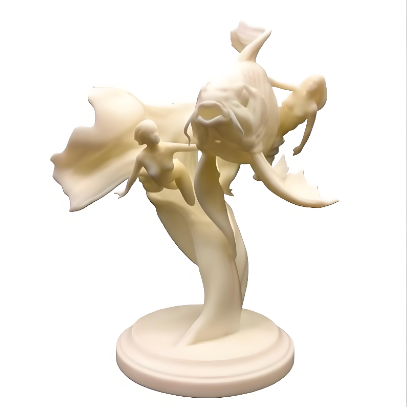
Technical Capability & RFQ
SLA 3D Printing Service for High-Precision Resin Prototypes
Discuss This PartCapability decision data
Technical fit for SLA 3D printing
Use this capability summary to decide whether the process fits the part before discussing tooling, lead time or price.
- Best fit
- Detailed visual prototypes, small precision models and smooth surfaces where appearance matters more than long-term production properties.
- Design focus
- Support contact, trapped resin, drainage, orientation, wall thickness and post-curing affect the result.
- Material direction
- Photopolymer resins are selected by visual, stiffness, temperature or specialty needs and should not be treated as direct thermoplastic equivalents.
- Volume and cost logic
- No hard tooling is needed; build volume, resin, support, washing and finishing drive cost.
- Inspection focus
- Inspect fine features, support marks, cure, warpage, surface, dimensional fit and resin-specific aging limits.
- Compare against
- Compare with FDM for economical functional models, SLS for durable nylon parts and molding for production material behavior.
Product Description
Our SLA 3D printing service produces high-detail resin prototypes with smooth surfaces, sharp features and accurate appearance for design review and product validation.
SLA is suitable for presentation models, small detailed parts, transparent prototypes, fit-check components and master models that need better surface quality than standard FDM printing.
Manufacturing Capabilities
| Process | SLA resin printing with UV-cured photopolymer materials |
| Strength | Fine detail, smooth surface and good dimensional consistency for prototypes |
| Finishing | Support removal, sanding, polishing, painting, clear coating and assembly |
| Use range | Appearance prototypes, product models, medical models, small housings and precision samples |
Materials and Options
- Standard resin for detailed visual prototypes.
- Tough resin for parts that need better impact resistance.
- Transparent resin for lenses, covers and fluid-view prototypes.
- High-temperature resin for selected heat-resistant samples.
Typical Applications
SLA printed parts are commonly used in consumer products, electronic housings, medical models, industrial design samples, display models and pre-mold appearance validation.
Example Project
A customer needed a smooth prototype housing before injection mold development. We printed SLA samples, sanded the visible surfaces, checked assembly gaps and helped the customer confirm design details before tooling.
Quality Control
- Drawing and requirement review before production.
- First article inspection before batch work.
- Dimensional checks for critical features and assembly areas.
- Appearance inspection for surface defects, color variation and processing marks.
- Protective packaging and final confirmation before shipment.
What We Need for a Quote
Please send 3D files, 2D drawings, material requirements, quantity, target tolerance, surface finish, color, application environment and any inspection standard. If the design is still early, we can help compare process options before production.
FAQ
When should I choose SLA instead of FDM?
Choose SLA when surface finish, small detail and appearance are more important than the lowest prototype cost.
Can SLA parts be painted?
Yes. SLA parts can be sanded, primed and painted for presentation models or appearance review.
Are SLA parts suitable for functional testing?
They can be used for fit and light functional tests, but SLS, CNC machining or injection molding may be better for stronger load-bearing parts.
Related Services
Technical Parameters
| Parameter | Typical Value / Range |
|---|---|
| Process Type | SLA (Stereolithography) 3D Printing |
| Supported Materials | Standard Resin, Tough Resin, Transparent Resin, High-Temp Resin |
| Layer Thickness | 0.025 mm – 0.1 mm |
| Dimensional Accuracy | ±0.05 mm – ±0.15 mm |
| Maximum Build Size | Up to 800 mm x 800 mm x 600 mm |
| Surface Finish | Smooth / High Detail |
| Tensile Strength | 40 – 80 MPa (material dependent) |
| Heat Resistance | Up to 230°C (special resin dependent) |
| Production Volume | Prototype to low-volume production |
| MOQ | 1 piece and above |
| Secondary Services | Sanding, Polishing, Painting, UV Coating, Assembly |
| Note | Final specifications depend on resin type, part geometry, and printing orientation. |
Samples
Related Manufacturing Capabilities
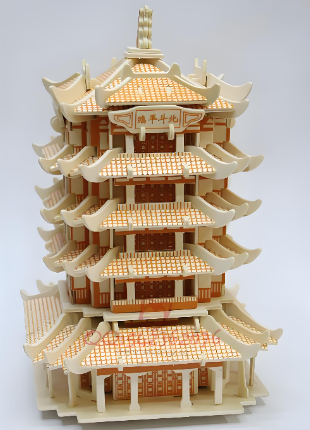
FDM 3D Printing
Home/Products/3D printing/FDM 3D Printing FDM (Fused Deposition Modeling) 3D printing is one of the most widely used additive manufacturing technologies for producing…
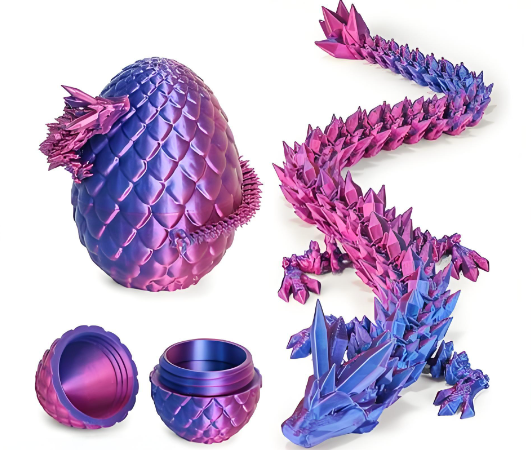
SLS 3D Printing Service for Functional Nylon Parts
Home/Products/3D printing/SLS 3D Printing Service for Functional Nylon Parts Our SLS 3D printing service produces strong nylon prototypes and low-volume plastic parts…
Plastic 3D Printing Services for Prototypes and Custom Parts
Home/Products/3D printing/Plastic 3D Printing Services for Prototypes and Custom Parts Our plastic 3D printing service supports rapid prototypes, visual models, functional test…
Is this process a fit for your part?
Send your drawing, material, quantity, finish and application requirements for a manufacturing review.