Industry News Archive
IndexBox Releases In-Depth Analysis of China’s Plastic Processing Machine Market
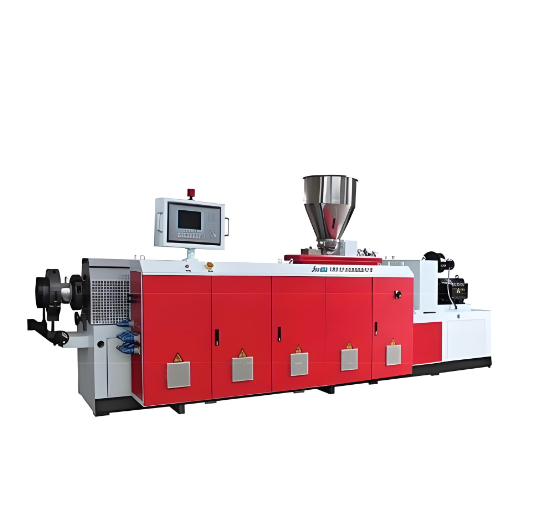
The plastic processing industry in China has long been a cornerstone of global manufacturing, driven by the country’s expansive production capacity and consumption of plastic materials. Equipment that shapes, molds, and extrudes plastic into finished or semi-finished goods forms the backbone of sectors ranging from packaging and automotive to electronics and healthcare. A new report from IndexBox offers a detailed examination of the market for such machinery within China, providing stakeholders with a thorough assessment of its size, structure, and anticipated evolution.
This report arrives at a time when the industry is grappling with a mix of challenges and opportunities. On one hand, rising labor costs and environmental regulations are pushing manufacturers toward more automated and energy-efficient solutions. On the other hand, the sheer scale of domestic demand and export-oriented production ensures sustained investment in processing equipment. The IndexBox study dissects these dynamics, offering data-driven insights that can guide business decisions.
What the Report Covers
The analysis encompasses a broad sweep of the plastic processing machine landscape, from raw material handling and compounding through to final product formation. It quantifies key market indicators and breaks down the industry by machine type, end-use application, and regional presence within China. Among the core elements explored are:
- Historical market size by revenue and unit shipments, with granular growth rate analysis
- Domestic production figures and capacity utilization rates for major machine categories
- Trade statistics, including import and export values, volumes, and primary trading partners
- Segmentation by technology: injection molding, extrusion, blow molding, thermoforming, rotational molding, and others
- Demand patterns across verticals such as packaging, automotive components, construction materials, consumer durables, and medical devices
- Profiles of leading Chinese machinery manufacturers and their global market positions
- A multi-year forecast that accounts for economic scenarios, policy shifts, and technological advancements
Each segment is analyzed not only in isolation but also in terms of its interplay with others—for instance, how growth in electric vehicle production spurs demand for precision injection molding machines. The inclusion of trade data is particularly relevant given China’s role as both a major importer of high-end European and Japanese machines and a growing exporter to developing economies.
Key Trends Impacting China’s Plastic Processing Machinery Sector
Three interconnected themes stand out in the current development of the market. The first is the relentless push toward digitization. Factories are deploying smart injection molding systems equipped with sensors that collect real-time data on cycle times, temperature, and pressure. These cyber-physical systems reduce downtime and scrap rates, directly improving profitability. Chinese equipment makers are increasingly embedding such intelligence into their offerings to compete with established international brands.
A second trend is the circular economy imperative. Government mandates on plastic waste reduction and recycling are spurring demand for machines that can handle recycled content without sacrificing quality. Extruders and injection molders that process mixed or contaminated feedstock are now a growing niche. Additionally, bioplastics processing is emerging as a specialized segment within the machinery market.
Third, the export profile of Chinese machinery is changing. Historically known for low-cost, basic equipment, domestic firms are now moving up the value chain. They are winning contracts for complete turnkey plants in Africa and Southeast Asia, offering everything from pipe extrusion lines to stretch blow molding systems. This shift is partly fueled by Beijing’s Belt and Road Initiative, which facilitates infrastructure-related plastics demand in partner countries.
Meanwhile, trade friction with the United States and Europe periodically affects the flow of components and complete machines. Tariffs on imported molding equipment can temporarily boost local sales but may also increase costs for processors reliant on foreign precision parts. The IndexBox report evaluates these risks and provides scenarios for market resilience.
Corporations involved in plastic processing services, whether domestic or international, often rely on a mix of these machines. For instance, businesses providing Injection Molding Services for Custom Plastic Parts, Plastic Extrusion Services for Pipes, Profiles, and Industrial Applications, and Blow Molding Services for Bottles and Industrial Containers are directly influenced by the availability and technological advancement of machinery. The market’s health thus directly impacts the competitiveness of the wider plastics industry.
Ultimately, the IndexBox publication serves as a benchmark resource for understanding where China’s plastic processing machinery market stands and where it is headed. Its findings can support capacity planning, investment decisions, and competitive analysis for a broad audience, from equipment manufacturers to end-users of molded plastic products.
Why This Matters
China’s dominance in plastics manufacturing makes its machinery market a bellwether for global equipment demand and technology shifts. Understanding its trajectory helps suppliers, investors, and processors anticipate supply chain changes and competitive dynamics, especially as automation and sustainability reshape production.
FAQ
Why is China’s plastic processing machine market important globally?
China is the world’s largest producer and consumer of plastic products, so its demand for processing equipment sets global trends. The market’s size, growth, and technology adoption influence machinery manufacturers worldwide and serve as a benchmark for emerging markets.
How is automation affecting plastic processing machinery in China?
Rising labor costs and quality demands are driving adoption of smart, IoT-enabled machines. Automation improves efficiency, reduces waste, and enables predictive maintenance, keeping Chinese manufacturers competitive against high-end European and Japanese suppliers.
What types of plastic processing machines are most in demand in China?
Injection molding, extrusion, and blow molding machines dominate the market, driven by packaging, automotive, and consumer goods sectors. Demand is also growing for energy-efficient and recycling-compatible machinery.
How do trade tensions impact China’s plastic processing machinery exports?
Tariffs and trade barriers can disrupt supply chains and increase costs for Chinese exporters. However, many manufacturers are diversifying markets, with growing exports to Africa and Southeast Asia under initiatives like the Belt and Road, partially offsetting Western trade frictions.