Technical Capability & RFQ
Overmolding Service | Multi-Material Plastic Parts Customization
Discuss This PartCapability decision data
Technical fit for Plastic overmolding
Use this capability summary to decide whether the process fits the part before discussing tooling, lead time or price.
- Best fit
- Parts that add a soft grip, seal, insulation or protective layer over a rigid molded or preformed substrate.
- Design focus
- Substrate support, mechanical interlocks, shutoffs, flow length, bond area and thermal exposure must be reviewed.
- Material direction
- The overmold and substrate need compatible processing temperatures and verified adhesion or mechanical retention.
- Volume and cost logic
- Additional tooling and handling can be offset when overmolding removes separate assembly, gaskets or finishing.
- Inspection focus
- Inspect bond, peel or pull behavior, flash, short shots, substrate distortion, coverage and cosmetic transition lines.
- Compare against
- Compare with multi-shot molding for automated repeat volume and separate bonded or mechanically assembled components.
Product Description
Overmolding Service | Multi-Material Plastic Parts Customization
Intro Paragraph:
In plastic component manufacturing, combining multiple materials in one part can dramatically enhance functionality and design freedom. Our Overmolding service allows seamless integration of rigid and soft materials, multiple colors, or functional polymers in a single component. Whether you require custom plastic molding, non-standard injection molding, or small-batch plastic parts customization, we provide rapid prototyping, 3D validation, and full-scale production support—taking your design from concept to finished part efficiently.
Advantages of Overmolding
- Customized & Flexible Design: Achieve complex geometries or multi-material features that standard injection molding cannot deliver.
- Enhanced Product Performance: Combine materials to achieve anti-slip surfaces, vibration damping, sealing, or ergonomic comfort.
- Reduced Assembly Costs: Merge multiple components into a single molded part.
- Small-Batch Feasibility: Low minimum order quantity (MOQ) and short mold cycles support R&D validation or pilot production.
- Material Compatibility: Works with ABS, PC, POM, TPU, TPE, and other engineering plastics to meet heat resistance, wear resistance, flame retardancy, and UV durability requirements.
Our Manufacturing Process
- Design Review & Material Selection
Evaluate part function, environment, and load to recommend optimal material combinations, avoiding over-design or premature material failure. - Rapid Prototyping & 3D Validation
Start without a mold, verify geometry, material fit, and color alignment using 3D prototypes. - Mold Fabrication & Injection Molding
Precision molds for single-shot or multi-shot injection molding, supporting high-volume and consistent quality. - Quality Control & Inspection
Use CMM measurement, vision inspection, and hardness testing to ensure dimensional precision and material performance.
Typical Applications
- Electronics Housings: Integrate rigid PC with soft TPU for anti-slip and impact-resistant features.
- Home Appliance Components: Multi-material design improves user comfort, grip, and durability.
- Automotive Interior Parts: Combine flexible and rigid materials in one part, reducing part count and assembly complexity.
Cost Optimization & Efficiency
- Reduce Post-Assembly Costs: Integrate multiple functions into a single molded part.
- Uniform Wall Thickness: Prevents shrinkage and warpage.
- Minimize Material Variety: Simplify material selection to optimize production speed and cost.
- Optimize Mold Design: Use modular or multi-cavity molds for faster cycle times.
- Small-Batch Feasibility: Flexible MOQ supports iterative product development without excessive cost.
Why Choose Us
As a professional plastic parts manufacturer, we specialize in Overmolding, non-standard injection molding, and small-batch plastic parts customization. From material recommendations to final production, we ensure high-quality, precision, and efficiency.
Send us your design files today to get a free evaluation and see how we can bring your multi-material plastic parts to life.
FAQ: Overmolding Service (Multi-Material Plastic Parts)
What is the difference between overmolding and two-shot injection molding?
Overmolding involves molding a second material onto a pre-made substrate part. Two-shot (multi-shot) molding injects two materials in one automated machine cycle without removing the part between shots. Overmolding is more flexible for substrate sourcing and lower capital cost; two-shot produces stronger chemical bonding and tighter registration.
What material combinations are used in overmolding?
Rigid substrate materials include ABS, PC, PC/ABS, nylon, and PP. Soft overmold materials include TPE, TPU, silicone, and rubber compounds. The key requirement is chemical or mechanical adhesion compatibility between the substrate and overmold material.
How do you ensure the overmold material adheres reliably to the substrate?
Adhesion strategy is determined during DFM. Chemical bonding requires material compatibility; mechanical bonding uses through-holes, undercuts, slots, and textured zones on the substrate. We conduct peel or pull tests during validation to confirm bond strength meets the application requirement.
Can overmolding be used to encapsulate electronics or sensitive components?
Yes, with careful material and process selection. Encapsulation-grade TPE or PU compounds with low injection pressure and controlled fill temperature protect electronic modules, connectors, and sensors. Thermal analysis is required to ensure the encapsulated component tolerates the processing temperature.
What industries most frequently specify overmolded plastic parts?
Power tools with grip handles, medical devices with soft-touch surfaces, consumer electronics, automotive interior controls, personal care products, and sports equipment are primary users. The defining requirement is always a combination of a hard structural core with a soft, functionally distinct exterior zone.
Related products: Multi-Component / Overmold Compression Molding Service | Functional Composite Components, 3D Printing Services for Rapid Prototyping and Custom Plastic Parts, Thin-wall Injection Molding, Hot Runner Injection Molding, Injection Stretch Blow Molding Service | High-Strength PET Bottle Manufacturing.
Technical Parameters
| Parameter | Typical Value / Range |
|---|---|
| Material Types | ABS, PC, POM, TPU, TPE |
| Mold Type | Single-shot & multi-shot, hot runner or cold runner |
| Max Part Size | Up to 300mm x 200mm x 100mm |
| Tolerances | ±0.02 mm (depending on geometry) |
| Shore Hardness | Soft: 60A–90A; Rigid: 70D–85D |
| Cycle Time | 30–90 seconds per part |
| Overmold Layer Thickness | 0.5–5 mm (depending on material and design) |
| Color Options | Multiple overmold colors possible |
| Minimum Order Quantity (MOQ) | 50–100 pcs (depending on design and mold setup) |
| Operating Temperature Range | -40°C to 120°C (depending on material combination) |
| Adhesion Strength | >5 MPa between layers (tested per ASTM D1002) |
| Note | All parameters are typical ranges; specific values may vary depending on geometry, material choice, and mold design. |
Samples
Related Manufacturing Capabilities
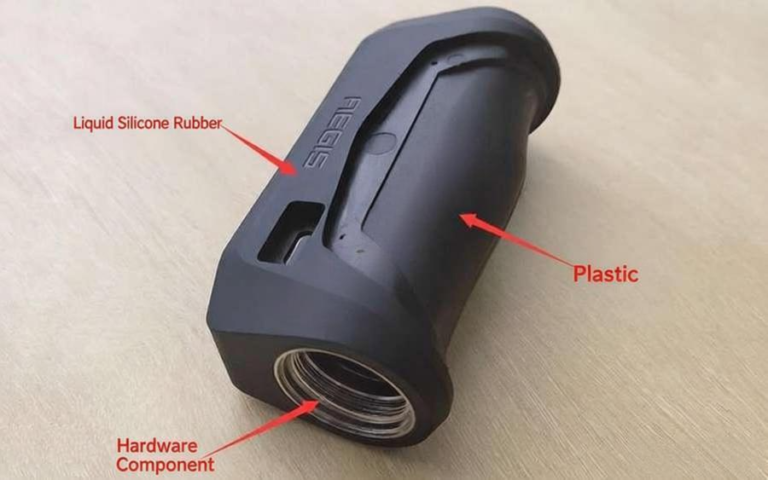
Multi-Component / Overmold Compression Molding Service | Functional Composite Components
Home/Products/Plastic molding/Compression Molding/Multi-Component / Overmold Compression Molding Service | Functional Composite Components Multi-Component or Overmold Compression Molding is an advanced thermoset process…
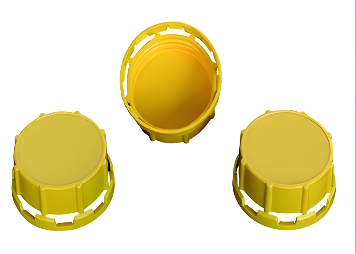
Hot Runner Injection Molding
Home/Products/Plastic molding/Injection Molding/Hot Runner Injection Molding Efficient Plastic Molding with Advanced Heated Runner Systems Hot runner injection molding is an advanced molding…
Thin-wall Injection Molding
Home/Products/Plastic molding/Injection Molding/Thin-wall Injection Molding High-speed Plastic Molding for Ultra-thin Wall Components Thin-wall injection molding is a specialized plastic molding process designed…
Is this process a fit for your part?
Send your drawing, material, quantity, finish and application requirements for a manufacturing review.