
Technical Capability & RFQ
Custom Compression Molding Service | Thermoset Plastic Parts
Discuss This PartCapability decision data
Technical fit for Compression molding
Use this capability summary to decide whether the process fits the part before discussing tooling, lead time or price.
- Best fit
- Thicker, strong parts made from thermoset, rubber-like or reinforced molding compounds.
- Design focus
- Charge position, flow, flash land, draft, inserts, wall transitions and cure behavior must be planned together.
- Material direction
- Thermosets, elastomers, SMC and BMC are selected for heat, electrical, chemical and structural requirements.
- Volume and cost logic
- Tooling and cure time are important; repeat production and material performance usually justify the process.
- Inspection focus
- Inspect cure, voids, flash, warpage, surface condition, insert position and critical dimensions.
- Compare against
- Compare with injection molding for thermoplastic thin-wall parts and machining for low-volume blocks or plates.
Product Description
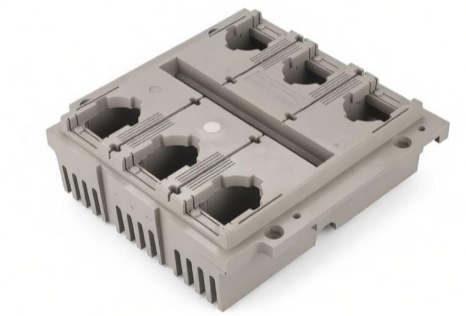
Standard Compression Molding is a widely used thermoset plastic processing technique where plastic granules or sheets are placed into a preheated mold, compressed under high pressure, and cooled to form precise components. This process is ideal for creating durable, heat-resistant, and dimensionally stable parts. As a professional plastic parts manufacturer, we provide custom compression molding solutions for electrical insulation parts, mechanical components, industrial gears, and switch housings. Whether you need non-standard plastic molding or small-batch plastic parts customization, our process ensures high quality, consistency, and efficiency.
Advantages of Standard Compression Molding
- High Strength & Durability
Thermoset materials provide excellent mechanical strength and wear resistance. - Excellent Heat & Electrical Resistance
Ideal for electrical insulation components and high-temperature applications. - Precision & Consistency
Controlled mold pressure and temperature result in tight dimensional tolerances. - Cost-Effective for Medium to Large Parts
Efficient production for components with relatively simple shapes or medium complexity. - Material Versatility
Works with phenolic, epoxy, and unsaturated polyester resins for diverse applications.
Molding Process
Material Preparation
Thermoset resin in granule or sheet form is prepared and preheated as needed for optimal flow and moldability.
Mold Loading & Compression
The resin is placed into a heated mold and the mold is closed under high pressure to shape the part and ensure full cavity fill.
Curing & Cooling
The part is maintained under pressure while the mold temperature ensures complete curing. After cooling, the mold is opened, and the part is removed.
Inspection & Finishing
Finished components are inspected for dimensional accuracy, surface quality, and mechanical performance. Secondary machining or trimming is applied as needed.
Common Materials for Compression Molding
| Material | Key Benefits | Typical Applications |
|---|---|---|
| PF (Phenolic) | High heat & electrical resistance | Switch housings, insulating components |
| UP (Unsaturated Polyester) | Good mechanical strength | Mechanical parts, industrial gears |
| EP (Epoxy Resin) | Strong adhesion, chemical resistance | Electrical insulation, precision components |
Industry Applications
- Electrical Components
Insulators, switch housings, connectors, and high-voltage parts. - Mechanical & Industrial Parts
Gears, bushings, and machine components requiring high wear resistance. - Automotive & Industrial Applications
Components exposed to heat, friction, and chemical exposure. - Consumer & Industrial Appliances
Durable thermoset parts for switches, housings, and safety devices.
Quality Control & Precision Manufacturing
- Dimensional Stability
Molded under controlled temperature and pressure to ensure consistent part size. - Heat & Electrical Testing
Ensures components meet insulation and thermal requirements. - Surface Quality Inspection
Eliminates defects such as voids, cracks, or surface imperfections. - Advanced Measurement Systems
CMM and precision gauges verify tight tolerances and performance standards.
Cost Optimization & Production Efficiency
- Efficient Material Use
Optimized resin flow reduces waste. - Short Setup for Small Batches
Flexible for prototypes or small-volume production without high tooling costs. - Minimal Secondary Operations
Compression molding produces near-net-shape parts, reducing machining requirements. - Scalable Production
Suitable for small-batch to medium-scale production with consistent quality.
Why Choose Us
As a professional plastic parts manufacturer, we specialize in standard compression molding, non-standard plastic molding, and small-batch plastic parts customization. From material selection and mold design to final production and quality inspection, we provide complete manufacturing solutions for high-performance thermoset components.
Send us your drawings or specifications today for a free engineering evaluation and custom compression molding consultation.
FAQ: Standard Compression Molding Service (Thermoset Components)
What is the typical cure cycle for standard compression molding?
Cure cycles vary by material. Phenolic compounds typically cure in 1–3 minutes at 150–175°C under full press pressure. SMC polyester compounds may require 2–5 minutes at 140–160°C. We document cure time, temperature, and pressure for each compound during process qualification.
How does compression molding compare to transfer molding for thermosets?
Compression molding places the compound charge directly in the open cavity. Transfer molding injects the compound from a pot through runners into a closed cavity. Compression molding is simpler and lower tooling cost; transfer molding provides more consistent fill for complex geometry and better dimensional control.
Can standard compression molded parts handle elevated temperatures?
Yes. Phenolic and other thermoset materials maintain structural integrity at temperatures exceeding 200°C, making them appropriate for electrical components, cookware handles, automotive under-hood parts, and industrial heat shields.
What is the typical surface finish of compression molded thermoset parts?
Molded surfaces can be semi-gloss to high-gloss depending on mold polish. Thermosets accept texture and can be molded with text, logos, or grain patterns directly from the mold surface. The exposed charge face typically has a different appearance than the molded faces.
How does charge weight variation affect part quality?
Charge weight directly affects part thickness, density, and flash quantity. Insufficient charge produces incomplete fill or voids. Precision charge preparation using weight measurement or pre-forms is standard practice for critical-dimension parts.
Related products: Fiber Reinforced Compression Molding Service | High-Strength Structural Components, Hot Runner Injection Molding, Injection Stretch Blow Molding Service | High-Strength PET Bottle Manufacturing, Suction Blow Molding Service | Complex Hollow Plastic Part Manufacturing.
Technical Parameters
| Parameter | Typical Value / Range |
|---|---|
| --------------------- | ----------------------------------------------------------- |
| Process Type | Standard Compression Molding |
| Supported Materials | PF (Phenolic), UP (Unsaturated Polyester), EP (Epoxy Resin) |
| Mold Type | Heated Metal Molds |
| Maximum Part Size | Up to 400 mm x 400 mm x 100 mm |
| Wall Thickness | 2 mm – 25 mm |
| Dimensional Tolerance | ±0.05 mm – ±0.2 mm |
| Surface Finish | Matte / Textured / Polished |
| Cycle Time | 2 – 10 minutes per part (depending on material & size) |
| Production Volume | Small to medium batch, scalable for larger orders |
| MOQ | Prototype to medium production batch |
| Secondary Services | Trimming, Machining, Assembly, Drilling |
Samples
Related Manufacturing Capabilities
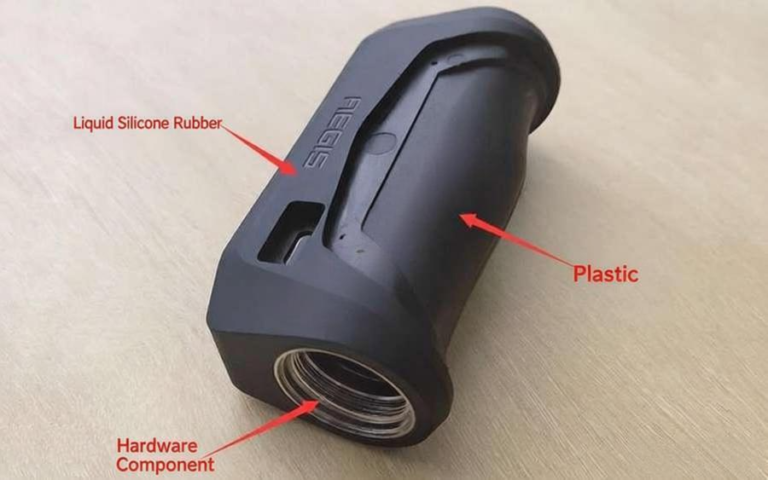
Multi-Component / Overmold Compression Molding Service | Functional Composite Components
Home/Products/Plastic molding/Compression Molding/Multi-Component / Overmold Compression Molding Service | Functional Composite Components Multi-Component or Overmold Compression Molding is an advanced thermoset process…
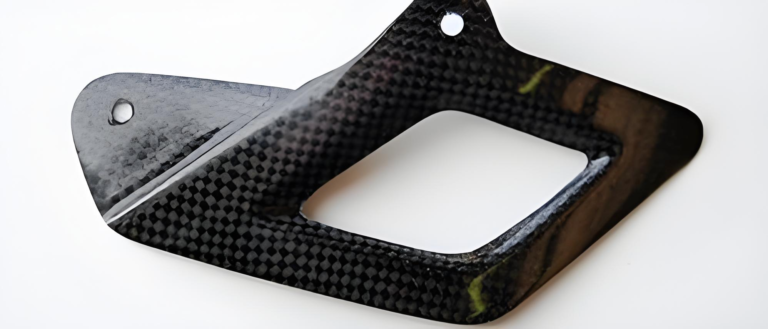
Fiber Reinforced Compression Molding Service | High-Strength Structural Components
Home/Products/Plastic molding/Compression Molding/Fiber Reinforced Compression Molding Service | High-Strength Structural Components Fiber Reinforced Compression Molding combines high-performance thermoset plastics with reinforcing fibers…
Is this process a fit for your part?
Send your drawing, material, quantity, finish and application requirements for a manufacturing review.