Technical Capability & RFQ
Suction Blow Molding Service | Complex Hollow Plastic Part Manufacturing
Discuss This PartCapability decision data
Technical fit for Extrusion blow molding
Use this capability summary to decide whether the process fits the part before discussing tooling, lead time or price.
- Best fit
- Hollow bottles, ducts, reservoirs and handled containers formed from an extruded parison.
- Design focus
- Pinch-off, parting line, neck finishing, handle geometry, blow ratio and wall distribution need coordinated design.
- Material direction
- HDPE, LDPE, PP, PVC and other blow-molding grades are selected for stiffness, barrier, chemical and drop requirements.
- Volume and cost logic
- Tooling and line setup favor repeat production; part weight, cycle, trimming and scrap recovery affect unit cost.
- Inspection focus
- Check wall distribution, pinch-off strength, flash, leakage, capacity, neck dimensions and drop performance.
- Compare against
- Compare with injection blow molding for controlled small necks and rotational molding for much larger low-volume hollow parts.
Product Description
Suction Blow Molding Service | Complex Hollow Plastic Part Manufacturing
Intro Paragraph:
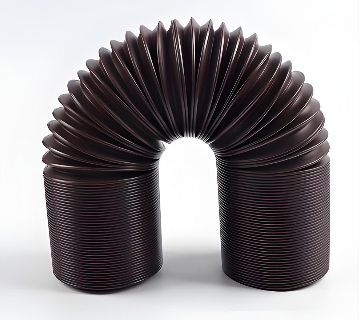
Suction Blow Molding is an advanced hollow plastic forming process that combines vacuum assistance with traditional blow molding technology. By using vacuum pressure during forming, the molten plastic can better conform to complex mold geometries, improving dimensional accuracy and surface consistency. As an experienced plastic parts manufacturer, we provide reliable custom suction blow molding solutions for automotive ducts, industrial tubing, and irregular hollow plastic components. Whether you need non-standard plastic molding or small-batch plastic parts customization, we offer precision manufacturing, stable quality, and efficient production support.
Advantages of Suction Blow Molding
- Excellent for Complex Hollow Shapes
Vacuum-assisted forming improves mold conformity for irregular and curved geometries. - Enhanced Dimensional Accuracy
Better material distribution reduces deformation and improves part consistency. - Improved Surface Quality
Vacuum assistance minimizes wrinkles, uneven thickness, and surface defects. - Lightweight Yet Durable Structures
Ideal for hollow industrial components requiring both strength and reduced weight. - Efficient Production Process
Supports stable and repeatable manufacturing for technical plastic components.
Our Suction Blow Molding Process
Parison Extrusion
Molten plastic is extruded into a hollow tube-shaped parison with controlled wall thickness.
Vacuum-Assisted Mold Forming
The mold closes around the parison while vacuum pressure helps the material conform tightly to complex mold surfaces.
Air Blow Expansion
Compressed air expands the plastic material fully against the mold cavity, ensuring accurate hollow part formation.
Cooling & Stabilization
Controlled cooling maintains dimensional stability and reduces shrinkage or deformation.
Inspection & Finishing
Finished parts undergo dimensional inspection, leak testing, trimming, and surface quality checks before delivery.
Common Materials for Suction Blow Molding
| Material | Key Benefits | Typical Applications |
|---|---|---|
| HDPE | Chemical resistance, durability | Industrial ducts |
| PP | Lightweight and heat resistant | Automotive air channels |
| PVC | Rigidity and smooth finish | Industrial tubing |
| ABS | Impact resistance | Technical hollow components |
| PA (Nylon) | High strength and wear resistance | Automotive systems |
Industry Applications
- Automotive Air Ducts
Complex airflow channels and HVAC duct systems with lightweight construction. - Industrial Pipe Components
Hollow industrial fittings and technical fluid transfer systems. - Irregular Hollow Plastic Parts
Custom-shaped components requiring complex internal structures. - Ventilation & Airflow Systems
Vacuum-formed ducting solutions for industrial and commercial equipment.
Quality Control & Precision Manufacturing
- Improved Shape Accuracy
Vacuum assistance enhances conformity to detailed mold geometries. - Consistent Wall Thickness
Controlled forming improves structural stability and durability. - Advanced Leak Testing
Hollow components are inspected for sealing integrity and airflow performance. - Strict Dimensional Inspection
Precision measuring systems ensure stable production quality across batches.
Cost Optimization & Production Efficiency
- Reduced Secondary Processing
Better mold conformity minimizes trimming and corrective finishing operations. - Lightweight Component Design
Hollow structures reduce raw material consumption and transportation costs. - Efficient Manufacturing Workflow
Integrated vacuum and blow molding processes improve production efficiency. - Flexible Production Capacity
Suitable for prototypes, small-batch customization, and mass production.
Why Choose Us
As a trusted plastic parts manufacturer, we specialize in Suction Blow Molding, non-standard plastic molding, and small-batch plastic parts customization. From engineering support and mold development to final production and inspection, we provide complete manufacturing solutions for complex hollow plastic components.
Send us your drawings or technical requirements today for a free engineering evaluation and custom suction blow molding consultation.
FAQ: Suction Blow Molding Service (Complex Hollow Parts)
What makes suction blow molding suitable for curved or 3D-shaped hollow parts?
In suction blow molding, the parison is drawn through the mold cavity by suction before blowing begins. This allows the parison to conform to curved or non-linear mold shapes, which is not achievable with conventional vertical parison drop. It is the preferred process for automotive air ducts and coolant pipes with complex 3D paths.
What wall thickness uniformity is achievable in suction blow molded parts?
Wall uniformity in complex-path parts is more challenging than in symmetric containers. Parison programming (varying extrusion speed to pre-distribute material) and process optimization are used to compensate for thickness variation around curves and at pinch-off zones.
Which materials are commonly used for suction blow molded automotive components?
PA6, PA12, HDPE, and PP are standard for under-hood and fluid-handling applications because of their chemical resistance and temperature tolerance. For air intake components, glass-filled PA is used where stiffness and thermal resistance are required.
How does suction blow molding compare to conventional EBM for industrial ducts?
Conventional EBM can only produce parts with essentially straight or gently curved centerlines. Suction blow molding removes this limitation, enabling 90-degree bends and complex routed paths in a single part. This reduces assembly joints that would otherwise be leak points in fluid or air systems.
What testing is required for hollow automotive parts made by suction blow molding?
Burst pressure testing, pulse pressure cycling, chemical immersion testing, dimensional inspection of connector interfaces, and temperature cycling are standard validation tests. We can align test protocols with automotive standards or customer-specific requirements.
Related products: Injection Stretch Blow Molding Service | High-Strength PET Bottle Manufacturing, Fiber Reinforced Compression Molding Service | High-Strength Structural Components, Rotational Molding Services for Large Hollow Plastic Products, Thermosetting Molding Service | High-Performance Thermoset Components.
Technical Parameters
| Parameter | Typical Value / Range |
|---|---|
| Process Type | Vacuum-Assisted Blow Molding |
| Supported Materials | HDPE, PP, PVC, ABS, PA |
| Product Type | Hollow Technical Components |
| Wall Thickness | 1 mm – 10 mm |
| Maximum Product Size | Up to 2500 mm |
| Dimensional Tolerance | ±0.1 mm – ±0.5 mm |
| Surface Finish | Smooth / Textured |
| Operating Temperature Range | -40°C to 120°C |
| Production Speed | Medium to high-volume production |
| MOQ | Prototype to mass production |
| Secondary Services | Trimming, Welding, Assembly, Leak Testing |
| Note | Final specifications depend on material type, mold complexity, and product geometry. |
Samples
Related Manufacturing Capabilities

Multilayer Blow Molding Service | High-Barrier Plastic Packaging Solutions
Home/Products/Plastic molding/Blow Molding/Multilayer Blow Molding Service | High-Barrier Plastic Packaging Solutions Multilayer Blow Molding Service | High-Barrier Plastic Packaging Solutions Intro Paragraph:Multilayer…

Stretch Blow Molding Service | High-Strength Plastic Container Manufacturing
Home/Products/Plastic molding/Blow Molding/Stretch Blow Molding Service | High-Strength Plastic Container Manufacturing Stretch Blow Molding Service | High-Strength Plastic Container Manufacturing Intro Paragraph:Stretch…
Injection Stretch Blow Molding Service | High-Strength PET Bottle Manufacturing
Home/Products/Plastic molding/Blow Molding/Injection Stretch Blow Molding Service | High-Strength PET Bottle Manufacturing Injection Stretch Blow Molding Service | High-Strength PET Bottle Manufacturing…
Is this process a fit for your part?
Send your drawing, material, quantity, finish and application requirements for a manufacturing review.