
Technical Capability & RFQ
Stretch Blow Molding Service | High-Strength Plastic Container Manufacturing
Discuss This PartCapability decision data
Technical fit for Injection stretch blow molding
Use this capability summary to decide whether the process fits the part before discussing tooling, lead time or price.
- Best fit
- Lightweight bottles and containers that benefit from biaxial orientation, clarity and controlled neck geometry.
- Design focus
- Preform geometry, stretch ratio, heating profile, base design and wall distribution must be developed as a system.
- Material direction
- PET is common; grade choice depends on clarity, barrier, heat and product-contact requirements.
- Volume and cost logic
- Preform and blow tooling favor repeat container production, with cavity count tied to expected demand.
- Inspection focus
- Measure wall distribution, top load, burst or leak performance, haze, gate condition and neck accuracy.
- Compare against
- Compare with injection blow molding for smaller non-oriented containers and extrusion blow molding for handled or asymmetric shapes.
Product Description
Stretch Blow Molding Service | High-Strength Plastic Container Manufacturing
Intro Paragraph:
Stretch Blow Molding is a specialized plastic manufacturing process that combines mechanical stretching and compressed air blowing to produce lightweight yet highly durable hollow plastic products. By stretching the material during forming, the molecular structure becomes more aligned, significantly improving impact resistance, pressure strength, and overall product performance. As an experienced plastic parts manufacturer, we provide professional custom stretch blow molding solutions for beverage packaging, industrial containers, and specialty hollow plastic products. Whether you require non-standard plastic molding or small-batch plastic parts customization, we deliver reliable quality, precision manufacturing, and efficient production support.
Advantages of Stretch Blow Molding
- Improved Impact Resistance
Molecular alignment during stretching enhances toughness and reduces cracking risks. - Higher Pressure Resistance
Ideal for carbonated beverage bottles and containers requiring strong internal pressure performance. - Lightweight Yet Durable
Reduces material usage while maintaining excellent structural integrity. - Enhanced Transparency & Surface Finish
Produces smooth, glossy containers with excellent visual appeal. - Efficient Mass Production
Automated systems support high-speed manufacturing with stable product quality.
Our Stretch Blow Molding Process
Preform Preparation
Plastic preforms are manufactured or prepared with accurate neck finishes and controlled material distribution.
Mechanical Stretching
The heated preform is mechanically stretched using a stretch rod to align the molecular structure and improve material strength.
Air Blow Forming
Compressed air expands the stretched preform against the mold cavity, creating the final hollow product shape.
Cooling & Stabilization
Controlled cooling systems maintain dimensional stability, transparency, and consistent wall thickness.
Inspection & Finishing
Finished products undergo dimensional inspection, leak testing, and appearance checks before packaging and shipment.
Common Materials for Stretch Blow Molding
| Material | Key Benefits | Typical Applications |
|---|---|---|
| PET | High transparency and strength | Beverage bottles |
| PP | Heat resistance and durability | Food containers |
| PVC | Rigidity and clarity | Specialty packaging |
Industry Applications
- Beverage Packaging
Water bottles, juice bottles, and carbonated drink containers with excellent pressure resistance. - Food Packaging
Lightweight and durable packaging for edible oils, sauces, and food-grade liquids. - Personal Care Products
Cosmetic and hygiene containers with premium appearance and smooth surfaces. - Industrial Packaging
Durable containers for chemicals, cleaning products, and industrial liquids.
Quality Control & Precision Manufacturing
- Uniform Wall Thickness
Controlled stretching improves material distribution and reduces weak points. - High Pressure Resistance Testing
Bottles are tested for durability and sealing performance under pressure conditions. - Advanced Inspection Systems
Precision measurement and visual inspection ensure consistent product quality. - Stable Neck Dimensions
Accurate neck finishes ensure compatibility with caps and sealing systems.
Cost Optimization & Production Efficiency
- Reduced Material Consumption
Stretching technology improves strength while using less raw material. - Fast Production Cycles
High-speed automation supports efficient large-volume manufacturing. - Lower Transportation Costs
Lightweight containers reduce shipping weight and logistics expenses. - Flexible Production Capacity
Supports prototype development, small-batch production, and large-scale manufacturing.
Why Choose Us
As a professional plastic parts manufacturer, we specialize in Stretch Blow Molding, non-standard plastic molding, and small-batch plastic parts customization. From material selection and mold engineering to final production and inspection, we provide complete manufacturing solutions for high-performance hollow plastic products.
Send us your drawings or packaging specifications today for a free engineering evaluation and custom stretch blow molding consultation.
FAQ: Stretch Blow Molding Service
What is the purpose of the stretch rod in stretch blow molding?
The stretch rod mechanically extends the preform axially before the blow pressure expands it radially. This biaxial orientation process aligns the polymer chains in both directions, resulting in a much stronger and more rigid container wall than single-axis blowing would produce.
What container applications are most common for stretch blow molding?
Beverage bottles (water, juice, carbonated soft drinks), edible oil containers, household cleaning product bottles, and personal care containers are the most frequent uses. The process is preferred wherever lightweight wall combined with pressure containment or drop resistance is important.
How is the preform design related to the final bottle properties?
Preform wall thickness, length, and material distribution determine where material goes during blowing. A poorly designed preform creates uneven wall distribution in the bottle, leading to weak zones or inconsistent base strength. Preform design is typically reviewed using simulation tools before tooling is cut.
Can stretch blow molded containers include handles or complex shapes?
Simple oval or square cross-sections are manageable. Integral handles are more commonly produced by EBM. Complex geometry that requires pinching or non-uniform stretch ratios is more difficult to control in stretch blow molding. We assess moldability during the design review.
What is the typical production rate for stretch blow molding?
Modern ISBM machines produce 2,000–6,000 bottles per hour per cavity for standard beverage bottles. Multi-cavity machines scale output proportionally. Production rate depends on bottle size, material, and cooling efficiency.
Related products: Blow Molding Services for Bottles and Industrial Containers, Fiber Reinforced Compression Molding Service | High-Strength Structural Components, Multi-color / Multi-material Injection Molding (Multi-shot Injection Molding), Rotational Molding Services for Large Hollow Plastic Products, Standard Compression Molding Service | High-Performance Thermoset Components.
Technical Parameters
| Parameter | Typical Value / Range |
|---|---|
| Process Type | Stretch Blow Molding |
| Supported Materials | PET, PP, PVC |
| Product Capacity | 100 ml – 5000 ml |
| Wall Thickness | 0.2 mm – 5 mm |
| Dimensional Tolerance | ±0.05 mm – ±0.2 mm |
| Pressure Resistance | Suitable for pressurized containers |
| Surface Finish | High Gloss / Matte |
| Transparency | High Clarity |
| Production Speed | 1000 – 25,000 pcs/hour |
| Neck Finish Types | Standard / Custom Threaded Neck |
| MOQ | Prototype to mass production |
| Secondary Services | Printing, Labeling, Leak Testing |
| Note | Final specifications depend on product design, material selection, and mold structure. |
Samples
Related Manufacturing Capabilities
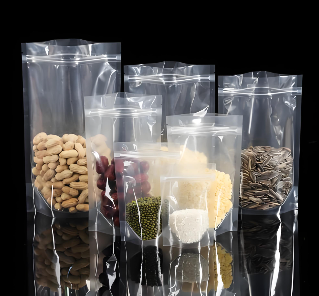
Multilayer Blow Molding Service | High-Barrier Plastic Packaging Solutions
Home/Products/Plastic molding/Blow Molding/Multilayer Blow Molding Service | High-Barrier Plastic Packaging Solutions Multilayer Blow Molding Service | High-Barrier Plastic Packaging Solutions Intro Paragraph:Multilayer…
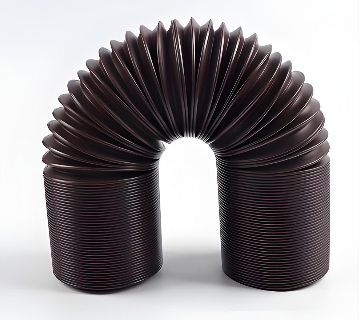
Suction Blow Molding Service | Complex Hollow Plastic Part Manufacturing
Home/Products/Plastic molding/Blow Molding/Suction Blow Molding Service | Complex Hollow Plastic Part Manufacturing Suction Blow Molding Service | Complex Hollow Plastic Part Manufacturing…
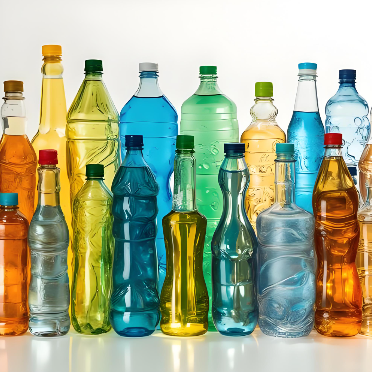
Injection Stretch Blow Molding Service | High-Strength PET Bottle Manufacturing
Home/Products/Plastic molding/Blow Molding/Injection Stretch Blow Molding Service | High-Strength PET Bottle Manufacturing Injection Stretch Blow Molding Service | High-Strength PET Bottle Manufacturing…
Is this process a fit for your part?
Send your drawing, material, quantity, finish and application requirements for a manufacturing review.