Technical Capability & RFQ
Face Milling Service | Precision Plastic Surface Machining
Discuss This PartCapability decision data
Technical fit for CNC plastic milling
Use this capability summary to decide whether the process fits the part before discussing tooling, lead time or price.
- Best fit
- Prismatic plastic components with pockets, slots, flat faces, hole patterns and controlled datums.
- Design focus
- Tool access, internal radii, wall stiffness, workholding, burr direction and datum strategy should be visible in the drawing.
- Material direction
- Heat generation, chip formation, moisture and residual stress vary by plastic stock grade.
- Volume and cost logic
- Setup count, stock size, toolpaths, material removal and inspection drive low-to-medium-volume cost.
- Inspection focus
- Inspect datums, flatness, position, pocket size, edge condition, surface and movement after unclamping.
- Compare against
- Compare with turning for rotational parts, 3D printing for fast complex prototypes and molding for repeat volume.
Product Description
Face milling is a precision CNC machining process used to create flat, smooth, and accurate surfaces on plastic components. The cutting tool removes material from the top surface of the workpiece, producing consistent thickness and high-quality finishes. As a professional plastic parts manufacturer, we provide reliable custom plastic face milling services for industrial components, structural parts, and precision assemblies. Whether you require non-standard plastic machining or small-batch plastic parts customization, we deliver accurate machining, stable tolerances, and high-efficiency production support.
Advantages of Face Milling
- High Surface Flatness
Produces smooth and level surfaces for precision assemblies and sealing applications. - Excellent Dimensional Accuracy
CNC-controlled machining ensures stable thickness and repeatable tolerances. - Efficient Material Removal
Suitable for both rough machining and fine finishing operations. - Compatible with Engineering Plastics
Works with ABS, POM, Nylon, Acrylic, PTFE, UHMW, and other plastic materials. - Improved Assembly Performance
Flat and accurate surfaces improve fit, sealing, and structural stability.
Material Preparation
Plastic sheets, blocks, or molded components are prepared and securely fixed for stable machining performance.
CNC Face Milling
High-speed CNC milling cutters remove material from the surface to achieve the required flatness, thickness, and finish quality.
Precision Finishing
Fine milling operations improve surface smoothness and dimensional consistency for high-precision applications.
Inspection & Quality Control
Finished components undergo dimensional inspection, flatness measurement, and visual quality checks before delivery.
Common Plastic Materials for Face Milling
| Material | Key Benefits | Typical Applications |
|---|---|---|
| POM (Acetal) | Excellent dimensional stability | Precision mechanical parts |
| ABS | Easy machining, impact resistance | Industrial housings |
| PA (Nylon) | Wear resistance, toughness | Gears and structural parts |
| Acrylic (PMMA) | Optical clarity | Display panels and covers |
| PTFE | Chemical resistance, low friction | Sealing and sliding components |
Industry Applications
- Industrial Equipment Components
Flat precision surfaces for machinery parts and support structures. - Electronic & Electrical Housings
Machined plastic panels and mounting surfaces for assemblies. - Mechanical & Structural Parts
Precision-machined plates, covers, and alignment surfaces. - Sealing & Contact Surfaces
Smooth and accurate surfaces for gaskets and sealing applications.
Quality Control & Precision Manufacturing
- High Flatness Accuracy
CNC-controlled machining ensures uniform and stable surfaces. - Consistent Surface Finish
Precision cutters reduce tool marks and machining defects. - Dimensional Inspection
Advanced measuring equipment verifies thickness and tolerance consistency. - Material Stability Monitoring
Machining parameters are optimized to reduce deformation and thermal stress.
Cost Optimization & Production Efficiency
- Efficient High-Speed Machining
CNC face milling reduces cycle time and improves production efficiency. - Reduced Secondary Processing
Smooth finished surfaces minimize additional polishing or grinding operations. - Flexible Production Capacity
Supports prototype machining, small-batch production, and large-volume orders. - Optimized Tool Paths
Advanced CNC programming improves accuracy while reducing machining waste.
Why Choose Us
As an experienced plastic parts manufacturer, we specialize in precision plastic face milling, non-standard plastic machining, and small-batch plastic parts customization. From material selection and CNC programming to final inspection and finishing, we provide complete machining solutions for high-precision plastic components.
Send us your drawings or machining requirements today for a free engineering evaluation and custom face milling consultation.
FAQ: Face Milling Service (Precision Plastic Surface Machining)
What is face milling and when is it specified for plastic components?
Face milling uses a rotating multi-tooth cutter to produce a flat surface across a workpiece. For plastic parts, it is used to create reference datums, flat seating surfaces for gaskets or assemblies, precise thickness on molded or extruded stock, and cosmetically consistent flat areas.
What flatness tolerance is achievable by face milling plastic parts?
Face milling on stable engineering plastics like POM or PEEK can achieve flatness tolerances of 0.02–0.05 mm across small parts (under 200 mm). Larger parts or materials with higher thermal expansion (PC, ABS) may require slower speeds, multiple passes, and intermediate relaxation to achieve flatness under 0.1 mm.
How is chip load managed in face milling of plastic to avoid surface damage?
Plastic face milling requires sharp, positive-rake carbide or polycrystalline diamond (PCD) inserts, moderate spindle speeds, and consistent chip load per tooth. Too high a chip load generates excessive heat; too low causes rubbing rather than cutting. Air blast chip removal is essential to prevent chip recutting and surface re-melting.
Can face milling be used on composite or filled plastic materials?
Yes, with appropriate tooling. Glass-filled, mineral-filled, or carbon-filled plastics are highly abrasive and accelerate tool wear. PCD inserts are the most economical choice for prolonged face milling of filled materials. We monitor insert condition and replace before tool wear reaches the threshold where surface finish or dimensional control deteriorates.
Is face milling or surface grinding better for preparing a plastic sealing surface?
Surface grinding achieves finer surface finish and better flatness than face milling for sealing surface preparation on small precision parts. For critical sealing faces in plastic manifolds or valve bodies, a milling-then-grinding sequence produces the best combination of material removal rate and final surface quality.
Related products: Plastic Surface Finishing & Assembly Services, CNC Plastic Machining Coolant Application Services, Multi-Component / Overmold Compression Molding Service | Functional Composite Components, Custom / Specialty Rotomolding Service | Complex & Multi-Functional Hollow Components.
Technical Parameters
| Parameter | Typical Value / Range |
|---|---|
| Process Type | CNC Face Milling |
| Supported Materials | ABS, POM, PA (Nylon), PTFE, PE, PP, Acrylic, PC |
| Maximum Part Size | Up to 2000 mm x 1000 mm |
| Thickness Tolerance | ±0.02 mm – ±0.1 mm |
| Surface Flatness | Up to 0.02 mm |
| Surface Roughness | Ra 0.8 – 3.2 μm |
| Spindle Speed | 3,000 – 24,000 RPM |
| Machining Accuracy | High-precision CNC controlled |
| MOQ | Prototype to mass production |
| Secondary Services | Drilling, Tapping, Polishing, Assembly |
| Note | Specifications may vary depending on material type, part geometry, and machining requirements. |
Samples
Related Manufacturing Capabilities
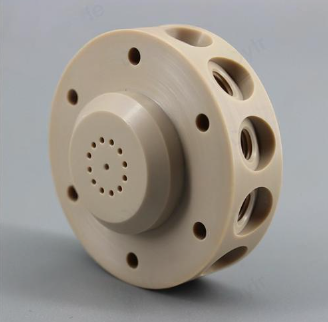
Climb Milling / Conventional Milling Service | Precision CNC Plastic Machining
Home/Products/CNC machining/Milling/Climb Milling / Conventional Milling Service | Precision CNC Plastic Machining Climb Milling and Conventional Milling are two essential CNC machining…
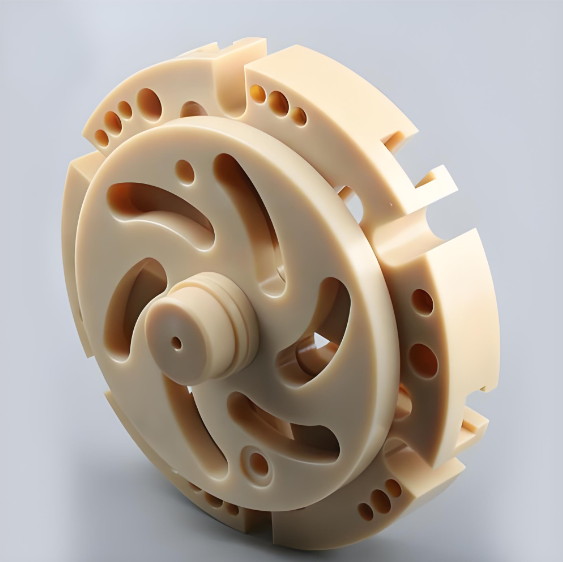
CNC Plastic Milling Services for Custom Machined Parts
Home/Products/CNC machining/Milling/CNC Plastic Milling Services for Custom Machined Parts Our CNC plastic milling service produces custom machined plastic parts with accurate features,…
Is this process a fit for your part?
Send your drawing, material, quantity, finish and application requirements for a manufacturing review.