Technical Capability & RFQ
CNC Plastic Machining Coolant Application Services
Discuss This PartCapability decision data
Technical fit for Coolant strategy for plastic machining
Use this capability summary to decide whether the process fits the part before discussing tooling, lead time or price.
- Best fit
- Plastic machining operations where heat, chip evacuation or surface damage cannot be controlled by dry cutting alone.
- Design focus
- Material compatibility, contamination limits, cleaning, recirculation and the actual cutting operation determine the coolant approach.
- Material direction
- Some plastics absorb fluids, stress-crack or change dimensions, so coolant compatibility must be checked by grade.
- Volume and cost logic
- Coolant can stabilize cutting but adds fluid management, cleaning and disposal requirements.
- Inspection focus
- Inspect swelling, staining, cracking, residue, dimensional change, surface and downstream bonding compatibility.
- Compare against
- Compare air blast, mist, flood coolant and optimized dry machining for the specific polymer and feature.
Product Description
Coolant application is a critical process in precision plastic machining used to reduce heat buildup, prevent thermal deformation, and improve machining quality. Engineering plastics are highly sensitive to excessive heat during CNC cutting, drilling, milling, and turning operations. Proper coolant control helps maintain dimensional stability, surface quality, and tool life. As a professional plastic parts manufacturer, we provide optimized coolant-assisted plastic machining solutions for high-precision industrial components, custom engineering parts, and complex plastic assemblies. Whether you require non-standard plastic machining or small-batch plastic parts customization, we ensure stable machining performance and reliable product quality.
Advantages of Coolant Application in Plastic Machining
- Prevents Thermal Deformation
Reduces heat buildup that can cause warping, melting, or dimensional instability. - Improves Surface Finish
Maintains cleaner cutting conditions for smoother and more accurate surfaces. - Extends Tool Life
Reduces cutter wear and friction during high-speed machining operations. - Enhances Dimensional Accuracy
Stable machining temperatures improve tolerance consistency. - Reduces Material Stress
Helps prevent cracking, internal stress, and edge burning on sensitive plastics.
Our Coolant-Assisted Machining Process
Material & Heat Sensitivity Evaluation
We analyze the thermal properties of the plastic material to determine the optimal cooling strategy and machining parameters.
Precision Coolant Control
Appropriate coolant flow, pressure, and application methods are selected based on machining type and component geometry.
CNC Machining Operations
Coolant-assisted milling, drilling, turning, or boring operations are performed to minimize heat generation and maintain dimensional stability.
Surface & Dimensional Inspection
Finished components are inspected for thermal deformation, surface quality, and tolerance consistency.
Common Cooling Methods
| Cooling Method | Key Benefits | Typical Applications |
|---|---|---|
| Flood Cooling | Maximum heat removal | Heavy milling and turning |
| Mist Cooling | Reduced fluid usage | Precision finishing operations |
| Air Cooling | Clean machining environment | Sensitive plastics and optical parts |
Common Plastic Materials Requiring Coolant Control
| Material | Heat Sensitivity | Typical Applications |
|---|---|---|
| Acrylic (PMMA) | High | Optical panels and display parts |
| Polycarbonate (PC) | Medium to high | Electronic housings |
| POM (Acetal) | Medium | Precision mechanical components |
| Nylon (PA) | Medium | Industrial gears and bushings |
| PEEK | High-performance machining | Aerospace and medical components |
Industry Applications
- Precision CNC Plastic Components
High-accuracy industrial parts requiring stable machining conditions. - Optical & Transparent Plastic Parts
Reduced heat marks and improved surface clarity for acrylic and PC components. - Medical & Electronic Components
Tight-tolerance plastic parts with minimal thermal distortion. - Industrial Machinery Components
Precision-machined engineering plastics for automation and motion systems.
Quality Control & Precision Manufacturing
- Temperature Monitoring
Machining temperatures are controlled to prevent overheating and dimensional instability. - Surface Quality Inspection
Components are checked for heat marks, burrs, melting, or surface defects. - Tool Wear Management
Optimized cooling improves tool performance and machining consistency. - Precision Dimensional Verification
Advanced measuring systems ensure stable tolerances after machining.
Cost Optimization & Production Efficiency
- Reduced Scrap Rate
Thermal protection minimizes material damage and machining defects. - Longer Tool Life
Lower cutting temperatures reduce tooling replacement frequency. - Improved Machining Speed
Stable cooling allows higher cutting efficiency while maintaining quality. - Reduced Secondary Finishing
Better surface quality lowers polishing and rework requirements.
Why Choose Us
As an experienced plastic parts manufacturer, we specialize in coolant-assisted CNC plastic machining, non-standard plastic machining, and small-batch plastic parts customization. From machining parameter optimization and coolant control to final inspection and finishing, we provide complete solutions for high-precision engineering plastic components.
Send us your drawings or machining requirements today for a free engineering evaluation and custom CNC cooling solution consultation.
FAQ: Coolant Application Service for Precision Plastic Machining
Why is coolant management important for precision plastic machining?
Plastic has much lower thermal conductivity than metal, meaning heat from cutting accumulates at the tool-chip interface rather than conducting away. Excessive heat causes the plastic to soften, smear, or leave a damaged surface layer that changes the effective dimension. Coolant or air blast removes heat from the cut zone and maintains consistent plastic properties throughout the machining operation.
What types of coolant are used in plastic machining?
Compressed air blast is the most common cooling method—it removes chips and dissipates heat without leaving residue or causing material swelling. Water-soluble coolant (flood coolant) is used when air alone is insufficient, but some hygroscopic plastics (nylon, PC) can absorb moisture from water-based coolants, causing dimensional change after machining.
Can coolant cause damage to plastic parts during machining?
Yes. Water-based coolants can cause moisture absorption swelling in hygroscopic resins like nylon, acetal, and PC, changing dimensions after machining. Aggressive cutting fluid chemistry can also cause stress cracking in PC and ABS. We evaluate coolant compatibility with the material and apply dry machining or air blast when moisture sensitivity is a concern.
How does coolant strategy affect surface finish on machined plastics?
Proper cooling allows faster cutting speeds without surface burning or smearing, which actually improves surface finish. Insufficient cooling at high speeds produces a degraded surface layer that appears discolored or has a different texture than the bulk material. Matched cooling and cutting parameters produce the cleanest surfaces and most consistent dimensions.
How do you decide between air cooling, mist cooling, and flood cooling for a specific plastic?
We review the material’s moisture sensitivity, thermal properties, and surface finish requirement, then match the cooling strategy to these constraints. Air blast is the default for most engineering plastics. Mist is used when thermal load is high but moisture sensitivity limits flood coolant. Flood coolant is reserved for thermally stable, non-hygroscopic materials in high-material-removal operations.
Related products: Climb Milling / Conventional Milling Service | Precision CNC Plastic Machining, External Turning Service | Precision CNC Plastic Turning, Plastic Extrusion Services for Pipes, Profiles, and Industrial Applications, Plastic Fiber Extrusion & Spinning Services for Packaging and Agricultural Applications, Standard Compression Molding Service | High-Performance Thermoset Components.
Technical Parameters
| Parameter | Typical Value / Range |
|---|---|
| Process Type | Coolant-Assisted CNC Machining |
| Cooling Methods | Flood Cooling / Mist Cooling / Air Cooling |
| Supported Materials | POM, PA, ABS, Acrylic, PC, PTFE, PEEK, PEI |
| Coolant Type | Water-Based / Oil-Free / Specialized Plastic Machining Coolant |
| Operating Temperature Control | Stable low-heat machining |
| Surface Roughness Improvement | Up to Ra 0.4 – 1.6 μm |
| Machining Accuracy | ±0.01 mm – ±0.05 mm |
| Spindle Speed Range | 3,000 – 24,000 RPM |
| MOQ | Prototype to mass production |
| Secondary Services | Milling, Turning, Drilling, Polishing |
| Note | Coolant selection depends on plastic material, cutting speed, machining depth, and surface finish requirements. |
Samples
Related Manufacturing Capabilities
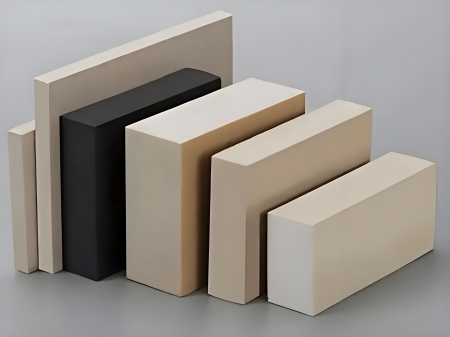
Plastic Annealing Service | Stress Relief & Dimensional Stabilization for Plastic Parts
Home/Products/CNC machining/Special Treatments/Plastic Annealing Service | Stress Relief & Dimensional Stabilization for Plastic Parts Plastic Annealing is a controlled heat treatment process…
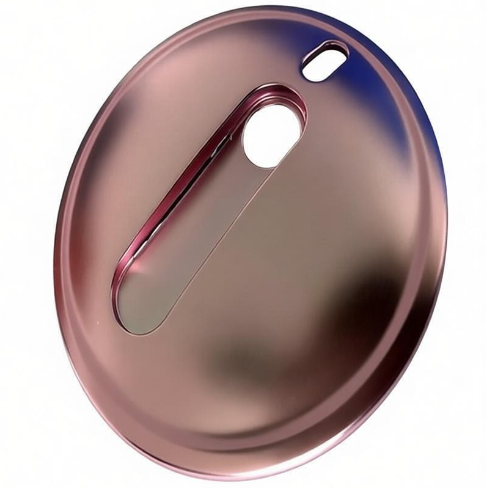
Plastic Surface Finishing & Assembly Services
Home/Products/CNC machining/Plastic Surface Finishing & Assembly Services Our Plastic Surface Finishing and Assembly Services provide complete post-processing solutions for custom plastic components…
Plastic Joining and Welding Services
Home/Products/CNC machining/Plastic Joining and Welding Services Our Plastic Joining Services provide reliable and high-precision assembly solutions for a wide range of custom…
Is this process a fit for your part?
Send your drawing, material, quantity, finish and application requirements for a manufacturing review.