Industry News Archive
Formlabs Expands Industrial SLS Lineup with the $84,999 Fuse X1 3D Printer
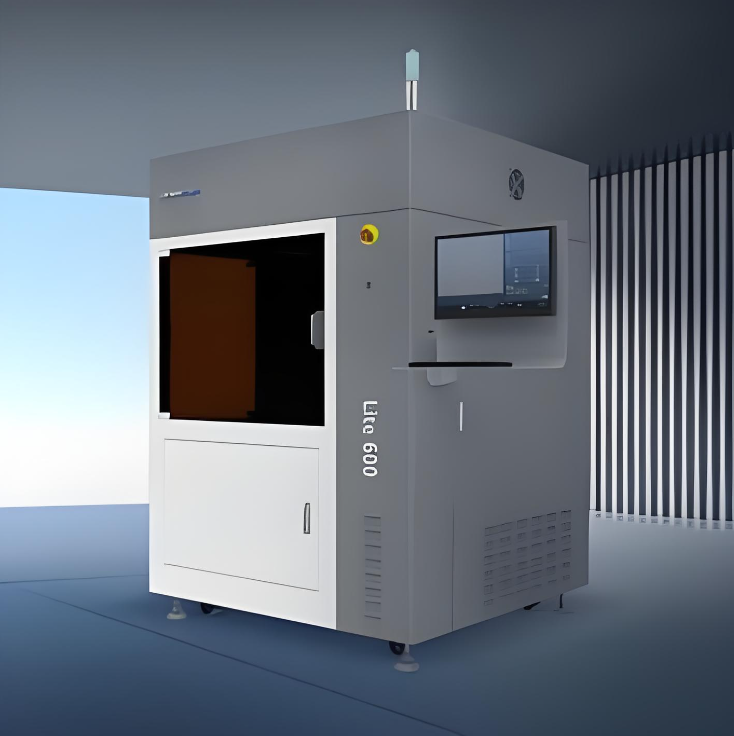
Formlabs has introduced the Fuse X1, a new selective laser sintering (SLS) 3D printer priced at $84,999, marking a significant expansion of its bench-top industrial additive manufacturing portfolio. The system builds on the company’s established Fuse 1 platform, targeting engineers and manufacturers who need reliable, high-throughput production of functional nylon parts without outsourcing to service bureaus.
Advanced SLS Capabilities for In-House Production
SLS technology creates durable, complex geometries by fusing nylon powder layer by layer with a laser. With the Fuse X1, Formlabs aims to bridge the gap between desktop prototyping and full-scale industrial manufacturing. The printer is designed to fit into engineering labs and small factories, offering a compact footprint while delivering production-grade output. Users can expect enhanced part consistency and simplified post-processing, thanks to integrated workflow improvements that streamline powder handling and recycling.
The Fuse X1 arrives as demand grows for agile, in-house manufacturing solutions that reduce lead times and protect intellectual property. By making SLS more accessible, Formlabs enables companies to iterate faster on design and produce end-use parts without the constraints of traditional tooling. This shift complements existing rapid prototyping services, including 3D Printing Services for Rapid Prototyping and Custom Plastic Parts, which many businesses use to bridge the gap between digital models and physical components.
Key Features of the Fuse X1
The Fuse X1 introduces several improvements over its predecessor, enhancing both performance and usability. While exact specifications were not detailed in the announcement, the following enhancements are expected from the next-generation system:
- An expanded build chamber that accommodates larger single parts or higher volumes of smaller components
- Improved laser scanning speed for faster print times without sacrificing surface quality
- Broader material compatibility, including reinforced and flexible nylon powders for diverse applications
- Refined temperature control that reduces warping and improves dimensional accuracy across the build area
- Automated powder management features that minimize manual intervention and material waste
These capabilities position the Fuse X1 as a versatile tool for producing functional prototypes, manufacturing aids, and low-volume end-use parts across multiple industries, from automotive to healthcare.
The $84,999 price point places the Fuse X1 above the original Fuse 1 but well below traditional industrial SLS machines, appealing to mid-sized companies that want to bring polymer printing in-house. Formlabs has not yet disclosed a specific ship date, but early customer deliveries are anticipated in the coming months.
Why This Matters
The Fuse X1 further lowers the barrier to industrial SLS printing, a sector historically dominated by expensive, large-format systems. By blending compact design with professional throughput, Formlabs helps mid-tier manufacturers compete against larger players, accelerating the shift toward distributed production and digital supply chains.
FAQ
What is the price of the Formlabs Fuse X1?
The Formlabs Fuse X1 is priced at $84,999. This positions it as an accessible industrial SLS solution compared to traditional machines that often cost several hundred thousand dollars, making it suitable for engineering departments and small to mid-sized production facilities.
How does the Fuse X1 differ from the original Fuse 1?
While the Fuse 1 established Formlabs in the benchtop SLS market, the Fuse X1 is designed as a higher-performance upgrade. It is expected to feature a larger build volume, faster printing, improved thermal management, and enhanced material compatibility, though official comparisons are pending.
What materials can the Fuse X1 print?
The Fuse X1 is compatible with nylon-based powders, including standard, reinforced, and flexible variants. These materials are widely used for functional prototypes, end-use parts, and manufacturing fixtures requiring durability, heat resistance, or impact strength.
What industries will benefit most from the Fuse X1?
Industries such as automotive, aerospace, consumer products, and medical device manufacturing stand to benefit. The printer’s ability to produce robust, complex nylon parts in-house supports rapid design iterations, custom tooling, and low-volume production without the cost and lead time of external suppliers.
Sources
Source: "3D Printing" – Google News