Industry News Archive
Injection Molding Expert Ryan Eggleston Weighs Plastic vs. Metal Parts in HelloNation Feature
Ryan Eggleston, an injection molding professional from Grand Rapids, Michigan, recently offered his perspective on the timeless manufacturing choice between plastic and metal components. Appearing in a segment produced by HelloNation and reported by Yahoo Finance, Eggleston addressed the critical considerations that drive material selection across various industries.
The Role of Injection Molding in Modern Manufacturing
Injection molding stands as a cornerstone of high-volume production, capable of delivering intricate parts with remarkable consistency. The process melts thermoplastic pellets and forces the material into precisely crafted molds, allowing for complex geometries and rapid cycle times. Eggleston noted that the method’s efficiency makes it a go-to solution for sectors ranging from medical devices to consumer electronics.
Manufacturers often turn to Standard Injection Molding Services for High-Precision Plastic Parts when tight tolerances and repeatability are non-negotiable. The technology has matured over decades, incorporating automation and advanced simulation to minimize waste and optimize part quality.
Benefits of Plastic Parts Over Metal
Eggleston highlighted weight reduction as a primary advantage of plastic over metal. In automotive and aerospace applications, lighter components contribute directly to fuel efficiency and lower emissions. Plastics also offer inherent corrosion resistance, eliminating the need for protective coatings that metals often require.
Cost savings extend beyond raw materials. Plastic parts can be formed in a single step, integrating multiple features that would demand separate assembly steps with metal. The flexibility of polymers allows for snap-fits, living hinges, and integrated color, slashing secondary finishing operations.
When Metal Remains the Preferred Choice
For applications demanding extreme temperature tolerance or structural load-bearing capacity, metals still reign. Eggleston explained that steel and aluminum alloys maintain their integrity under conditions that would soften or degrade most thermoplastics. Industrial machinery, engine components, and heavy-load fasteners often cannot compromise on metal’s strength.
Dimensional stability over wide temperature ranges and long-term fatigue resistance are additional factors that keep metal in the mix. Manufacturers frequently weigh these mechanical properties against the design freedom and cost advantages of plastics before committing to a material.
Shifting Dynamics in Material Selection
The conversation touched on sustainability pressures reshaping the industry. Recyclability and the carbon footprint of raw material extraction are prompting engineers to reconsider life-cycle impacts. Eggleston pointed to bio-based plastics and high-performance composites as areas where the gap between plastic and metal performance may narrow.
Global supply chain volatility has also influenced decisions, with some producers pivoting to locally sourced plastic resin to avoid metal shortages. This trend, combined with advances in polymer science, suggests that the plastic-versus-metal calculus will keep evolving.
The discussion left open the question of whether future hybrid components, combining plastic matrices with metal reinforcements, might become the new standard, challenging the traditional binary choice.
Why This Matters
Eggleston’s insights underscore a fundamental tension in modern manufacturing: the drive for lighter, cheaper, and corrosion-resistant plastic parts versus metal’s unmatched durability and thermal performance. As sustainability concerns and material innovations reshape the landscape, this debate influences supply chains, product design, and competitive strategy across automotive, aerospace, and consumer goods industries.
FAQ
Why is plastic often chosen over metal in injection molding?
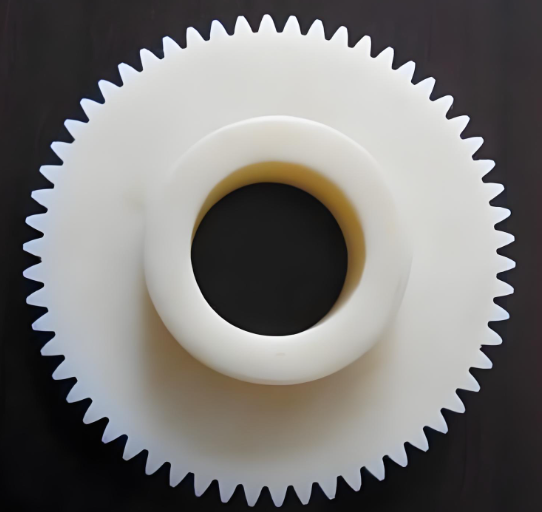
Plastic parts are significantly lighter, do not rust, and can be produced in complex shapes without secondary finishing. They also allow design features like snap-fits and living hinges, which reduce assembly time and overall costs.
How does metal compare to plastic in terms of durability?
Metals such as steel and aluminum maintain strength at high temperatures and resist deformation under sustained loads. They tend to have longer fatigue life and better dimensional stability in extreme environments compared to most thermoplastics.
What industries commonly use plastic injection molded parts?
Automotive, medical devices, consumer electronics, packaging, and aerospace all rely heavily on injection molded plastics. The process suits high-volume manufacturing where lightweight, precision, and cost efficiency are critical.
What advancements are influencing material selection in manufacturing?
Bio‑based and reinforced polymers, improved recycling technologies, and predictive simulation software are expanding the performance envelope of plastics. Supply chain dynamics and carbon‑footprint considerations are also pushing engineers toward more sustainable material choices.