Technical Capability & RFQ
Extrusion Services | Tube, Film and Sheet Manufacturing
Discuss This PartCapability decision data
Technical fit for Plastic profile extrusion
Use this capability summary to decide whether the process fits the part before discussing tooling, lead time or price.
- Best fit
- Continuous profiles, tubes, seals and channels with a consistent cross-section.
- Design focus
- Cross-section balance, wall consistency, die swell, cooling, puller control and cut length shape the design.
- Material direction
- Rigid and flexible thermoplastics are selected for weathering, chemical, temperature, stiffness and sealing needs.
- Volume and cost logic
- Die and line setup favor repeat lengths; material yield, line speed and downstream operations drive unit cost.
- Inspection focus
- Check cross-sectional dimensions, straightness, twist, surface, color, cut length and functional fit.
- Compare against
- Compare with injection molding for discrete complex parts and CNC machining for short lengths or early samples.
Product Description
Plastic Extrusion Service | Pipes, Films & Sheet Manufacturing
Intro Paragraph:
Plastic extrusion is one of the most efficient manufacturing methods for producing continuous plastic profiles, including pipes, films, sheets, tubes, and custom-shaped components. As an experienced plastic parts manufacturer, we provide reliable custom plastic extrusion solutions for industrial, commercial, and consumer applications. Whether you need small-batch plastic parts customization or large-scale production, our extrusion process delivers consistent quality, stable dimensions, and cost-effective manufacturing.
Advantages of Plastic Extrusion
- Continuous High-Speed Production: Ideal for long-length plastic products with stable cross-sectional shapes.
- Cost-Effective Manufacturing: Lower tooling and production costs compared to many molding methods.
- Wide Material Compatibility: Supports PVC, PE, PP, ABS, PC, PET, TPU, and other engineering plastics.
- Flexible Product Design: Produce pipes, films, sheets, tubes, channels, trims, and custom extrusion profiles.
- Consistent Quality: Automated extrusion lines ensure stable dimensions and smooth surface finishes.
Our Plastic Extrusion Process
- Material Selection & Engineering Support
We help customers select the right plastic material based on strength, flexibility, UV resistance, chemical exposure, or temperature requirements. - Extrusion Die Design
Custom tooling is developed to ensure accurate profile dimensions and stable production performance. - Extrusion Production
Plastic resin is heated and continuously formed through a precision extrusion die to create pipes, films, sheets, or custom profiles. - Cooling & Calibration
Controlled cooling systems maintain dimensional accuracy and reduce deformation or shrinkage. - Cutting & Finishing
Products are cut to length and can include additional finishing services such as punching, drilling, or printing.
Common Materials for Extrusion
| Material | Key Advantages | Typical Applications |
|---|---|---|
| PVC | Chemical resistance, low cost | Pipes, cable covers |
| PE | Flexible, moisture resistant | Packaging film, tubing |
| PP | Lightweight, heat resistant | Industrial sheets |
| ABS | Strong impact resistance | Structural profiles |
| PC | High transparency, durable | Protective covers |
| TPU | Flexible and wear-resistant | Soft tubing, seals |
Industry Applications
- Pipe Manufacturing
Water pipes, drainage systems, protective tubing, and industrial fluid transport solutions. - Plastic Film Production
Packaging film, protective film, agricultural film, and flexible industrial materials. - Plastic Sheet Fabrication
Thermoforming sheets, machine covers, display panels, and industrial protective boards. - Custom Extruded Profiles
Edge trims, sealing strips, channels, and specialty industrial components.
Cost Optimization & Production Efficiency
- Continuous Production Reduces Labor Costs
Extrusion supports high-volume output with minimal downtime. - Optimized Material Usage
Efficient resin flow reduces waste and improves overall production efficiency. - Custom Profile Integration
Complex features can be integrated directly into the extrusion profile, reducing secondary assembly steps. - Flexible Batch Sizes
Supports both prototype development and high-volume manufacturing.
Why Choose Us
As a trusted plastic parts manufacturer, we specialize in custom plastic extrusion, non-standard plastic processing, and small-batch plastic parts customization. From engineering support and material selection to tooling and mass production, we provide complete extrusion manufacturing solutions tailored to your application needs.
Send us your drawings or specifications today for a free project evaluation and extrusion manufacturing consultation.
FAQ: Extrusion Services (Tube, Film and Sheet Manufacturing)
What is the difference between extruded tube and extruded pipe in plastic terms?
Pipe typically refers to pressure-rated cross-sections for fluid conveyance, with dimensional standards tied to wall thickness-to-OD ratio. Tube refers to precision-drawn stock with controlled OD and ID for mechanical use, such as structural spacers, guides, or low-pressure fluid systems. We produce to either classification based on your specification.
How is plastic film extrusion different from sheet extrusion?
Film extrusion typically refers to products under about 0.25 mm thick, often produced by blown film (bubble extrusion) or cast film (slot die onto a chill roll). Sheet extrusion refers to thicker gauges from about 0.25 mm to several millimeters, produced by flat die extrusion with polishing roll stacks.
Can extruded film be produced in multi-layer configurations?
Yes. Co-extrusion with multiple extruder heads allows barrier, sealing, and structural layers to be combined into a single film. This is common for food packaging films, medical packaging, and agricultural covers. Layer count, thickness distribution, and material compatibility are reviewed during die design.
What surface finish is achievable on extruded plastic sheet?
Polish roll stacks produce glossy or matte surfaces depending on roll finish. Embossed surfaces are produced by engraved rolls. Surface quality depends on melt temperature, roll temperature, and pulling speed.
How are custom widths and lengths handled for extruded sheet?
Sheet is extruded at a fixed width determined by the die, then slit to custom widths on rewinders or slitting equipment. Length is cut on inline or offline equipment. We discuss target width, thickness, and length or coil weight requirements as part of the order specification.
Related products: Plastic Fiber Extrusion & Spinning Services for Packaging and Agricultural Applications, Co-Extrusion Service | Multi-Layer Plastic Extrusion Solutions, Injection Stretch Blow Molding Service | High-Strength PET Bottle Manufacturing, Multilayer Blow Molding Service | High-Barrier Plastic Packaging Solutions, Thermoforming & Vacuum Forming Services for Packaging and Industrial Applications.
Technical Parameters
| Parameter | Typical Value / Range |
|---|---|
| Process Type | Single-Screw / Twin-Screw Extrusion |
| Supported Materials | PVC, PE, PP, ABS, PET, PC, TPU |
| Pipe Diameter Range | 5 mm – 300 mm |
| Sheet Thickness Range | 0.3 mm – 20 mm |
| Film Thickness Range | 0.01 mm – 2 mm |
| Dimensional Tolerance | ±0.05 mm – ±0.2 mm |
| Maximum Extrusion Width | Up to 2000 mm |
| Production Speed | 1–50 m/min |
| Surface Finish Options | Glossy, Matte, Textured |
| MOQ | Small-batch to mass production |
| Secondary Operations | Cutting, Drilling, Printing, Welding |
| Note | Specifications may vary depending on material type, product geometry, and extrusion tooling design. |
Samples
Related Manufacturing Capabilities
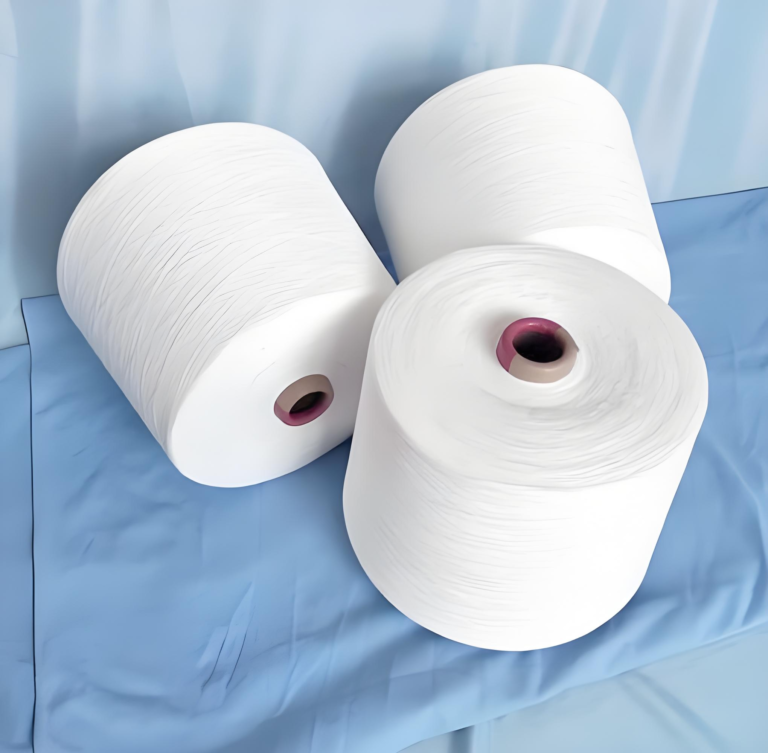
Fiber Spinning Service | Continuous & Functional Plastic Fibers
Home/Products/Plastic molding/Extrusion Molding/Fiber Spinning Service | Continuous & Functional Plastic Fibers Fiber Spinning is a specialized plastic processing method that transforms molten…
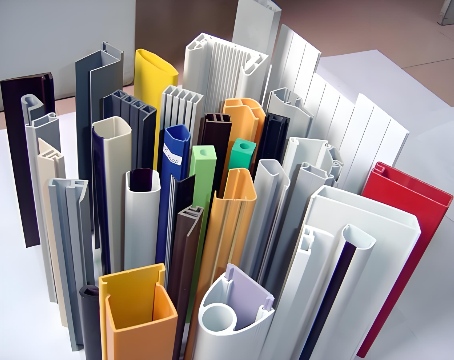
Co-Extrusion Service | Multi-Layer Plastic Extrusion Solutions
Home/Products/Plastic molding/Extrusion Molding/Co-extrusion/Co-Extrusion Service | Multi-Layer Plastic Extrusion Solutions Co-Extrusion Service | Multi-Layer Plastic Extrusion Solutions Intro Paragraph:Co-extrusion is an advanced plastic…
Is this process a fit for your part?
Send your drawing, material, quantity, finish and application requirements for a manufacturing review.