Technical Capability & RFQ
Co-Extrusion Service | Multi-Layer Plastic Extrusion Solutions
Discuss This PartCapability decision data
Technical fit for Plastic co-extrusion
Use this capability summary to decide whether the process fits the part before discussing tooling, lead time or price.
- Best fit
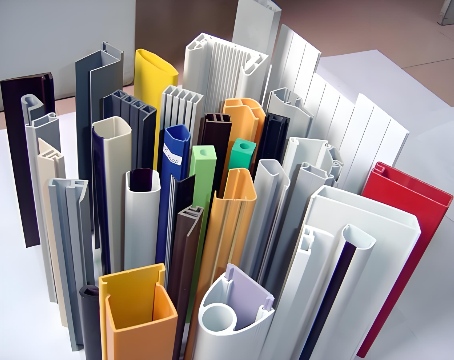
- Continuous profiles that need two or more materials, colors or functional layers in one cross-section.
- Design focus
- Layer arrangement, die balance, melt compatibility, adhesion, cooling and downstream sizing drive feasibility.
- Material direction
- Resin pairs require compatible processing windows and interface behavior; tie layers may be needed.
- Volume and cost logic
- Die and line setup favor repeat lengths; integrating layers can remove secondary assembly or coating.
- Inspection focus
- Monitor layer thickness, bond strength, profile dimensions, surface defects, color boundaries and curl.
- Compare against
- Compare with single-material extrusion plus lamination, coating or mechanical assembly.
Product Description
Co-Extrusion Service | Multi-Layer Plastic Extrusion Solutions
Intro Paragraph:
Co-extrusion is an advanced plastic extrusion process that combines two or more materials into a single multi-layer product. This technology improves product performance by integrating different material properties such as strength, flexibility, barrier protection, UV resistance, or surface appearance. As a professional plastic parts manufacturer, we provide high-quality custom co-extrusion solutions for pipes, sheets, films, tubes, and specialty industrial profiles. Whether you require non-standard plastic extrusion or small-batch plastic parts customization, we deliver reliable manufacturing with consistent quality and fast turnaround times.
Advantages of Co-Extrusion
- Multi-Layer Functional Design
Combine different plastic materials into one product to improve strength, sealing, insulation, or durability. - Material Cost Optimization
Use premium materials only where necessary while reducing overall raw material costs. - Enhanced Surface Performance
Add UV-resistant, scratch-resistant, or decorative outer layers without increasing total product weight. - Improved Barrier Protection
Multi-layer structures can improve moisture, gas, and chemical resistance for industrial and packaging applications. - Continuous High-Speed Production
Co-extrusion supports efficient mass production with stable dimensions and uniform layer thickness.
Our Co-Extrusion Manufacturing Process
- Material Engineering & Layer Design
We analyze product performance requirements and recommend the best material combinations for each layer. - Custom Extrusion Die Development
Precision co-extrusion tooling ensures stable layer distribution and consistent product dimensions. - Multi-Layer Extrusion Production
Multiple extruders simultaneously feed different materials into a single die to create a unified layered structure. - Cooling & Calibration
Controlled cooling systems maintain dimensional stability and prevent layer separation or deformation. - Inspection & Finishing
Products undergo dimensional inspection, adhesion testing, and surface quality checks before delivery.
Common Material Combinations
| Material Combination | Key Benefits | Typical Applications |
|---|---|---|
| PE + EVOH | Excellent oxygen barrier | Food packaging film |
| PVC + ABS | Strength and weather resistance | Construction profiles |
| PP + TPU | Rigidity with flexible surface | Industrial tubing |
| PC + UV Layer | UV protection and transparency | Outdoor panels |
| PE + Recycled Core Layer | Cost reduction | Industrial sheets |
Industry Applications
- Packaging Industry
Multi-layer films with moisture and oxygen barrier properties for food and industrial packaging. - Construction Materials
Durable co-extruded profiles for doors, windows, and protective panels. - Automotive Components
Lightweight multi-layer tubing and trim parts with improved durability and appearance. - Medical & Industrial Tubing
Flexible and chemically resistant tubing with specialized inner and outer layers. - Electrical & Cable Protection
Co-extruded insulation materials for cable management and industrial electrical systems.
Cost Optimization & Efficiency
- Reduce Material Waste
Use high-performance materials only in functional layers while using lower-cost materials internally. - Lower Assembly Costs
Integrate multiple material properties into a single extrusion process instead of secondary assembly. - Improve Production Speed
Continuous multi-layer manufacturing reduces labor and increases output efficiency. - Support Small-Batch Production
Flexible manufacturing capacity supports both prototyping and large-volume orders.
Why Choose Us
As an experienced plastic parts manufacturer, we specialize in co-extrusion manufacturing, custom plastic extrusion, and small-batch plastic parts customization. We help customers optimize product performance, reduce manufacturing costs, and accelerate production timelines through advanced multi-layer extrusion technology.
Send us your drawings or product requirements today for a free engineering evaluation and custom co-extrusion solution consultation.
FAQ: Co-Extrusion Service (Multi-Layer Plastic Extrusion)
What problems does co-extrusion solve that single-layer extrusion cannot?
Co-extrusion combines materials that individually lack the complete set of properties required: one layer provides surface hardness or UV resistance, another provides barrier performance, another provides adhesion or flexibility. A single material rarely delivers all of these at once.
How many layers can co-extruded structures include?
Commercial co-extrusion systems typically run 3 to 7 layers. Highly specialized barrier structures may use up to 11 layers. Each additional layer requires an extruder, a feed block or die layer, and compatible processing temperatures.
What are tie layers and when are they necessary?
Tie layers are adhesive polymer layers positioned between material layers that would not bond directly due to chemical incompatibility. For example, HDPE and EVOH do not adhere without a tie layer such as modified polyolefin.
How is thickness distribution between layers controlled in co-extrusion?
Each extruder’s output rate determines the proportional thickness of its layer. Layer thickness ratios are set by adjusting extruder screw speeds and verified by cross-sectional analysis of production samples.
Can co-extruded structures be recycled?
Recyclability depends on layer composition. Structures using chemically similar materials (like all-polyolefin combinations) are more recyclable. EVOH or nylon barrier layers in a polyolefin matrix complicate recycling. We can provide material composition data to support recycling compliance evaluations.
Related products: Extrusion Services | Tube, Film and Sheet Manufacturing, Plastic Fiber Extrusion & Spinning Services for Packaging and Agricultural Applications, Plastic Surface Finishing & Assembly Services, Overmolding Service | Multi-Material Plastic Parts Customization, Multi-color / Multi-material Injection Molding (Multi-shot Injection Molding), Thermoplastic Plastic Processing Services (ABS, PLA, and More).
Technical Parameters
| Parameter | Typical Value / Range |
|---|---|
| Process Type | Two-Layer / Three-Layer / Multi-Layer Co-Extrusion |
| Compatible Materials | PE, PP, PVC, ABS, PET, EVOH, TPU, PC |
| Product Types | Pipes, Films, Sheets, Tubes, Profiles |
| Layer Thickness Range | 0.02 mm – 10 mm |
| Total Product Thickness | 0.1 mm – 30 mm |
| Maximum Extrusion Width | Up to 2500 mm |
| Production Speed | 1–40 m/min |
| Dimensional Tolerance | ±0.05 mm – ±0.2 mm |
| Surface Finish | Glossy, Matte, Textured |
| Operating Temperature | -40°C to 120°C |
| MOQ | Prototype to mass production |
| Secondary Services | Cutting, Printing, Laminating, Welding |
| Note | Final specifications depend on material combinations, product geometry, and extrusion tooling design |
Samples
Related Manufacturing Capabilities
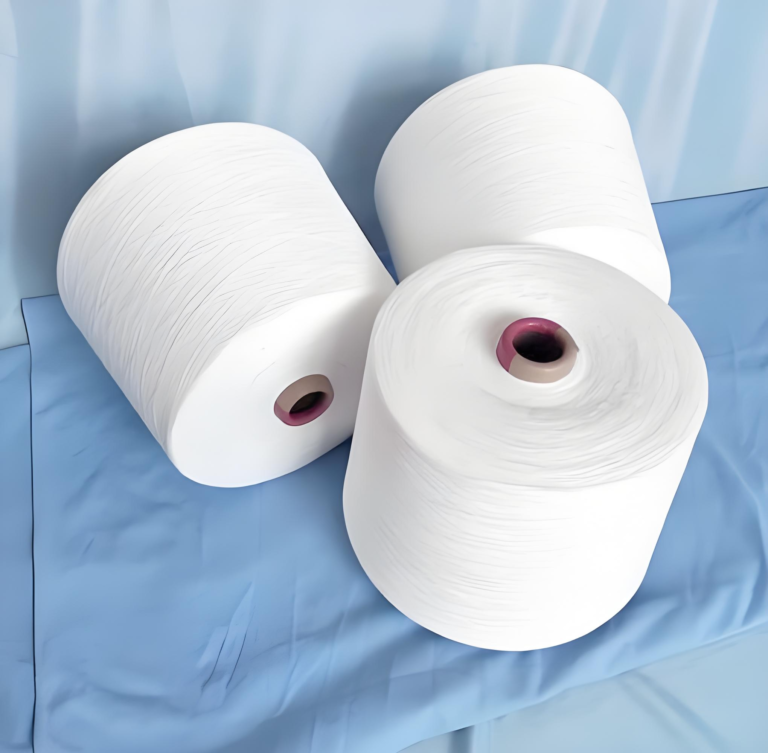
Fiber Spinning Service | Continuous & Functional Plastic Fibers
Home/Products/Plastic molding/Extrusion Molding/Fiber Spinning Service | Continuous & Functional Plastic Fibers Fiber Spinning is a specialized plastic processing method that transforms molten…
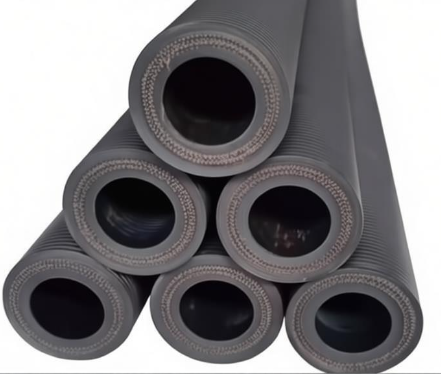
Extrusion Services | Tube, Film and Sheet Manufacturing
Home/Products/Plastic molding/Extrusion Molding/Extrusion Services | Tube, Film and Sheet Manufacturing Plastic Extrusion Service | Pipes, Films & Sheet Manufacturing Intro Paragraph:Plastic extrusion…
Is this process a fit for your part?
Send your drawing, material, quantity, finish and application requirements for a manufacturing review.