Technical Capability & RFQ
Thermoplastic Plastic Processing Services (ABS, PLA, and More)
Discuss This PartCapability decision data
Technical fit for Thermoplastic processing route selection
Use this capability summary to decide whether the process fits the part before discussing tooling, lead time or price.
- Best fit
- Early projects that have selected a thermoplastic family but still need to choose machining, printing, extrusion or molding.
- Design focus
- Geometry, wall section, tolerance, surface, joining, operating environment and expected quantity determine the route.
- Material direction
- ABS, PLA and other thermoplastics should be specified by grade and end-use performance, not only a family name.
- Volume and cost logic
- Tool-free processes suit changing or low-volume designs; tooling becomes relevant when repeat quantity stabilizes.
- Inspection focus
- Define material verification, critical dimensions, appearance, functional tests and lot documentation before quoting.
- Compare against
- Compare CNC, FDM/SLA/SLS, extrusion and injection molding against the same drawing and quantity assumptions.
Product Description
Our Thermoplastic Processing Services specialize in manufacturing high-quality plastic components using common engineering thermoplastics such as ABS, PLA, and other widely used materials. These plastics are versatile, lightweight, and easy to process, making them ideal for industrial, automotive, consumer, electronics, medical, and packaging applications.
Thermoplastics can be repeatedly melted and reshaped, allowing us to use advanced plastic molding and machining techniques—including injection molding, CNC machining, 3D printing, extrusion, and thermoforming—to produce precise, durable, and functional parts.
Our services support both prototypes and mass production, ensuring flexibility for custom designs, low-volume batches, and large-scale industrial manufacturing.
We process a wide range of thermoplastic materials, including:
- ABS (Acrylonitrile Butadiene Styrene): Durable, impact-resistant, and ideal for housings, enclosures, and consumer products.
- PLA (Polylactic Acid): Biodegradable and environmentally friendly, used for 3D printing, prototypes, and lightweight components.
- PP (Polypropylene): Chemical-resistant and lightweight, suitable for packaging and automotive parts.
- PE (Polyethylene): Flexible and durable, ideal for containers, tubing, and protective components.
- PC (Polycarbonate): High strength and heat-resistant, perfect for optical parts, protective shields, and industrial components.
- PVC (Polyvinyl Chloride): Rigid or flexible, used for piping, profiles, and insulation applications.
- POM (Acetal / Delrin): Low-friction, wear-resistant, ideal for mechanical components and precision parts.
Our thermoplastic processing services are widely applied for:
- Consumer product components
- Electronic housings and structural parts
- Automotive plastic components
- Industrial machinery parts
- Packaging and containers
- 3D printing prototypes and small-batch custom parts
Product Features
Wide Material Compatibility
We work with the most common thermoplastics, supporting both standard and high-performance plastics.
Precision Manufacturing
Advanced molding and machining techniques ensure tight tolerances, smooth surfaces, and repeatable quality.
Rapid Prototyping & Customization
Flexible processes allow for fast prototype development and customized small-batch production.
Durable & Functional Parts
Thermoplastics processed with our equipment provide long-lasting strength, chemical resistance, and dimensional stability.
Sustainable Options
We support biodegradable and environmentally friendly thermoplastics such as PLA for green manufacturing solutions.
Applications
- Consumer electronics and housings
- Automotive interior and exterior components
- Industrial equipment and machinery parts
- Medical devices and laboratory components
- Packaging, containers, and protective products
- 3D printing prototypes and customized parts
Why Choose Our Thermoplastic Processing Services?
- Expertise in ABS, PLA, and a wide range of thermoplastics
- Advanced equipment for precise molding and machining
- Fast turnaround for prototypes and small-batch production
- Consistent quality control and inspection systems
- Custom OEM and ODM solutions for specialized applications
- Sustainable processing options for eco-friendly materials
We are committed to delivering high-quality thermoplastic components that meet the performance, appearance, and functional needs of modern industries.
Contact us today to discuss your project and get a professional quote for your ABS, PLA, or other thermoplastic parts.
FAQ: Thermoplastic Plastic Processing Services (ABS, PLA, and More)
What thermoplastics does your facility process, and in which processes?
We process a broad range including ABS, ABS/PC blend, PC, HIPS, PP, PE (HDPE/LDPE/LLDPE), POM (acetal), PA6, PA66, PET, PBT, TPU, TPE, and glass or mineral filled grades. Processing capability includes injection molding, extrusion, blow molding, and thermoforming depending on the material and part geometry.
What is the main difference between ABS and PC/ABS for structural parts?
ABS offers good surface quality, paintability, and machinability at lower cost. PC/ABS blend combines the impact resistance and heat deflection of polycarbonate with the processability and surface quality of ABS. PC/ABS is preferred for structural housings that must survive drop impacts or elevated temperatures where pure ABS would fail.
How do you handle material drying requirements for hygroscopic engineering plastics?
PA, PC, PET, PBT, and other hygroscopic resins absorb moisture that must be removed before processing to prevent hydrolysis degradation and cosmetic defects. We use desiccant dryers with material-specific temperature and dew point targets. Material residence time in the dryer is monitored and documented for each run.
Can you process bio-based or recycled thermoplastics?
Yes. We have experience processing PLA (polylactic acid) for prototyping and consumer product applications. Post-consumer recycled grades of PP, PE, and ABS are available for applications where sustainability certification is valued. Recycled material lots require incoming inspection for melt flow consistency.
What is the practical service temperature range for common thermoplastics?
General-purpose ABS and HIPS: up to 70–80°C continuous use. PC and PC/ABS: up to 110–120°C. POM: up to 90–100°C. Nylon PA66: up to 130°C dry, lower in humid conditions. Glass-filled versions extend upper temperature capability by 10–30°C.
Related products: 3D Printing Services for Rapid Prototyping and Custom Plastic Parts, Injection Stretch Blow Molding Service | High-Strength PET Bottle Manufacturing, Blow Molding Services for Bottles and Industrial Containers, Multilayer Blow Molding Service | High-Barrier Plastic Packaging Solutions, Fiber Reinforced Compression Molding Service | High-Strength Structural Components.
Technical Parameters
| Item | Specification |
|---|---|
| Service Type | Thermoplastic Processing |
| Materials | ABS, PLA, PP, PE, PC, PVC, POM, PET, and others |
| Processing Methods | Injection Molding, CNC Machining, 3D Printing, Extrusion, Thermoforming |
| Processing Accuracy | ±0.01 – 0.05 mm (depending on method and material) |
| Surface Finish | Smooth, Matte, Glossy, Textured, Transparent (material dependent) |
| Maximum Workpiece Size | 1500 × 800 × 600 mm (equipment dependent) |
| Production Volume | Prototype to Mass Production |
| Lead Time | 3 – 20 Working Days |
| Inspection Equipment | Calipers, Micrometers, CMM, Surface Roughness Testers |
| OEM / ODM Service | Supported |
| Quality Standard | ISO / Customer Requirements |
Samples
Related Manufacturing Capabilities
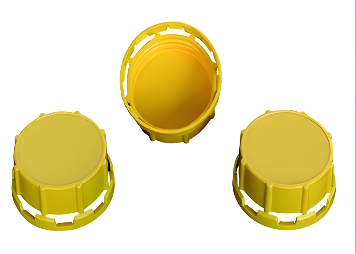
Hot Runner Injection Molding
Home/Products/Plastic molding/Injection Molding/Hot Runner Injection Molding Efficient Plastic Molding with Advanced Heated Runner Systems Hot runner injection molding is an advanced molding…
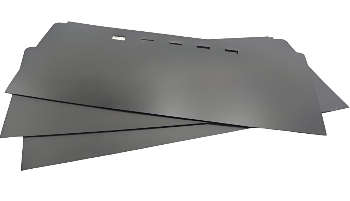
Thin-wall Injection Molding
Home/Products/Plastic molding/Injection Molding/Thin-wall Injection Molding High-speed Plastic Molding for Ultra-thin Wall Components Thin-wall injection molding is a specialized plastic molding process designed…
Reaction Injection Molding (RIM)
Home/Products/Plastic molding/Injection Molding/Reaction Injection Molding (RIM) Chemical Reaction Plastic Molding for Large and Lightweight Components Reaction Injection Molding (RIM) is an advanced…
Is this process a fit for your part?
Send your drawing, material, quantity, finish and application requirements for a manufacturing review.