
Technical Capability & RFQ
Micro Injection Molding (Micro Molding Service)
Discuss This PartCapability decision data
Technical fit for Micro injection molding
Use this capability summary to decide whether the process fits the part before discussing tooling, lead time or price.
- Best fit
- Very small thermoplastic components with fine features where repeat molding is more suitable than machining each part.
- Design focus
- Gate size, venting, feature-to-wall ratios, part handling and the relationship between shot size and machine capacity are critical.
- Material direction
- Flow behavior, moisture sensitivity and thermal stability matter as much as the nominal resin family at micro scale.
- Volume and cost logic
- Precision tooling and validation are significant; repeat quantity and automated handling usually determine viability.
- Inspection focus
- Use magnified dimensional inspection and monitor short shots, flash, gate vestige, contamination and part-handling damage.
- Compare against
- Compare with micro CNC machining or additive manufacturing for early prototypes and very low quantities.
Product Description
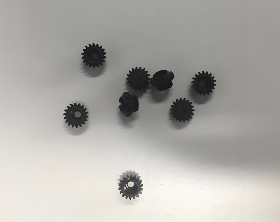
Micro injection molding is a highly specialized plastic manufacturing process designed for ultra-small and ultra-precise components, typically in the milligram weight range. It enables the production of extremely fine structures that traditional injection molding cannot achieve.
This technology is widely used in industries requiring miniaturization, high precision, and complex micro-scale geometries, such as medical devices, electronics, and precision engineering.
Key Features
- Ultra-small component manufacturing (mg-level parts)
- High-speed and high-pressure injection capability
- High-precision micro mold technology
- Excellent repeatability for mass production
- Capable of complex micro geometries
- Minimal material waste
- Stable dimensional control at micro scale
Manufacturing Process
- Micro-scale mold is designed with ultra-high precision
- Specialized micro-dosing system prepares material
- High-speed injection fills micro cavities instantly
- Rapid cooling ensures dimensional stability
- Automated ejection under microscopic tolerance control
- Strict inspection under precision measurement systems
This process requires extremely precise control of pressure, temperature, and injection timing.
Suitable Materials
Micro injection molding supports high-performance engineering polymers:
- PEEK (high-performance medical & industrial grade)
- LCP (Liquid Crystal Polymer for micro electronics)
- PA (Nylon)
- PC (Polycarbonate)
- POM (Acetal / Delrin)
- PMMA (Acrylic, micro optical applications)
- TPU (flexible micro parts)
Material selection depends on flowability, stability, and micro-forming capability.
Applications
Micro injection molding is widely used in advanced precision industries:
- Medical micro components (catheters, micro valves, connectors)
- Micro gears and micro mechanical systems
- Electronic micro connectors and terminals
- Optical micro parts and alignment structures
- Sensor micro housings
- Wearable device components
Cost Optimization & Efficiency
Although micro molding requires advanced tooling and equipment, it provides significant long-term value:
- Enables mass production of ultra-small parts
- Reduces assembly of multiple components
- Improves product reliability at micro scale
- Minimizes scrap through high repeatability
- Supports automation for large-scale production
- Reduces post-processing requirements
Why Choose Us
We provide advanced micro injection molding solutions with precision engineering capability:
- Ultra-high precision micro mold manufacturing
- Stable micro-injection process control
- Experience in medical and electronic micro components
- Advanced inspection and measurement systems
- Support for complex micro-geometry design
- High-volume production stability
- Fast prototyping and engineering support
We help customers achieve reliable micro-scale plastic components with consistent quality and tight tolerances.
FAQ: Micro Injection Molding (Micro Molding Service)
What is the minimum part size achievable with micro injection molding?
We produce parts weighing as little as 0.1 grams with feature sizes in the 0.1–0.5 mm range. The practical limit depends on the material’s melt flow behavior, the mold cavity precision, and whether the part can be handled and inspected reliably after molding.
How do you fill extremely small cavities without short shots or flash?
Micro molding requires tight process control over injection speed, melt temperature, and cavity pressure. We use precision injection units with small screw diameters and servo-controlled injection to achieve consistent fill in complex micro cavities.
What inspection methods are used for micro molded parts?
Optical measurement systems, vision inspection, and non-contact 3D scanning are standard tools. Manual contact measurement can introduce errors at this scale. We define key inspection features during DFM and use statistical sampling appropriate to the volume and application risk.
Which applications require micro injection molding?
Hearing aid components, implantable medical devices, optical connectors, microfluidic chips, watch components, and miniature electronic housings are common. The defining characteristic is that part dimensions or feature tolerances cannot be achieved with standard injection molding equipment.
Are micro molded parts as structurally reliable as conventionally molded parts?
Yes, provided the material and design are correctly matched. Resin selection is particularly important at micro scale because fiber reinforcement may not improve strength in very thin sections. We evaluate structural requirements and recommend validated material options.
Related products: Multi-color / Multi-material Injection Molding (Multi-shot Injection Molding), Injection Molding Services for Custom Plastic Parts, Precision Injection Molding (High-Precision Plastic Molding), Injection Stretch Blow Molding Service | High-Strength PET Bottle Manufacturing, Injection Blow Molding Service | High-Precision Plastic Bottle Manufacturing.
Technical Parameters
| Item | Specification |
|---|---|
| Process Type | Micro Injection Molding |
| Part Weight Range | 0.001 g – 1 g (mg-level components) |
| Tolerance Range | ±0.003 – ±0.01 mm |
| Injection System | High-speed micro-dosing system |
| Mold Accuracy | Ultra-precision CNC / EDM machining |
| Injection Pressure | 100 – 300 MPa |
| Cycle Time | 5 – 60 seconds |
| Material Compatibility | PEEK, LCP, PC, POM, PA, PMMA, TPU |
| Feature Size Capability | Micro-scale structures (<100 μm possible depending on design) |
| Production Volume | Prototype to high-volume production |
Samples
Related Manufacturing Capabilities
Hot Runner Injection Molding
Home/Products/Plastic molding/Injection Molding/Hot Runner Injection Molding Efficient Plastic Molding with Advanced Heated Runner Systems Hot runner injection molding is an advanced molding…
Thin-wall Injection Molding
Home/Products/Plastic molding/Injection Molding/Thin-wall Injection Molding High-speed Plastic Molding for Ultra-thin Wall Components Thin-wall injection molding is a specialized plastic molding process designed…
Reaction Injection Molding (RIM)
Home/Products/Plastic molding/Injection Molding/Reaction Injection Molding (RIM) Chemical Reaction Plastic Molding for Large and Lightweight Components Reaction Injection Molding (RIM) is an advanced…
Is this process a fit for your part?
Send your drawing, material, quantity, finish and application requirements for a manufacturing review.