Technical Capability & RFQ
Precision Injection Molding (High-Precision Plastic Molding)
Discuss This PartCapability decision data
Technical fit for Plastic injection molding
Use this capability summary to decide whether the process fits the part before discussing tooling, lead time or price.
- Best fit
- Repeat production of discrete thermoplastic parts with detailed features, consistent geometry and integrated functions.
- Design focus
- Draft, wall thickness, ribs, bosses, gates, ejector access, undercuts and shrinkage must be reviewed before tooling.
- Material direction
- Thermoplastic grade selection balances stiffness, impact, temperature, chemical, appearance and regulatory needs.
- Volume and cost logic
- Tooling creates an upfront cost, while repeat volume, cavity count, cycle time and automation determine part economics.
- Inspection focus
- Inspect critical dimensions, flash, sink, weld lines, warpage, short shots, color and functional assembly.
- Compare against
- Compare with CNC machining or 3D printing before tooling and with compression molding for suitable thermoset or reinforced parts.
Product Description
Precision injection molding is an advanced plastic manufacturing process designed to produce components with micron-level dimensional accuracy and extremely stable repeatability. It relies on high-performance molds, precise temperature control systems, and optimized injection parameters to ensure consistent quality in every production cycle.
This process is widely used for parts that require tight tolerances, fine geometries, and high-performance functional stability.
Key Features
- Micron-level tolerance control
- High-precision mold manufacturing
- Advanced temperature control system
- Excellent repeatability and stability
- Low deformation and shrinkage rate
- Suitable for complex and fine-detail structures
- High consistency in mass production
Manufacturing Process
- High-precision mold is designed and manufactured
- Material is carefully dried and prepared
- Controlled injection under optimized pressure and speed
- Precise temperature regulation during molding
- Cooling with strict dimensional stability control
- Automated ejection and quality inspection
This process ensures minimal variation between each produced part.
Suitable Materials
Precision injection molding supports high-performance engineering plastics:
- PC (Polycarbonate)
- PMMA (Acrylic / Plexiglass)
- PEEK (High-performance engineering plastic)
- ABS (High-precision grade)
- PA (Nylon)
- POM (Acetal / Delrin)
- PEI (Ultem)
These materials are selected based on optical clarity, strength, heat resistance, and dimensional stability.
Applications
Precision injection molding is widely used in high-end industries:
- Optical lens housings and supports
- Medical precision components
- Precision gears and micro-mechanical parts
- Electronic connectors and terminals
- Sensor housings and alignment parts
- Industrial precision assemblies
Cost Optimization & Efficiency
Although precision injection molding requires higher tooling and process control costs, it provides significant long-term advantages:
- Reduces assembly and rework costs
- Improves yield rate in mass production
- Minimizes dimensional deviation and scrap rate
- Enhances product reliability and lifespan
- Supports high-volume stable production
Why Choose Us
We provide advanced precision injection molding solutions with strict quality control:
- High-precision mold design and manufacturing
- Micron-level tolerance control capability
- Advanced thermal and pressure management systems
- Stable mass production consistency
- Optical-grade and engineering-grade material processing
- Strict inspection and quality assurance system
- Rapid prototyping and engineering support
We help customers achieve high-performance precision plastic components with stable repeatability.
FAQ: Precision Injection Molding (High-Precision Plastic Molding)
What tolerances are achievable with precision injection molding?
Precision injection molding typically targets ±0.02–0.05 mm on critical dimensions depending on the resin, part geometry, and tooling quality. Extremely tight tolerances are possible on small features with the right material and process, but must be evaluated against the plastic’s natural thermal expansion and moisture absorption behavior.
Which materials are suitable for precision plastic molding?
POM (acetal), PEEK, LCP, PPS, glass-filled nylon, and polycarbonate are commonly used for precision parts because of their dimensional stability. High-shrinkage materials like unfilled PP or flexible TPE are less suitable for critical-tolerance features.
How do you maintain consistent tolerances across large production runs?
Process stability comes from scientific molding practice: documented injection profiles, consistent melt temperature, cavity pressure monitoring, controlled cooling time, and periodic inspection sampling. We set control limits and monitor key process parameters to catch drift before it reaches specification limits.
What is the relationship between wall thickness and achievable tolerance?
Thinner walls cool faster and more uniformly, which supports tighter tolerances. Non-uniform wall thickness causes differential shrinkage and warpage. Precision molding designs should aim for consistent wall thickness and avoid abrupt thickness transitions.
Can precision molded parts replace machined plastic components?
Often yes, at much lower per-part cost in volume. The critical question is whether the injection molding process can hold the tolerances that currently require machining. We can compare both options given your drawing and annual volume, including a breakeven analysis on tooling investment versus machining cost.
Related products: Insert Injection Molding (Insert Molding Service), Standard Injection Molding Services for High-Precision Plastic Parts, Injection Stretch Blow Molding Service | High-Strength PET Bottle Manufacturing, Fiber Reinforced Compression Molding Service | High-Strength Structural Components, Multi-Component / Overmold Compression Molding Service | Functional Composite Components.
Technical Parameters
| Item | Specification |
|---|---|
| -------------------------------- | --------------------------------------------- |
| **Process Type** | Precision Injection Molding |
| **Tolerance Range** | ±0.005 – ±0.02 mm |
| **Mold Accuracy** | High-precision CNC + EDM machining |
| **Injection Pressure** | 80 – 200 MPa (adjustable) |
| **Temperature Control Accuracy** | ±1°C |
| **Cycle Time** | 20 – 120 seconds (depends on part complexity) |
| **Material Compatibility** | PC, PMMA, PEEK, POM, PA, ABS, PEI |
| **Surface Finish** | High-gloss / optical-grade / matte / textured |
| **Production Volume** | Prototype to high-volume production |
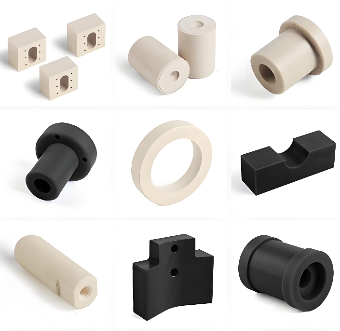
Samples
Related Manufacturing Capabilities
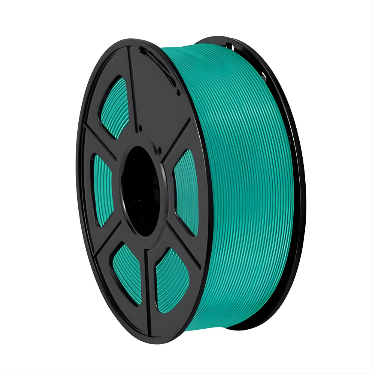
3D Printing Filament Supplier for PLA, ABS, PETG, TPU and Engineering Materials
Home/Products/3D Printing Filament Supplier for PLA, ABS, PETG, TPU and Engineering Materials We supply 3D printing filament materials for FDM printing, prototyping,…
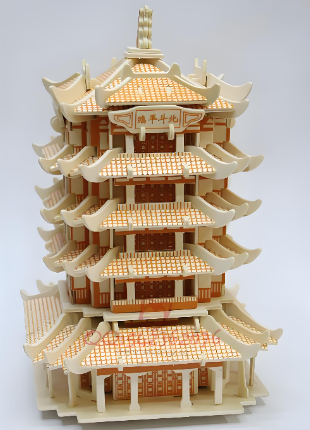
FDM 3D Printing
Home/Products/3D printing/FDM 3D Printing FDM (Fused Deposition Modeling) 3D printing is one of the most widely used additive manufacturing technologies for producing…
SLA 3D Printing Service for High-Precision Resin Prototypes
Home/Products/3D printing/SLA 3D Printing Service for High-Precision Resin Prototypes Our SLA 3D printing service produces high-detail resin prototypes with smooth surfaces, sharp…
Is this process a fit for your part?
Send your drawing, material, quantity, finish and application requirements for a manufacturing review.