Capability decision data
Technical fit for Insert injection molding
Use this capability summary to decide whether the process fits the part before discussing tooling, lead time or price.
- Best fit
- Parts that permanently combine a molded thermoplastic body with metal threads, contacts, bushings or other inserts.
- Design focus
- Insert retention, shutoff geometry, plastic flow around the insert, thermal expansion and automated or manual loading drive the design.
- Material direction
- Engineering thermoplastics are paired with compatible metal or preformed inserts after checking temperature and adhesion behavior.
- Volume and cost logic
- It removes later assembly steps but adds insert handling, tooling and process-control requirements.
- Inspection focus
- Verify insert location, pull-out or torque performance, short shots, flash, cracking and electrical isolation where relevant.
- Compare against
- Compare with heat staking, ultrasonic insertion or post-mold threaded inserts when design changes or lower volumes need more flexibility.
Product Description
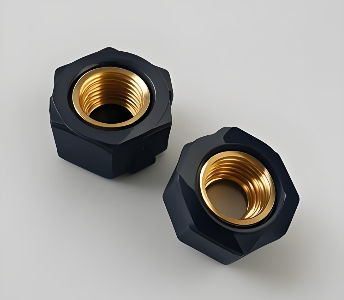
Insert injection molding is a manufacturing process where metal or other functional inserts are placed into a mold cavity before plastic injection. During molding, the plastic material flows around the insert, forming a strong, permanent, and integrated component.
This process combines the strength of metal or ceramic with the flexibility and design freedom of plastic, enabling highly durable and functional hybrid parts.
Key Advantages
Insert molding provides significant structural and production benefits:
- Creates strong plastic-to-metal bonding
- Improves overall mechanical strength
- Eliminates secondary assembly processes
- Reduces fasteners, adhesives, and manual labor
- Enhances product reliability and durability
- Enables compact and lightweight designs
- Improves production efficiency and consistency
Insert Types
We support a wide range of insert materials and structures:
- Metal threaded inserts (brass, stainless steel, aluminum)
- Copper sleeves / bushings
- Conductive electronic inserts
- Ceramic inserts for heat resistance
- Glass components for optical or sealing functions
- Custom machined metal parts
Each insert is designed for optimal mechanical locking and bonding performance.
Manufacturing Process
- Insert is precisely placed into the mold cavity
- Mold is closed and aligned with high accuracy
- Molten plastic is injected around the insert
- Material cools and forms a strong mechanical bond
- Finished part is ejected as a single integrated component
Automation systems can be used for high-volume production to ensure consistency and efficiency.
Common Material Combinations
- ABS + Brass inserts (threaded connections)
- PA (Nylon) + Metal bushings (high-strength joints)
- PC + Copper inserts (electrical conductivity)
- PBT + Metal terminals (electrical housings)
- TPU + Metal cores (flexible + rigid hybrid parts)
Material selection depends on load requirements, heat resistance, and application environment.
Industry Applications
Insert injection molding is widely used across industrial and precision industries:
- Automotive connectors and fastening systems
- Electrical terminals and housings
- Industrial mechanical fasteners
- Medical device components
- Consumer electronics structural parts
- Aerospace and high-performance assemblies
Cost Optimization & Efficiency
This process significantly improves manufacturing efficiency and reduces total cost:
- Eliminates secondary assembly operations
- Reduces need for screws, welding, or adhesives
- Improves production cycle efficiency
- Reduces part failure caused by assembly errors
- Enables automated mass production
- Lowers long-term maintenance and assembly cost
Although insert preparation requires precision, overall production cost is reduced in large-scale manufacturing.
Why Choose Us
We provide high-precision insert molding solutions with strong engineering capability:
- Precision insert placement systems
- Stable bonding and overmolding control
- Custom metal insert design support
- High-volume automated production capability
- Strict dimensional and quality inspection
- Experience in electrical, automotive, and industrial components
- Rapid prototyping and mass production support
We help customers achieve reliable metal-plastic integration with consistent quality.
FAQ: Insert Injection Molding Service
What types of inserts can be molded into plastic parts?
We commonly mold in threaded brass or stainless inserts, metal pins, bushings, magnets, electrical contacts, and encapsulated hardware. The insert material must withstand the resin temperature and pressure during injection.
How is insert position controlled during the molding cycle?
Inserts are located on precise mold pins or pockets sized to hold them during resin injection. For automated production we use robot placement; manual loading is used for lower volumes. Insert position tolerance depends on the mold design and is verified during first article inspection.
What are the advantages of insert molding compared to post-assembly installation?
Insert molding eliminates a separate assembly step, improves pull-out strength because the resin flows around the insert geometry, and reduces the risk of loose inserts in service. The tradeoff is that insert placement adds cycle time and mold maintenance attention.
Can insert molding be used with brass heat-set inserts already in a molded part?
Heat-set inserts are a post-mold operation using ultrasonic or thermal installation. Insert molding incorporates the metal during the molding cycle itself, which is different and generally stronger for high-stress fastening.
What resins work best for insert molding applications?
Rigid resins with moderate shrinkage such as ABS, PC, nylon, and POM work well. High-shrinkage resins like unfilled PP require careful design to avoid stress concentration around the insert. We review material compatibility before tooling is cut.
Related products: Precision Injection Molding (High-Precision Plastic Molding), Standard Injection Molding Services for High-Precision Plastic Parts, Thin-wall Injection Molding, Fiber Reinforced Compression Molding Service | High-Strength Structural Components.
Technical Parameters
| Category | Specification |
|---|---|
| ----------------- | ----------------------------------------------------------- |
| Process Type | Insert Injection Molding |
| Insert Materials | Brass, Stainless Steel, Copper, Ceramic, Glass |
| Plastic Materials | ABS, PC, PA, PBT, PP, TPU |
| Tolerance Control | ±0.02 – 0.05 mm (depending on part structure) |
| Bonding Type | Mechanical interlocking + thermal encapsulation |
| Production Volume | From small batch to mass production |
| Automation Level | Manual / Semi-automatic / Fully automatic systems available |
| Processing Cycle | 15 – 60 seconds (depending on part complexity) |
Samples
Related Manufacturing Capabilities
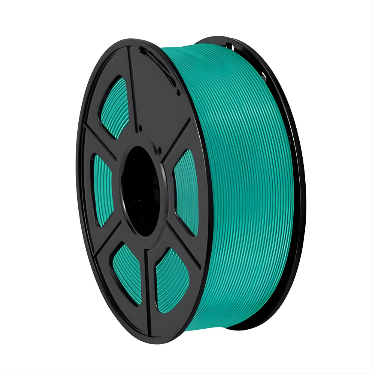
3D Printing Filament Supplier for PLA, ABS, PETG, TPU and Engineering Materials
Home/Products/3D Printing Filament Supplier for PLA, ABS, PETG, TPU and Engineering Materials We supply 3D printing filament materials for FDM printing, prototyping,…
FDM 3D Printing
Home/Products/3D printing/FDM 3D Printing FDM (Fused Deposition Modeling) 3D printing is one of the most widely used additive manufacturing technologies for producing…
SLA 3D Printing Service for High-Precision Resin Prototypes
Home/Products/3D printing/SLA 3D Printing Service for High-Precision Resin Prototypes Our SLA 3D printing service produces high-detail resin prototypes with smooth surfaces, sharp…
Is this process a fit for your part?
Send your drawing, material, quantity, finish and application requirements for a manufacturing review.