Technical Capability & RFQ
Plastic Annealing Service | Stress Relief & Dimensional Stabilization for Plastic Parts
Discuss This PartCapability decision data
Technical fit for Plastic annealing
Use this capability summary to decide whether the process fits the part before discussing tooling, lead time or price.
- Best fit
- Machined or formed plastic parts that need residual-stress reduction or improved dimensional stability before final use.
- Design focus
- Material grade, prior processing history, wall variation, support method and dimensional allowance affect the heat cycle.
- Material direction
- The time and temperature window must be selected for the specific polymer rather than copied across material families.
- Volume and cost logic
- Annealing adds handling and cycle time but can reduce later movement or cracking in suitable applications.
- Inspection focus
- Measure dimensions before and after treatment and check distortion, surface marks, cracking and moisture-sensitive behavior.
- Compare against
- Compare with rough-machining plus conditioning and finish-machining when very tight dimensional stability is required.
Product Description
Plastic Annealing is a controlled heat treatment process used to reduce internal stress in machined, molded, or fabricated plastic components. By carefully heating and slowly cooling the material, annealing improves dimensional stability, reduces cracking risks, and enhances long-term mechanical performance. As a professional plastic parts manufacturer, we provide reliable plastic annealing and stress relief services for precision engineering components, CNC machined plastic parts, and high-performance industrial applications. Whether you require non-standard plastic processing or small-batch plastic parts customization, we deliver stable quality, improved material performance, and precision-controlled processing.
Advantages of Plastic Annealing
- Reduces Internal Stress
Minimizes stress generated during machining, molding, or forming processes. - Improves Dimensional Stability
Helps prevent warping, deformation, and shrinkage after machining or assembly. - Reduces Cracking Risks
Improves long-term durability and resistance to stress cracking. - Enhances Machining Performance
Stabilized materials achieve better accuracy during secondary machining operations. - Improves Product Reliability
Ideal for precision industrial, medical, and electronic applications.
Our Plastic Annealing Process
Material Evaluation
We analyze material type, machining history, and application requirements to determine the optimal annealing cycle.
Controlled Heating
Plastic components are gradually heated to a specified temperature below the material’s melting point to relieve internal stress safely.
Heat Stabilization
Parts remain at a controlled temperature for a calculated duration to ensure uniform stress relief throughout the material.
Slow Cooling Process
Components are cooled gradually under controlled conditions to avoid thermal shock and maintain dimensional stability.
Inspection & Verification
Finished parts undergo dimensional inspection and visual quality checks to confirm stress reduction and product stability.
Common Plastic Materials for Annealing
| Material | Key Benefits of Annealing | Typical Applications |
|---|---|---|
| Acrylic (PMMA) | Reduces cracking and crazing | Optical covers, display panels |
| Polycarbonate (PC) | Improves dimensional stability | Electronic housings |
| POM (Acetal) | Minimizes warping | Precision mechanical parts |
| Nylon (PA) | Stabilizes moisture-sensitive parts | Gears and industrial components |
| PEEK | Enhances structural stability | High-performance engineering parts |
Industry Applications
- Precision CNC Machined Parts
Stress-relieved components with improved dimensional accuracy and stability. - Optical & Transparent Plastic Components
Reduced cracking and improved surface integrity for acrylic and PC parts. - Industrial & Mechanical Parts
Stabilized plastic gears, bushings, and structural components. - Electronic & Medical Components
High-reliability plastic parts requiring long-term dimensional consistency.
Quality Control & Precision Processing
- Accurate Temperature Monitoring
Precision-controlled ovens maintain stable annealing conditions. - Dimensional Stability Verification
Parts are inspected before and after processing to confirm stress reduction. - Controlled Cooling Management
Slow cooling prevents deformation and thermal cracking. - Consistent Batch Quality
Standardized annealing cycles ensure repeatable processing performance.
Cost Optimization & Production Efficiency
- Reduced Product Failure
Minimizes cracking, warping, and assembly issues after machining or molding. - Improved Secondary Machining Accuracy
Stress-relieved materials perform better during finishing operations. - Extended Product Service Life
Stabilized materials improve durability and reduce replacement costs. - Flexible Processing Capacity
Supports prototypes, small-batch production, and large-scale manufacturing.
Why Choose Us
As a trusted plastic parts manufacturer, we specialize in plastic annealing, stress relief heat treatment, non-standard plastic processing, and small-batch plastic parts customization. From material evaluation and thermal processing to inspection and finishing, we provide complete solutions for high-stability engineering plastic components.
Send us your drawings or technical requirements today for a free engineering evaluation and custom plastic annealing consultation.
FAQ: Plastic Annealing Service (Stress Relief & Dimensional Stabilization)
Why do machined plastic parts need annealing?
CNC machining removes material from extruded or molded stock, disrupting the internal stress state of the plastic. As stressed material is removed, the remaining material can warp, twist, or change dimension. Annealing—controlled heating to below the heat deflection temperature followed by slow cooling—allows internal stresses to relax, stabilizing the part geometry before final inspection or use.
Which plastics benefit most from annealing after machining?
PEEK, POM, nylon (PA), polycarbonate, acrylic (PMMA), and PTFE benefit most from post-machining annealing. These materials either have high internal stress from extrusion, are prone to moisture-induced dimensional change, or have narrow tolerance requirements where residual stress movement would cause out-of-tolerance conditions.
What temperature and time is used for annealing different plastics?
Annealing temperature is set at 10–30°C below the material’s heat deflection temperature (HDT). POM is typically annealed at 120–130°C for 2–4 hours. PEEK may require 150–200°C depending on the grade. Polycarbonate anneals at 110–125°C. Time depends on part thickness—thicker sections require longer cycles for uniform heat penetration.
Can annealing be used to relieve stresses in injection molded plastic parts?
Yes. Injection molded parts contain frozen-in stresses from rapid cooling in the mold. Annealing can stabilize dimensions, reduce warpage in thin-wall parts, and improve creep resistance for elevated-temperature applications. It is particularly useful for parts that will be used at temperatures close to the material’s service limit.
Does annealing change the mechanical properties of the plastic?
For most engineering plastics, annealing improves dimensional stability and slightly increases ductility by allowing stress-induced molecular orientation to relax. It does not typically degrade mechanical properties if the temperature and time parameters are correctly controlled. Our cycles are validated to avoid over-annealing outcomes such as deformation or discoloration.
Related products: Thin-wall Injection Molding, CNC Plastic Machining Coolant Application Services, Multi-color / Multi-material Injection Molding (Multi-shot Injection Molding), Thermosetting Molding Service | High-Performance Thermoset Components, Hot Runner Injection Molding.
Technical Parameters
| Parameter | Typical Value / Range |
|---|---|
| Process Type | Plastic Annealing / Stress Relief Heat Treatment |
| Supported Materials | Acrylic, PC, POM, Nylon, PTFE, ABS, PEI, PEEK |
| Annealing Temperature Range | 60°C – 250°C |
| Temperature Control Accuracy | ±1°C – ±3°C |
| Processing Time | 1 – 24 hours |
| Cooling Method | Controlled Slow Cooling |
| Maximum Part Size | Up to 2000 mm |
| Dimensional Stability Improvement | Significant reduction in residual stress |
| Surface Effect | Minimal surface deformation |
| MOQ | Prototype to mass production |
| Secondary Services | CNC Machining, Polishing, Assembly |
| Note | Annealing parameters vary depending on plastic material type, wall thickness, and part geometry. |
Samples
Related Manufacturing Capabilities
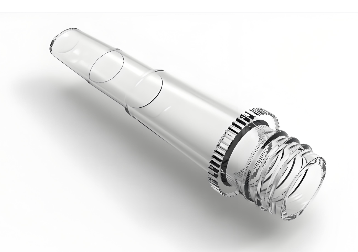
CNC Plastic Machining Coolant Application Services
Home/Products/CNC machining/Special Treatments/CNC Plastic Machining Coolant Application Services Coolant application is a critical process in precision plastic machining used to reduce heat…
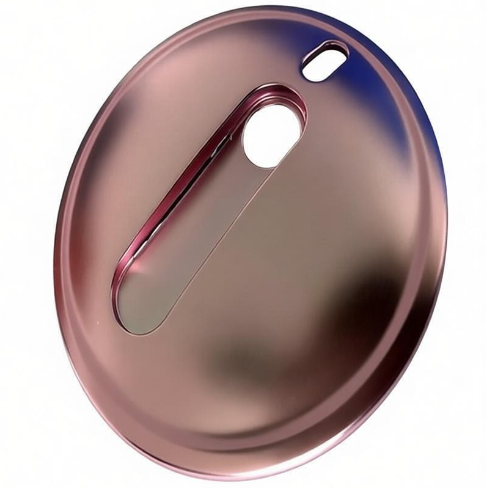
Plastic Surface Finishing & Assembly Services
Home/Products/CNC machining/Plastic Surface Finishing & Assembly Services Our Plastic Surface Finishing and Assembly Services provide complete post-processing solutions for custom plastic components…
Plastic Joining and Welding Services
Home/Products/CNC machining/Plastic Joining and Welding Services Our Plastic Joining Services provide reliable and high-precision assembly solutions for a wide range of custom…
Is this process a fit for your part?
Send your drawing, material, quantity, finish and application requirements for a manufacturing review.