Technical Capability & RFQ
Hot Runner Injection Molding
Discuss This PartCapability decision data
Technical fit for Hot-runner injection molding
Use this capability summary to decide whether the process fits the part before discussing tooling, lead time or price.
- Best fit
- Repeat injection-molded parts where runner waste, cycle efficiency or multi-cavity filling justifies a heated runner system.
- Design focus
- Gate location, thermal balance, residence time, pressure drop, color change and maintenance access shape the system.
- Material direction
- Heat-sensitive, filled or color-critical resins require runner and temperature-control choices suited to the grade.
- Volume and cost logic
- Higher mold complexity can reduce cold-runner scrap and secondary handling over sufficient repeat volume.
- Inspection focus
- Monitor gate appearance, drool, stringing, thermal degradation, cavity balance, color change and dimensional consistency.
- Compare against
- Compare with cold-runner tooling when volume, material cost or changeover frequency does not justify the added system.
Product Description
Efficient Plastic Molding with Advanced Heated Runner Systems
Hot runner injection molding is an advanced molding process that uses a heated runner system to keep plastic material in a molten state during injection. Unlike traditional cold runner systems, hot runner technology eliminates solidified runner waste, improves material utilization, and enhances production efficiency.
This process is widely used for precision plastic parts, high-volume manufacturing, and products requiring superior surface quality and consistent molding performance.
Key Features
- Heated runner system maintains molten plastic flow
- Eliminates cold runner waste and reduces material loss
- Improves production efficiency and cycle consistency
- Enhances product surface quality
- Reduces post-processing and trimming operations
- Supports complex and precision part molding
- Ideal for automated high-volume production
Manufacturing Process
- Plastic material is melted in the injection barrel
- Heated manifold and nozzles maintain molten material flow
- Molten plastic is injected directly into mold cavities
- Precise temperature control ensures stable filling
- Parts cool and solidify while runners remain molten
- Finished parts are ejected without runner scrap
This process requires advanced thermal control and precision hot runner systems.
Suitable Materials
Hot runner injection molding supports a wide range of thermoplastics:
- ABS
- PC (Polycarbonate)
- PP (Polypropylene)
- PE (Polyethylene)
- PA (Nylon)
- POM (Acetal / Delrin)
- PMMA (Acrylic)
- Engineering-grade thermoplastics
Material compatibility depends on thermal stability and flow characteristics.
Applications
Hot runner injection molding is widely used in industries requiring high efficiency and superior product quality:
- High-end consumer products
- Precision industrial components
- Automotive plastic parts
- Medical device housings
- Electronic enclosures and connectors
- Large-scale mass production products
Cost Optimization & Efficiency
Hot runner systems provide major manufacturing and cost advantages:
- Eliminates runner waste and reduces raw material consumption
- Shortens production cycle time
- Improves dimensional consistency
- Reduces secondary trimming operations
- Enhances automation capability
- Lowers long-term production cost in high-volume manufacturing
Although initial tooling cost is higher, hot runner molding significantly improves long-term production efficiency and material savings.
Why Choose Us
We provide advanced hot runner injection molding solutions with stable mass production capability:
- Precision hot runner temperature control systems
- Multi-cavity high-efficiency mold capability
- Strong engineering support for runner design optimization
- Stable high-volume manufacturing performance
- Strict dimensional and surface quality inspection
- Experience in consumer, industrial, and medical applications
- Fast prototyping and production support
We help customers achieve efficient, low-waste, and high-quality plastic molding solutions.
FAQ: Hot Runner Injection Molding
What is the main advantage of a hot runner system over a cold runner?
Hot runner systems keep resin in the runner at melt temperature between shots, eliminating the runner scrap that cold runner molds generate. In high-volume production, this reduces material waste significantly. It also allows faster cycle times because there is no runner to cool and eject.
When does a hot runner system justify the additional tooling cost?
Hot runners are typically justified for annual volumes above 50,000–100,000 pieces, parts with high material cost, or projects where runner waste would require grinding and reprocessing. For color-sensitive or optical-grade materials where regrind is not acceptable, hot runners become necessary even at lower volumes.
How are hot runner systems maintained?
Hot runner manifolds require periodic tip cleaning, nozzle inspection, and temperature controller calibration. Contamination from degraded resin is the most common service issue, which is why controlled purging during color changes or shutdowns is important. We document hot runner maintenance intervals as part of mold care records.
Can hot runner molds be used for all resins?
Most thermoplastics can be processed with hot runners. Heat-sensitive resins like PVC or some flame-retardant grades require careful temperature control to prevent degradation in the runner. Highly abrasive resins may require wear-resistant nozzle tips. We evaluate resin compatibility during the tooling design phase.
What is valve gating and when is it used in hot runner systems?
Valve gates use a physical pin to open and close the gate at controlled times during the injection cycle. This eliminates gate vestige, improves gate appearance, allows sequential fill of multi-cavity or large parts, and helps manage pressure balance in family molds. Valve gating is specified when gate appearance or pack control requirements demand it.
Related products: Micro Injection Molding (Micro Molding Service), Precision Injection Molding (High-Precision Plastic Molding), Reaction Injection Molding (RIM), Standard Injection Molding Services for High-Precision Plastic Parts, Thin-wall Injection Molding, Injection Stretch Blow Molding Service | High-Strength PET Bottle Manufacturing.
Technical Parameters
| Item | Specification |
|---|---|
| -------------------------------- | --------------------------------------- |
| **Process Type** | Hot Runner Injection Molding |
| **Runner System** | Heated manifold and nozzle system |
| **Temperature Control Accuracy** | ±1 – 2°C |
| **Injection Pressure** | 80 – 250 MPa |
| **Cycle Time** | 5 – 60 seconds |
| **Suitable Materials** | ABS, PP, PC, PA, POM, PMMA, PE |
| **Production Volume** | Medium to high-volume production |
| **Mold Type** | Multi-cavity hot runner molds available |
| **Material Waste** | Minimal (no cold runner scrap) |
| **Surface Finish** | High-gloss / precision-grade / textured |
Samples
Related Manufacturing Capabilities
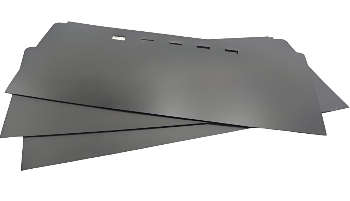
Thin-wall Injection Molding
Home/Products/Plastic molding/Injection Molding/Thin-wall Injection Molding High-speed Plastic Molding for Ultra-thin Wall Components Thin-wall injection molding is a specialized plastic molding process designed…
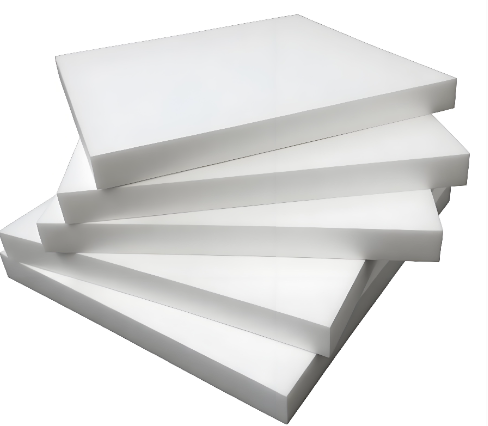
Reaction Injection Molding (RIM)
Home/Products/Plastic molding/Injection Molding/Reaction Injection Molding (RIM) Chemical Reaction Plastic Molding for Large and Lightweight Components Reaction Injection Molding (RIM) is an advanced…
Micro Injection Molding (Micro Molding Service)
Home/Products/Plastic molding/Injection Molding/Micro Injection Molding (Micro Molding Service) Micro injection molding is a highly specialized plastic manufacturing process designed for ultra-small and…
Is this process a fit for your part?
Send your drawing, material, quantity, finish and application requirements for a manufacturing review.