Technical Capability & RFQ
Multi-Component / Overmold Compression Molding Service | Functional Composite Components
Discuss This PartCapability decision data
Technical fit for Plastic overmolding
Use this capability summary to decide whether the process fits the part before discussing tooling, lead time or price.
- Best fit
- Parts that add a soft grip, seal, insulation or protective layer over a rigid molded or preformed substrate.
- Design focus
- Substrate support, mechanical interlocks, shutoffs, flow length, bond area and thermal exposure must be reviewed.
- Material direction
- The overmold and substrate need compatible processing temperatures and verified adhesion or mechanical retention.
- Volume and cost logic
- Additional tooling and handling can be offset when overmolding removes separate assembly, gaskets or finishing.
- Inspection focus
- Inspect bond, peel or pull behavior, flash, short shots, substrate distortion, coverage and cosmetic transition lines.
- Compare against
- Compare with multi-shot molding for automated repeat volume and separate bonded or mechanically assembled components.
Product Description
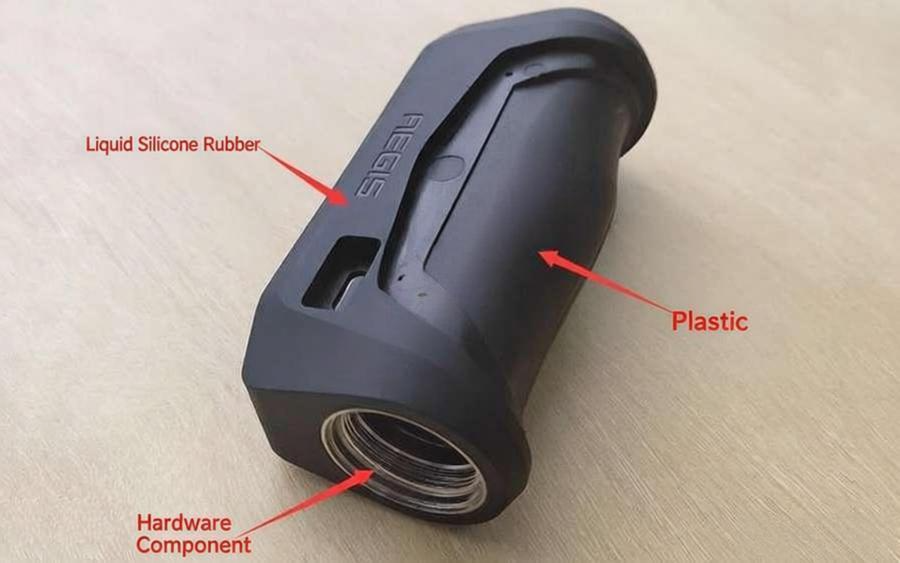
Multi-Component or Overmold Compression Molding is an advanced thermoset process that allows stacking or combining different materials within a single mold to create functional composite parts. By integrating multiple materials in one component, you can achieve combined properties such as wear resistance, electrical insulation, and flame retardancy. As a professional plastic parts manufacturer, we provide reliable custom overmold compression molding solutions for multilayer industrial components, high-performance structural parts, and customized electronic modules. Whether you need non-standard plastic molding or small-batch plastic parts customization, our process ensures high precision, consistent quality, and enhanced functionality.
Advantages of Multi-Component / Overmold Compression Molding
- Composite Material Functionality
Combine different resin types or fiber-reinforced layers for multifunctional performance. - Enhanced Mechanical & Thermal Properties
Achieve wear resistance, high strength, insulation, and flame retardancy in one part. - Complex Geometries in a Single Part
Produce multilayer or hybrid structures without additional assembly. - Customizable Multi-Layer Components
Ideal for industrial, automotive, or electronic applications requiring tailored material combinations. - Reduced Post-Processing
Integrating multiple materials during molding minimizes secondary operations.
Our Multi-Component / Overmold Compression Molding Process
Material Layer Preparation
Different thermoset resins or reinforced sheets are prepared for sequential or simultaneous molding.
Mold Loading & Layer Stacking
The first material layer is placed in the heated mold, followed by additional layers of different materials to create a composite structure.
Compression & Curing
The mold is closed under pressure to cure all materials simultaneously or sequentially, forming a functional composite part.
Cooling & Demolding
Controlled cooling ensures dimensional stability, proper adhesion between layers, and consistent surface quality.
Inspection & Finishing
Finished parts undergo dimensional checks, mechanical performance testing, and surface quality inspection. Secondary operations such as trimming, machining, or assembly are applied as needed.
Common Applications
| Component Type | Key Advantages | Typical Uses |
|---|---|---|
| Multilayer Industrial Components | Wear + heat + chemical resistance | Machinery housings, structural inserts |
| High-Performance Structural Parts | High strength + flame retardancy | Automotive brackets, load-bearing components |
| Customized Electronic Modules | Insulation + durability | Circuit housings, connectors, hybrid assemblies |
Quality Control & Precision Manufacturing
- Layer Adhesion & Bonding
Advanced process control ensures strong bonding between different material layers. - Dimensional Accuracy
Precision molds minimize shrinkage, warpage, and inter-layer distortion. - Mechanical Performance Verification
Components are tested for strength, thermal resistance, and functional integrity. - Surface & Visual Inspection
Ensures smooth, defect-free surfaces and consistent quality across batches.
Cost Optimization & Production Efficiency
- Integrated Multi-Material Production
Reduces secondary assembly steps, lowering labor and production costs. - Optimized Material Use
Strategic placement of high-performance resins reduces overall material cost. - Flexible Production Capacity
Supports prototypes, small-batch customization, and medium-scale production. - Scalable Manufacturing
Capable of producing high-quality functional composites with repeatable results.
Why Choose Us
As a professional plastic parts manufacturer, we specialize in multi-component and overmold compression molding, non-standard plastic molding, and small-batch plastic parts customization. From material engineering and mold design to production and quality inspection, we provide complete solutions for functional, high-performance composite plastic components.
Send us your drawings or specifications today for a free engineering evaluation and custom overmold compression molding consultation.
FAQ: Multi-Component / Overmold Compression Molding Service
What is the purpose of overmold compression molding compared to single-shot compression molding?
Overmold compression molding combines a pre-formed substrate with a second compound that bonds and encapsulates part of the substrate during the compression cycle. This creates integrated multi-material parts such as metal-reinforced thermoset components and rubber-to-metal bonded assemblies.
Can rubber be bonded to thermoset plastic in compression molding?
Yes. Rubber overmolding onto a thermoset substrate is used for vibration isolators, sealing inserts, and chemically resistant functional assemblies. Adhesive primers are typically applied to the substrate before molding, and the rubber compound is co-cured at the interface during the compression cycle.
How is insert position controlled in overmold compression molding?
The mold cavity includes locating features—pins, pockets, or surfaces—that hold the substrate in position during mold closure and compound flow. We verify insert position and overmold wall uniformity during first article inspection.
What is the advantage of compression overmolding over adhesive bonding for two-material assemblies?
Compression overmolding creates a chemically and mechanically integrated bond during the cure cycle, eliminating a separate adhesive application step. The interface strength is typically higher and more repeatable than adhesive joints, and the process produces no volatile adhesive waste.
What quality tests are used for overmold compression molded assemblies?
Pull-out force testing of the substrate from the overmolded material, adhesion peel tests, dimensional inspection of the overmolded boundary, and environmental exposure testing (heat, humidity, chemical) are standard validation approaches.
Related products: Fiber Reinforced Compression Molding Service | High-Strength Structural Components, Compression Molding Services for High-Strength Thermoset Plastic Parts, Custom / Specialty Rotomolding Service | Complex & Multi-Functional Hollow Components, Structural / Reinforced Rotomolding Service | High-Strength Hollow Components, Plastic Surface Finishing & Assembly Services, Fiber Spinning Service | Continuous & Functional Plastic Fibers.
Technical Parameters
| Parameter | Typical Value / Range |
|---|---|
| --------------------- | ------------------------------------------------------------------------------ |
| Process Type | Multi-Component / Overmold Compression Molding |
| Supported Materials | Phenolic (PF), Unsaturated Polyester (UP), Epoxy (EP), Fiber-Reinforced Resins |
| Maximum Part Size | Up to 400 mm x 400 mm x 150 mm |
| Wall Thickness | 2 mm – 25 mm |
| Layer Thickness | 0.5 mm – 10 mm per layer |
| Dimensional Tolerance | ±0.05 mm – ±0.3 mm |
| Operating Temperature | Up to 200°C depending on resin type |
| Surface Finish | Matte / Textured / Polished |
| Cycle Time | 3 – 15 minutes per part |
| Production Volume | Small to medium batch |
| MOQ | Prototype to medium-scale production |
| Secondary Services | Trimming, Machining, Drilling, Assembly |
Samples
Related Manufacturing Capabilities
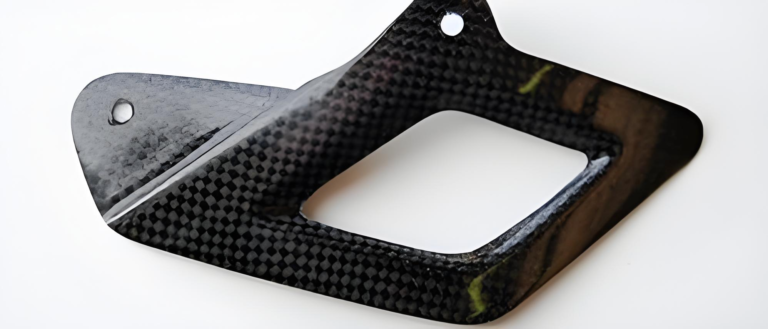
Fiber Reinforced Compression Molding Service | High-Strength Structural Components
Home/Products/Plastic molding/Compression Molding/Fiber Reinforced Compression Molding Service | High-Strength Structural Components Fiber Reinforced Compression Molding combines high-performance thermoset plastics with reinforcing fibers…
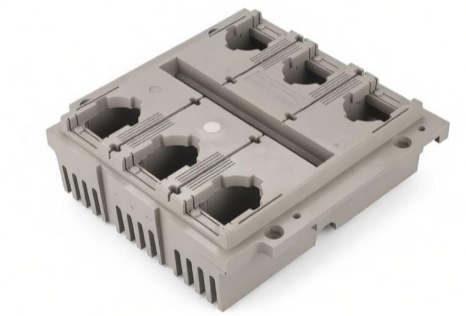
Custom Compression Molding Service | Thermoset Plastic Parts
Home/Products/Plastic molding/Compression Molding/Custom Compression Molding Service | Thermoset Plastic Parts Standard Compression Molding is a widely used thermoset plastic processing technique where…
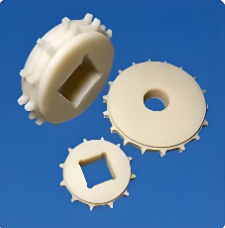
Overmolding Service | Multi-Material Plastic Parts Customization
Home/Products/Plastic molding/Injection Molding/Overmolding Service | Multi-Material Plastic Parts Customization Overmolding Service | Multi-Material Plastic Parts Customization Intro Paragraph:In plastic component manufacturing, combining…
Is this process a fit for your part?
Send your drawing, material, quantity, finish and application requirements for a manufacturing review.