Plastic Manufacturing Guide
Plastic Extrusion Process: Complete Guide to Materials, Controls, and Quality Optimization
Learn how the plastic extrusion process works, from melting raw resin to die shaping, cooling, and final cutting. This guide explains process steps, material selection, die desi...
Plastic extrusion is a high-volume, continuous manufacturing process where solid thermoplastic materials are melted, homogenized, and forced through a shaped die to create products with a consistent cross-section. Think of it like squeezing toothpaste from a tube—the material takes the shape of the opening as it exits. In industrial extrusion, the plastic is heated and pushed by a rotating screw, while the die determines the final profile. Once the extrudate leaves the die, it is cooled and solidified while maintaining its shape.
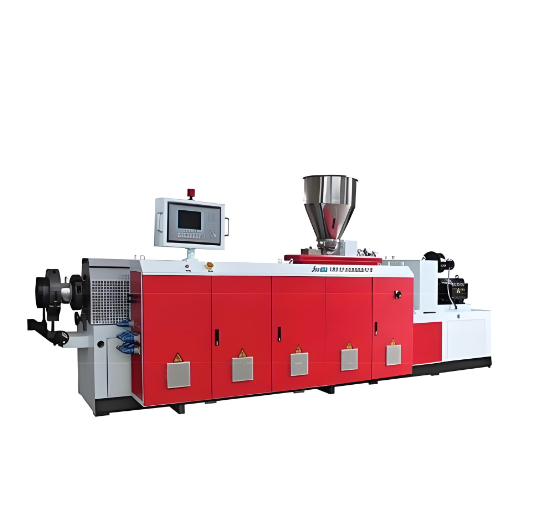
This process enables the efficient production of long, uniform items used extensively in agriculture, construction, automotive, and packaging industries. For plastic processors, understanding the nuances of extrusion—from material selection to process controls—is essential for delivering consistent quality, minimizing waste, and maximizing throughput. For custom pipes, profiles, tubes, sheets, and other continuous components, our plastic extrusion services support material selection, die development, production, cutting, and secondary processing.
The Plastic Extrusion Process: Step-by-Step Flow
A typical extrusion line consists of several linked stages. Below is a detailed breakdown of the process flow from raw material to finished product.
| Step | Description | Key Equipment |
|---|---|---|
| 1. Feeding | Raw plastic pellets, powder, or flakes are loaded into a hopper. Additives such as UV stabilizers, colorants, impact modifiers, and flame retardants may be blended at this stage. | Hopper, gravimetric feeder, dryer if using hygroscopic resin |
| 2. Melting & Conveying | A rotating screw inside a heated barrel compresses, melts, and mixes the material. Frictional heat plus barrel heaters raise the temperature to the required range for the specific resin. | Single-screw or twin-screw extruder, heater bands, thermocouples |
| 3. Metering | At the end of the screw, the melt is pressurized and delivered at a steady, controlled rate to the die. Consistency here is critical for uniform product dimensions. | Screw metering zone, breaker plate, screen pack |
| 4. Shaping | The molten plastic passes through a precisely machined die that forms the desired cross-section—round, square, complex profile, sheet, or film. | Die, adapter, co-extrusion feedblock if multiple layers are required |
| 5. Cooling & Sizing | The hot extrudate is immediately cooled—usually by water or air—to set its shape. For pipes and profiles, a sizing tool or vacuum calibrator holds the part to exact dimensions while it hardens. | Water bath, vacuum sizing tank, air ring, chill rolls for sheet |
| 6. Haul-off & Cutting | A puller draws the cooled product at a speed synchronized with the extrusion rate. A cutter then slices it into predetermined lengths or coils it for winding. | Caterpillar puller, flying saw, guillotine cutter, winder |
While the sequence is straightforward, precise control of temperature, pressure, and line speed at each stage is essential for consistent quality—especially when manufacturing components that must meet tight tolerances.
Key Materials Used in Plastic Extrusion
Almost any thermoplastic can be extruded. The choice depends on required mechanical properties, chemical resistance, weathering ability, and cost. Below are common resins and their typical applications.
| Material | Attributes | Typical Extruded Products |
|---|---|---|
| PVC (Polyvinyl Chloride) | Rigid or flexible, good chemical resistance, flame-retardant, cost-effective | Pipes, window profiles, fencing, wall panels, tubing |
| HDPE (High-Density Polyethylene) | Strong, impact-resistant, excellent weathering, good chemical resistance | Pipes, geomembranes, corrugated tubing, sheets, packaging |
| PP (Polypropylene) | Lightweight, good flex life, chemical-resistant, high heat deflection | Strapping, sheets, profiles, fibers, pipe fittings |
| ABS | Rigid, glossy, good low-temperature toughness | Equipment housings, vent covers, automotive trims |
| Nylon (Polyamide) | High strength, abrasion resistance, good bearing properties | Tubing, cable jacketing, wear-resistant profiles |
| PET / PETG | Clear, good barrier properties, recyclable | Sheet for thermoforming, strapping, optical films |
| TPE / TPU | Rubber-like elasticity, soft touch | Seals, gaskets, hose, medical tubing |
Material rheology—the way the melt flows—is a decisive factor. Resins with a high melt-flow index (MFI) are easier to process but may sacrifice mechanical strength. Conversely, high-viscosity grades provide toughness but require more power and a robust screw design. Maintaining consistent pellet size and moisture content is fundamental to stable extrusion.
Die Design and Melt Flow Control
The die is the heart of the extrusion process. Its internal channel gradually transitions from the circular exit of the extruder to the desired final shape, while distributing the melt uniformly. For high-quality profiles, the die must deliver a perfectly balanced flow so that all parts of the profile exit at the same speed and temperature. Any imbalance can cause warping, thickness variation, or surface defects.
Key Concepts in Die Design
- Flow channel geometry: The die is machined to compensate for varying flow lengths. A thin section of a profile typically has a shorter channel than a thick section so that melt arrives at the different die lips simultaneously.
- Shear rate control: Excessive shear can degrade the polymer; too little shear may leave the melt inhomogeneous. Computational fluid dynamics (CFD) simulation is often used to optimize die contours.
- Co-extrusion capability: Some dies allow two or more materials to be combined, creating products with a tough core and a UV-resistant skin, or incorporating a barrier layer. For multi-layer structures, our co-extrusion service supports pipes, sheets, films, tubes, and specialty profiles.
- Die swell compensation: After leaving the die, the still-soft plastic undergoes die swell—a slight expansion as stress relaxes. Die designers compensate by slightly undersizing the die opening, especially for profile and pipe dies.
Cooling, Sizing, and Take-Off Control
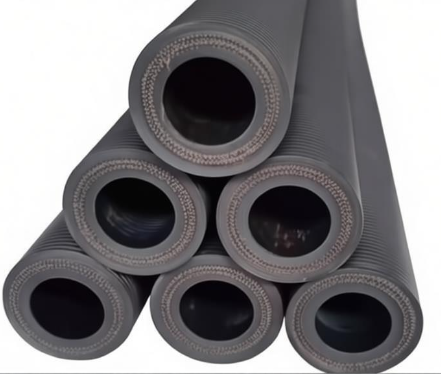
Once the plastic exits the die, it must be cooled rapidly to hold its shape. The cooling method depends on the product type:
- Pipe & profile: Typically pass through a water bath or series of spray tanks. A vacuum sizing tank located right after the die pulls the hot tube against a chilled calibration sleeve, setting the outer diameter precisely.
- Blown film: Air ring cooling at the die exit and an internal air bubble cool the film while stretching it in both directions (biaxial orientation).
- Sheet & flat film: Polished chill rolls rapidly cool the sheet while imparting surface finish and controlling thickness.
Haul-off speed is critical: if the pull speed is too fast, the product stretches and wall thickness shrinks; too slow, and it can buckle or accumulate. Tension and line speed are constantly monitored to maintain dimensional tolerances. Many modern lines employ closed-loop control systems that automatically adjust puller speed based on real-time thickness or diameter measurements.
Common Defects in Plastic Extrusion and Production Controls
Even well-designed extrusion lines can produce flawed parts. Recognizing these defects and knowing how to adjust production controls is vital for consistent quality.
| Defect | Likely Cause | Control Measure |
|---|---|---|
| Melt fracture (rough, shark-skin surface) | Too high output rate; die-exit shear stress exceeds critical value | Reduce screw speed; raise die temperature; use lubricated die lip; increase die gap |
| Die swell / oversized dimensions | Uncompensated viscoelastic recovery | Modify die land length; adjust drawdown ratio; lower melt temperature |
| Thickness variation (pipe/profile) | Uneven melt flow from die; misaligned haul-off; eccentric core | Center the mandrel; adjust die bolts; check puller alignment; use a rotating haul-off |
| Burn marks / discoloration | Material degradation due to excessive temperature or residence time | Lower barrel/die temperatures; clean screw and die; check for dead spots; reduce screw speed |
| Surface voids / bubbles | Moisture in raw material; entrapped air; volatiles | Pre-dry resin, especially nylon and PET; use a vented extruder; check screw feeding zone |
| Warping / distortion | Non-uniform cooling; differential shrinkage; internal stresses | Stagger cooling exits; use sizing plates; calibrate water temperature; adjust draw ratio |
| Gels / fisheyes | Poor mixing; cross-linked particles; contamination | Improve screw mixing section; increase back pressure; use finer screen pack |
| Surface roughness / orange peel | Die surface contamination; melt temperature too low; improper die lip finish | Clean die lips; increase melt temperature; polish die surfaces |
Robust Production Controls
A comprehensive process control plan should include:
- Continuous temperature and pressure monitoring at multiple points along the barrel and die.
- Regular dimensional sampling using laser micrometers, ultrasonic gauges, or contact sensors.
- Statistical Process Control (SPC) on key parameters such as melt temperature, motor load, line speed, and thickness.
- Scheduled maintenance for screw, barrel, and die to prevent gradual wear that leads to defects.
- Material traceability to ensure consistent resin lots and additive proportions.
Extrusion vs. Injection Molding vs. Machining: Key Differences
While plastic extrusion is excellent for long, continuous shapes, other processes may be better suited for different part geometries.
| Factor | Extrusion | Injection Molding | Machining |
|---|---|---|---|
| Process nature | Continuous, constant cross-section | Cyclical, discrete 3D parts | Material removal from solid block |
| Typical outputs | Pipes, profiles, sheets, film, wire coating | Housings, connectors, complex components, gears | Custom or low-volume components, prototypes |
| Production volume | High, with thousands of feet run continuously | High, from thousands to millions of shots | Low to medium |
| Tooling cost | Moderate, including die and calibration tooling | High, including mold design and fabrication | No specialized mold tooling; uses standard cutting tools |
| Material waste | Low; trim and start-up scrap can be reground | Very low; runners and gates may be reground | Higher because material is removed as chips |
| Dimensional repeatability | Good in cross-section; length depends on cutting precision | Excellent part-to-part consistency | Very good, limited by tool wear and process control |
| Lead time | Shorter die fabrication time | Longer mold fabrication time | Short because no mold is required |
For agricultural, construction, and packaging applications, extrusion is the go-to method when uniform lengths of piping, fencing, or sheet are needed in large quantities. Plastic injection molding is chosen for complex, often smaller components such as fittings, valves, or enclosures. CNC plastic milling is more practical for prototypes and custom low-volume precision parts where mold investment is not justified.
When Is Plastic Extrusion the Right Choice?
You should consider plastic extrusion when:
- The product has a consistent cross-section along its length.
- Mass production is required, often involving thousands of meters or kilograms.
- Material properties such as corrosion resistance, low weight, or flexibility are advantageous.
- Lower per-unit cost is desired compared with molding for the same continuous shape.
- Tooling investment needs to remain moderate and relatively quick to produce.
Common applications include:
- Pipes and tubing for plumbing, irrigation, and gas distribution.
- Window and door profiles for construction.
- Fencing, decking, and railing systems.
- Sheet and film for packaging, geomembranes, and greenhouse covers.
- Wire and cable insulation.
- Automotive trims, weatherstrips, and seals.
For projects focused specifically on tube, film, sheet, and continuous profile production, our tube, film, and sheet extrusion services provide a more application-specific manufacturing option.
However, extrusion is not suitable for parts with hollow, complex internal geometries, undercuts, or varying cross-sections. For those, injection molding, blow molding, or rotational molding are better suited.
Conclusion: Optimizing Your Extrusion Line
Plastic extrusion is a mature yet continually evolving process that offers unmatched efficiency for producing long, uniform thermoplastic products. Success depends on a holistic approach:
- Select the right material for the application’s mechanical and environmental demands.
- Design the die for balanced melt flow and proper swell compensation.
- Control the process rigorously—temperature, pressure, speed, and cooling must be monitored and adjusted in real time.
- Implement quality systems such as SPC, regular maintenance, and material traceability to catch defects early and reduce scrap.
- Understand process alternatives so you can choose extrusion only when it is the most cost-effective and technically sound option.
By mastering these fundamentals, plastic processors can deliver reliable, long-lasting components while maintaining competitive production costs. Whether you’re manufacturing agricultural piping, construction profiles, or custom packaging, the principles outlined here will help you optimize your extrusion operations for quality and efficiency.
Have a related manufacturing question?
Send your drawing, material, quantity, finish and application requirements for a manufacturing review.