Technical Capability & RFQ
Climb Milling / Conventional Milling Service | Precision CNC Plastic Machining
Discuss This PartCapability decision data
Technical fit for CNC plastic milling
Use this capability summary to decide whether the process fits the part before discussing tooling, lead time or price.
- Best fit
- Prismatic plastic components with pockets, slots, flat faces, hole patterns and controlled datums.
- Design focus
- Tool access, internal radii, wall stiffness, workholding, burr direction and datum strategy should be visible in the drawing.
- Material direction
- Heat generation, chip formation, moisture and residual stress vary by plastic stock grade.
- Volume and cost logic
- Setup count, stock size, toolpaths, material removal and inspection drive low-to-medium-volume cost.
- Inspection focus
- Inspect datums, flatness, position, pocket size, edge condition, surface and movement after unclamping.
- Compare against
- Compare with turning for rotational parts, 3D printing for fast complex prototypes and molding for repeat volume.
Product Description
Climb Milling and Conventional Milling are two essential CNC machining methods used for precision plastic component manufacturing. Different cutting directions affect surface quality, cutting force, tool life, and machining stability. As a professional plastic parts manufacturer, we provide optimized custom CNC plastic milling solutions based on material properties, part geometry, and precision requirements. Whether you need non-standard plastic machining or small-batch plastic parts customization, we deliver accurate machining, stable tolerances, and reliable production performance.
What Is Climb Milling?
Climb Milling, also known as Down Milling, occurs when the cutter rotates in the same direction as the feed movement. The cutting tool engages the material with maximum chip thickness at the beginning of the cut.
Advantages of Climb Milling
- Better surface finish
- Reduced cutting vibration
- Lower tool wear
- Improved machining efficiency
- Reduced heat generation on plastic surfaces
Typical Applications
- Precision engineering plastic parts
- High-surface-finish components
- Thin-wall plastic structures
- CNC finishing operations
What Is Conventional Milling?
Conventional Milling, also called Up Milling, occurs when the cutter rotates against the feed direction. Chip thickness starts small and increases during cutting.
Advantages of Conventional Milling
- Better stability for rough surfaces
- Suitable for harder or irregular materials
- Improved control on flexible workpieces
- Reduced sudden cutting load
Typical Applications
- Rough machining operations
- Large plastic sheets or blocks
- Components requiring heavy material removal
- Machining with less rigid setups
Our CNC Milling Process
Material Evaluation
We analyze the plastic material properties, including hardness, thermal expansion, and flexibility, to determine the optimal milling strategy.
CNC Programming
Tool paths are optimized for either climb milling or conventional milling depending on surface finish and machining stability requirements.
Precision Milling Operations
High-speed CNC equipment performs roughing and finishing operations while maintaining dimensional consistency and surface quality.
Inspection & Finishing
Finished components undergo dimensional measurement, surface inspection, and functional verification before shipment.
Common Plastic Materials for CNC Milling
| Material | Key Benefits | Typical Applications |
|---|---|---|
| POM (Acetal) | Excellent machinability | Precision mechanical parts |
| ABS | Good impact resistance | Housings and industrial covers |
| PA (Nylon) | Wear resistance | Gears and industrial components |
| Acrylic (PMMA) | Optical clarity | Display panels and transparent parts |
| PTFE | Low friction, chemical resistance | Sealing and sliding components |
Industry Applications
- Industrial Equipment Components
Precision-machined structural and mechanical plastic parts. - Electronic & Electrical Parts
CNC-machined housings, insulation plates, and mounting structures. - Medical & Laboratory Components
Accurate plastic parts requiring stable tolerances and smooth finishes. - Custom Engineering Plastic Parts
Specialized components for automation, robotics, and industrial systems.
Quality Control & Precision Manufacturing
- Optimized Cutting Parameters
Milling strategies are adjusted to reduce burrs, deformation, and heat buildup. - Stable Dimensional Accuracy
CNC-controlled machining ensures repeatable precision across production batches. - Advanced Surface Inspection
Surface roughness and flatness are verified using precision measuring equipment. - Reduced Material Stress
Proper cutting direction selection minimizes cracking and thermal deformation.
Cost Optimization & Production Efficiency
- Improved Tool Life
Optimized milling direction reduces tool wear and maintenance costs. - Efficient Material Removal
High-speed machining improves production cycle efficiency. - Reduced Secondary Processing
Better surface finish lowers polishing and finishing requirements. - Flexible Production Capacity
Supports prototypes, small-batch production, and high-volume CNC machining.
Why Choose Us
As a trusted plastic parts manufacturer, we specialize in precision CNC plastic milling, non-standard plastic machining, and small-batch plastic parts customization. From CNC programming and machining optimization to quality inspection and finishing, we provide complete manufacturing solutions for high-precision engineering plastic components.
Send us your drawings or machining requirements today for a free engineering evaluation and custom CNC milling consultation.
FAQ: Climb Milling / Conventional Milling Service for CNC Plastic Machining
What is the difference between climb milling and conventional milling for plastics?
In climb milling, the cutter tooth engages the workpiece from the top of the chip (maximum chip thickness at entry). In conventional milling, the reverse is true. For plastics, climb milling generally produces better surface finish because the cutting force pushes the workpiece into the fixture rather than lifting it, and chip thickness transitions reduce heat at the exit.
When is conventional milling preferred over climb milling for plastic parts?
Conventional milling is sometimes used for rough operations where high material removal rate is needed and the machine tool or fixturing cannot fully resist the pulling force of climb milling. Final finish passes are almost always climb milling to control surface quality.
How does milling direction affect dimensional accuracy in thin plastic parts?
Thin plastic plates and ribs deflect under milling forces. In climb milling, the cutting force tends to push the part down, which is favorable when the part is supported from below. Conventional milling pulls upward, increasing deflection risk. For thin sections, climb milling with reduced depth-of-cut and multiple finish passes produces better dimensional control.
What end mill geometry is recommended for milling engineering plastics?
Single or two-flute end mills with large chip clearance and highly polished flutes are preferred for most engineering plastics. This geometry prevents chip re-cutting and reduces friction heat. Sharp cutting edges with positive rake angles produce clean shearing rather than tearing.
How do you select the optimal depth of cut and feed rate for plastic milling?
Selection is based on material hardness, tool diameter, part fixturing rigidity, and surface finish requirement. We establish validated parameters during setup and record them in the process sheet for repeatability across production runs. Any change in material lot, tool supplier, or fixture configuration triggers a parameter review.
Related products: CNC Plastic Machining Coolant Application Services, CNC Plastic Thread Tapping Services, CNC Plastic Turning Services, Plastic Surface Finishing & Assembly Services, Thermoplastic Plastic Processing Services (ABS, PLA, and More), Custom / Specialty Rotomolding Service | Complex & Multi-Functional Hollow Components.
Technical Parameters
| Parameter | Typical Value / Range |
|---|---|
| Process Type | CNC Climb Milling / Conventional Milling |
| Supported Materials | ABS, POM, PA, PP, PE, Acrylic, PC, PTFE |
| Maximum Part Size | Up to 2500 mm x 1500 mm |
| Dimensional Tolerance | ±0.02 mm – ±0.1 mm |
| Surface Roughness | Ra 0.8 – 3.2 μm |
| Spindle Speed | 3,000 – 24,000 RPM |
| Cutting Method | Rough Milling / Finish Milling |
| Machining Accuracy | High-Precision CNC Controlled |
| MOQ | Prototype to mass production |
| Secondary Services | Drilling, Tapping, Polishing, Assembly |
| Note | Final machining parameters depend on plastic material, cutting depth, and component geometry. |
Samples
Related Manufacturing Capabilities
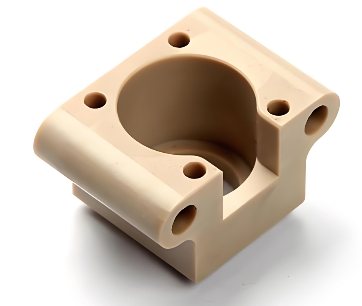
Face Milling Service | Precision Plastic Surface Machining
Home/Products/CNC machining/Milling/Face Milling Service | Precision Plastic Surface Machining Face milling is a precision CNC machining process used to create flat, smooth,…
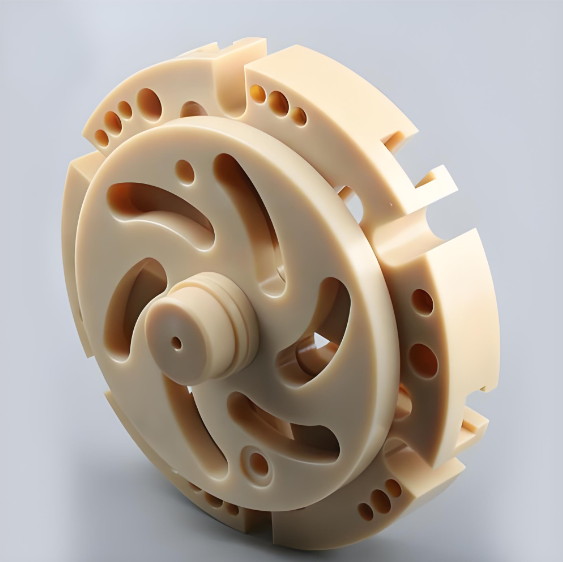
CNC Plastic Milling Services for Custom Machined Parts
Home/Products/CNC machining/Milling/CNC Plastic Milling Services for Custom Machined Parts Our CNC plastic milling service produces custom machined plastic parts with accurate features,…
Is this process a fit for your part?
Send your drawing, material, quantity, finish and application requirements for a manufacturing review.