Technical Capability & RFQ
Extrusion Blow Molding Service | Custom Plastic Bottle & Container Manufacturing
Discuss This PartCapability decision data
Technical fit for Extrusion blow molding
Use this capability summary to decide whether the process fits the part before discussing tooling, lead time or price.
- Best fit
- Hollow bottles, ducts, reservoirs and handled containers formed from an extruded parison.
- Design focus
- Pinch-off, parting line, neck finishing, handle geometry, blow ratio and wall distribution need coordinated design.
- Material direction
- HDPE, LDPE, PP, PVC and other blow-molding grades are selected for stiffness, barrier, chemical and drop requirements.
- Volume and cost logic
- Tooling and line setup favor repeat production; part weight, cycle, trimming and scrap recovery affect unit cost.
- Inspection focus
- Check wall distribution, pinch-off strength, flash, leakage, capacity, neck dimensions and drop performance.
- Compare against
- Compare with injection blow molding for controlled small necks and rotational molding for much larger low-volume hollow parts.
Product Description
Extrusion Blow Molding Service | Custom Plastic Bottle & Container Manufacturing
Intro Paragraph:
Extrusion Blow Molding is one of the most widely used plastic manufacturing processes for producing hollow plastic products. The process begins by extruding molten plastic into a tube-shaped parison, which is then inflated with compressed air inside a mold cavity to form the final shape. As a professional plastic parts manufacturer, we provide high-quality custom extrusion blow molding solutions for industrial containers, automotive components, bottles, and large hollow plastic parts. Whether you need non-standard plastic molding or small-batch plastic parts customization, we deliver reliable production with consistent quality and fast lead times.
Advantages of Extrusion Blow Molding
- Ideal for Hollow Plastic Products
Efficiently produces bottles, tanks, drums, and complex hollow components. - Cost-Effective Manufacturing
Lower tooling and production costs compared to many alternative hollow-part manufacturing methods. - Flexible Product Sizes
Supports small consumer bottles as well as large industrial containers and automotive fuel tanks. - Multi-Layer Material Capability
Co-extrusion technology enables barrier layers, UV resistance, and improved chemical resistance. - High Production Efficiency
Continuous production lines allow stable output and fast cycle times.
Extrusion Blow Molding Types
Continuous Extrusion Blow Molding
This process continuously extrudes molten plastic while molds move in sequence for high-speed production. It is commonly used for bottles, household containers, and packaging products requiring large production volumes.
Typical Applications:
- Shampoo bottles
- Detergent containers
- Food packaging bottles
Intermittent Extrusion Blow Molding
In this method, the extrusion process pauses between cycles, allowing better control of larger or thicker products. It is suitable for medium-sized industrial parts and technical containers.
Typical Applications:
- Industrial chemical containers
- Lubricant bottles
- Specialty packaging
Accumulator Head Blow Molding
Accumulator head systems store molten plastic before rapidly releasing it into the mold, making them ideal for large hollow parts with thick walls.
Typical Applications:
- Chemical drums
- Water tanks
- Large industrial containers
Co-Extrusion Blow Molding
This process combines multiple plastic layers into one hollow product, improving barrier performance, durability, and chemical resistance.
Typical Applications:
- Automotive fuel tanks
- Multi-layer chemical containers
- Barrier packaging bottles
3D Blow Molding
3D blow molding allows complex curved hollow structures that traditional straight-line extrusion cannot achieve. It is commonly used for automotive and technical applications.
Typical Applications:
- Automotive air ducts
- Fluid transfer pipes
- Complex industrial tubing systems
Common Materials for Blow Molding
| Material | Key Benefits | Typical Applications |
|---|---|---|
| HDPE | Chemical resistance, durability | Chemical drums, bottles |
| LDPE | Flexibility, lightweight | Squeeze bottles |
| PP | Heat resistance | Industrial containers |
| PVC | Transparency, rigidity | Specialty packaging |
| EVOH | High gas barrier | Multi-layer fuel tanks |
Industry Applications
- Chemical Industry
Durable chemical drums, industrial tanks, and hazardous material containers. - Personal Care Packaging
Shampoo bottles, cosmetic containers, and household packaging products. - Automotive Industry
Fuel tanks, air ducts, and fluid management systems with complex geometries. - Industrial Storage Solutions
Large blow-molded containers and transportation tanks for industrial applications.
Cost Optimization & Production Efficiency
- Lower Material Waste
Optimized parison control improves material utilization and reduces scrap. - Reduced Assembly Requirements
One-piece hollow structures reduce secondary assembly operations. - Fast Production Cycles
High-speed automated systems support large-volume manufacturing. - Flexible Production Volumes
Supports prototype development, small-batch customization, and mass production.
Why Choose Us
As a trusted plastic parts manufacturer, we specialize in extrusion blow molding, non-standard plastic molding, and small-batch plastic parts customization. From material selection and mold development to final production and inspection, we provide complete manufacturing solutions for hollow plastic products.
Send us your drawings or product requirements today for a free project evaluation and custom blow molding consultation.
FAQ: Extrusion Blow Molding Service
What shapes and sizes can extrusion blow molding produce?
EBM is suited to bottles from about 50 mL up to 200-liter drums, as well as non-round cross-sections, integral handles, multi-layer walls, and complex duct shapes. The parison is a continuous tube that can be shaped by the mold geometry, giving EBM more flexibility than IBM for complex container shapes.
Can extrusion blow molding produce containers with handles?
Yes. Integral handles are a strength of EBM. The handle is formed by the mold pinching a portion of the parison during the blowing cycle. Handle integration eliminates secondary assembly and produces a strong, continuous part. Handle geometry should be reviewed during DFM to confirm pinch-off quality.
How are material changes or color changes managed in EBM production?
Color changes require purging the extruder barrel and die head, which generates scrap during the transition. Purging time depends on the color change direction (light to dark is faster). We schedule color changes to minimize waste in production runs.
What is the typical mold life for EBM tooling?
Aluminum EBM molds typically last 500,000–1,000,000 cycles for standard HDPE. Steel molds last longer but cost more. We track shot counts and condition mold surfaces periodically to maintain part quality.
Can EBM parts include co-extruded barrier layers?
Yes, through co-extrusion blow molding, which produces walls with distinct material layers such as HDPE inner and outer layers with an EVOH oxygen barrier in the middle. This is common for fuel system components, agricultural chemical packaging, and food containers with extended shelf life requirements.
Related products: Injection Stretch Blow Molding Service | High-Strength PET Bottle Manufacturing, Injection Blow Molding Service | High-Precision Plastic Bottle Manufacturing, Multilayer Blow Molding Service | High-Barrier Plastic Packaging Solutions, Co-Extrusion Service | Multi-Layer Plastic Extrusion Solutions, Plastic Extrusion Services for Pipes, Profiles, and Industrial Applications.
Technical Parameters
| Parameter | Typical Value / Range |
|---|---|
| Process Type | Continuous / Intermittent / Accumulator Head Blow Molding |
| Supported Materials | HDPE, LDPE, PP, PVC, PETG, EVOH |
| Product Capacity | 50 ml – 5000 L |
| Wall Thickness | 0.5 mm – 15 mm |
| Maximum Product Size | Up to 3 m |
| Dimensional Tolerance | ±0.2 mm – ±1.0 mm |
| Layer Structure | Single-Layer / Multi-Layer Co-Extrusion |
| Production Speed | 100 – 2000 pcs/hour |
| Surface Finish | Glossy, Matte, Textured |
| MOQ | Prototype to mass production |
| Secondary Services | Trimming, Printing, Assembly, Leak Testing |
| Note | Specifications may vary depending on material type, mold structure, and product geometry. |
Samples
Related Manufacturing Capabilities
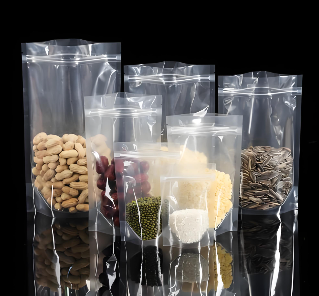
Multilayer Blow Molding Service | High-Barrier Plastic Packaging Solutions
Home/Products/Plastic molding/Blow Molding/Multilayer Blow Molding Service | High-Barrier Plastic Packaging Solutions Multilayer Blow Molding Service | High-Barrier Plastic Packaging Solutions Intro Paragraph:Multilayer…
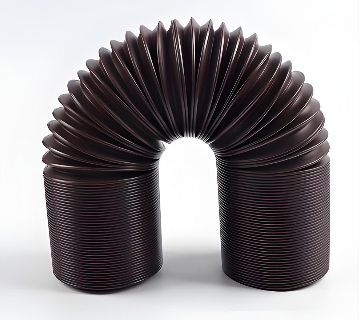
Suction Blow Molding Service | Complex Hollow Plastic Part Manufacturing
Home/Products/Plastic molding/Blow Molding/Suction Blow Molding Service | Complex Hollow Plastic Part Manufacturing Suction Blow Molding Service | Complex Hollow Plastic Part Manufacturing…
Stretch Blow Molding Service | High-Strength Plastic Container Manufacturing
Home/Products/Plastic molding/Blow Molding/Stretch Blow Molding Service | High-Strength Plastic Container Manufacturing Stretch Blow Molding Service | High-Strength Plastic Container Manufacturing Intro Paragraph:Stretch…
Is this process a fit for your part?
Send your drawing, material, quantity, finish and application requirements for a manufacturing review.