
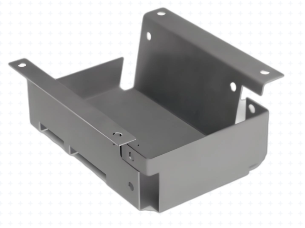
Technical Capability & RFQ
Pressure Thermoforming
Discuss This PartCapability decision data
Technical fit for Pressure thermoforming
Use this capability summary to decide whether the process fits the part before discussing tooling, lead time or price.
- Best fit
- Large or medium-size sheet parts that need sharper cosmetic detail than basic vacuum forming.
- Design focus
- Draw ratio, draft, radii, texture, trim datum and the non-uniform wall thinning of formed sheet must be allowed for.
- Material direction
- ABS, PC/ABS, PETG and other formable sheets are selected for appearance, impact, temperature and flame requirements.
- Volume and cost logic
- Tooling is usually below injection-mold cost, but sheet usage and CNC trimming contribute to every part.
- Inspection focus
- Inspect surface definition, thinning, trim accuracy, flange flatness, color consistency and cosmetic defects.
- Compare against
- Compare with vacuum forming for simpler detail and injection molding for smaller high-volume parts with molded features on both sides.
Product Description
High-Detail Plastic Forming with Vacuum and Air Pressure Technology
Pressure thermoforming is an advanced thermoforming process that combines vacuum suction with high-pressure air to force heated plastic sheets tightly against the mold surface. Compared with standard vacuum forming, this method delivers significantly better surface detail, dimensional accuracy, and overall product appearance.
Pressure thermoforming is widely used for high-end plastic components that require near injection-molded surface quality with lower tooling investment.
Key Features
- Sharper and clearer surface details
- Higher dimensional accuracy
- Improved texture and feature replication
- Surface quality close to injection molding
- Suitable for complex geometries
- Lower tooling cost than injection molding
- Efficient for medium-volume production
Manufacturing Process
- Plastic sheet is heated to forming temperature
- Sheet is positioned over the mold cavity
- Vacuum removes trapped air beneath the sheet
- High-pressure air pushes material tightly against mold surfaces
- Material cools and solidifies into final shape
- Finished part is trimmed and inspected
This process enables superior mold detail reproduction and enhanced product aesthetics.
Suitable Materials
Pressure thermoforming supports a wide range of engineering thermoplastics:
- ABS
- PC (Polycarbonate)
- Acrylic (PMMA)
- PETG
- HIPS
- PVC
- HDPE
Material selection depends on strength, appearance, impact resistance, and application requirements.
Applications
Pressure thermoforming is widely used in industries requiring high-quality appearance and precise detail:
- Medical equipment housings
- Automotive interior components
- Industrial control panels
- High-end display enclosures
- Equipment covers and casings
- Kiosks and electronic housings
Cost Optimization & Efficiency
Pressure thermoforming offers major manufacturing advantages:
- Lower tooling investment than injection molding
- Faster mold development cycle
- Excellent appearance quality for medium production runs
- Reduced machining and finishing requirements
- Efficient for large and lightweight parts
- Flexible customization and design modifications
This process is ideal for products requiring premium appearance without the high cost of injection molding tooling.
Why Choose Us
We provide professional pressure thermoforming solutions with advanced forming capability:
- High-precision pressure forming systems
- Excellent surface detail reproduction
- Custom tooling and mold development
- Precision CNC trimming and finishing
- Stable production quality control
- Experience in medical, automotive, and industrial products
- Fast prototype and low-to-medium volume production support
We help customers manufacture premium thermoformed plastic components with excellent appearance and reliable dimensional accuracy.
FAQ: Pressure Thermoforming
When is pressure thermoforming needed instead of vacuum thermoforming?
Pressure thermoforming is required when the part has deep draws, fine surface texture, sharp edges, complex geometry, or thin walls that vacuum alone cannot form accurately. The additional forming pressure from compressed air pushes the material more firmly against the mold, producing better definition and more consistent wall distribution.
What pressure levels are typically used in pressure thermoforming?
Forming pressures typically range from 3 to 10 bar (approximately 45–150 psi). Higher pressure improves mold contact and surface definition. Pressure, mold temperature, and heating time are optimized together for each material and geometry.
Can pressure thermoforming produce parts with fine surface texture?
Yes. Pressure thermoforming can replicate leather grain, geometric patterns, or matte/gloss surfaces by transferring the mold texture to the sheet. The mold surface must be clean and the sheet must be at the correct forming temperature to receive the texture accurately.
What types of packaging use pressure thermoforming?
Pressure thermoforming is used for medical device blister packs, pharmaceutical trays, precision electronic component packaging, automotive interior trims, and cosmetic packaging where dimensional consistency and surface appearance are more demanding than standard vacuum forming applications.
How does pressure forming tooling cost compare to vacuum forming and injection molding?
Pressure forming tooling is moderately more expensive than vacuum forming tooling due to the sealed forming chamber and higher-pressure mold construction. It remains significantly less expensive than injection mold tooling. For medium-complexity parts at volumes too low to justify injection mold investment, pressure forming provides a good quality-to-tooling-cost balance.
Related products: Thin-wall Injection Molding, Vacuum Thermoforming, CNC Plastic Machining Coolant Application Services, Injection Molding Services for Custom Plastic Parts, Insert Injection Molding (Insert Molding Service), Precision Injection Molding (High-Precision Plastic Molding).
Technical Parameters
| Item | Specification |
|---|---|
| ---------------------------- | ------------------------------------------ |
| **Process Type** | Pressure Thermoforming |
| **Forming Method** | Vacuum + high-pressure air forming |
| **Air Pressure Range** | 3 – 10 bar |
| **Material Thickness Range** | 0.5 – 10 mm |
| **Suitable Materials** | ABS, PC, PMMA, PETG, PVC, HIPS |
| **Mold Type** | Aluminum / temperature-controlled molds |
| **Surface Quality** | Near injection-molded finish |
| **Production Volume** | Prototype to medium-volume production |
| **Cycle Time** | 20 – 120 seconds |
| **Post Processing** | CNC trimming, drilling, assembly available |
Samples
Related Manufacturing Capabilities
Insert-Assisted Thermoforming (Plug-Assisted Thermoforming)
Home/Products/Plastic molding/Thermoforming/Insert-Assisted Thermoforming (Plug-Assisted Thermoforming) Insert-assisted thermoforming, also known as plug-assisted thermoforming, is an advanced plastic thermoforming process designed to improve material…
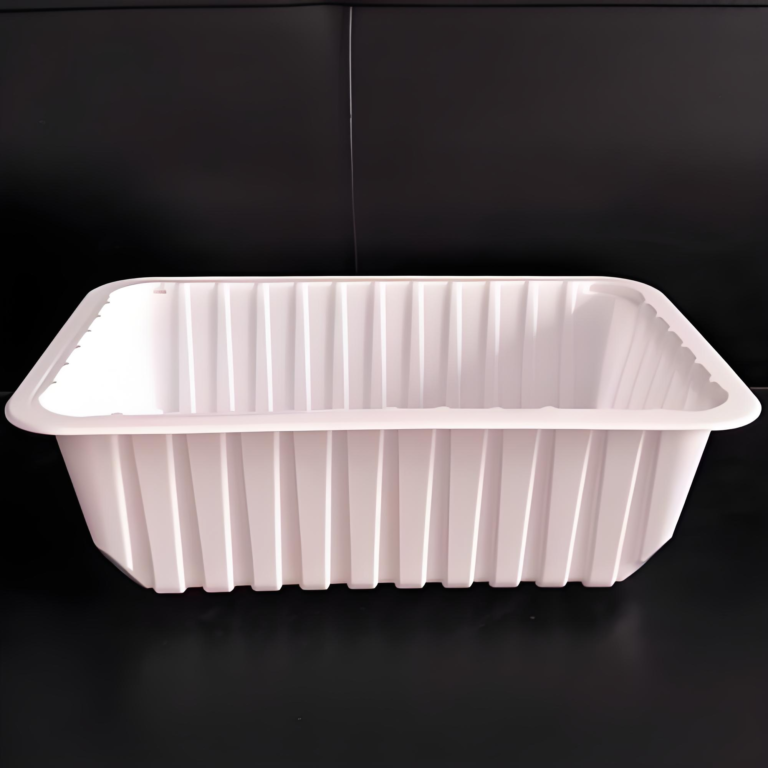
Vacuum Thermoforming
Home/Products/Plastic molding/Thermoforming/Vacuum Thermoforming Vacuum Forming Process for Plastic Sheet Manufacturing Vacuum thermoforming is one of the most widely used thermoforming processes in…
Is this process a fit for your part?
Send your drawing, material, quantity, finish and application requirements for a manufacturing review.