Technical Capability & RFQ
Fiber Spinning Service | Continuous & Functional Plastic Fibers
Discuss This PartCapability decision data
Technical fit for Plastic fiber extrusion and spinning
Use this capability summary to decide whether the process fits the part before discussing tooling, lead time or price.
- Best fit
- Continuous monofilament, multifilament or fiber products where diameter and tensile behavior must be controlled.
- Design focus
- Spinneret geometry, melt filtration, draw ratio, cooling and winding conditions determine final fiber structure.
- Material direction
- PP, PET, PA and other fiber-forming polymers are chosen for strength, flexibility, chemical and thermal needs.
- Volume and cost logic
- Continuous production suits repeat demand; line setup, winding and downstream treatment affect minimum practical runs.
- Inspection focus
- Measure denier or diameter, tensile properties, elongation, consistency, finish pickup and winding defects.
- Compare against
- Compare with profile extrusion when the output is a shaped section rather than a drawn fiber.
Product Description
Fiber Spinning is a specialized plastic processing method that transforms molten plastic or polymer solutions into continuous fibers. This process allows the production of monofilament, multifilament, or composite fibers with controlled properties for diverse applications. As a professional plastic parts manufacturer, we provide reliable custom fiber spinning solutions for industrial, textile, and functional applications. Whether you require non-standard plastic fiber production or small-batch fiber customization, we deliver high-quality fibers with consistent performance and tailored functionality.
Advantages of Fiber Spinning
- Continuous Fiber Production
Create long, uniform fibers suitable for industrial or textile use. - Versatile Fiber Types
Supports monofilament, multifilament, and composite fiber production. - Functional Properties
Fibers can be engineered for flame retardancy, UV resistance, or chemical durability. - Customizable Dimensions
Diameter, length, and twist can be adjusted to meet specific application requirements. - High Mechanical Strength
Fibers are strong, flexible, and suitable for demanding industrial applications.
Our Fiber Spinning Process
Polymer Preparation
Plastic resins are dried, melted, or dissolved to achieve optimal viscosity for fiber formation.
Extrusion & Fiber Formation
Molten polymer or solution is extruded through spinnerets to form continuous fibers. Diameter and filament count are precisely controlled.
Drawing & Stretching
Fibers are stretched to align molecular chains, improving strength, elasticity, and dimensional stability.
Cooling & Collection
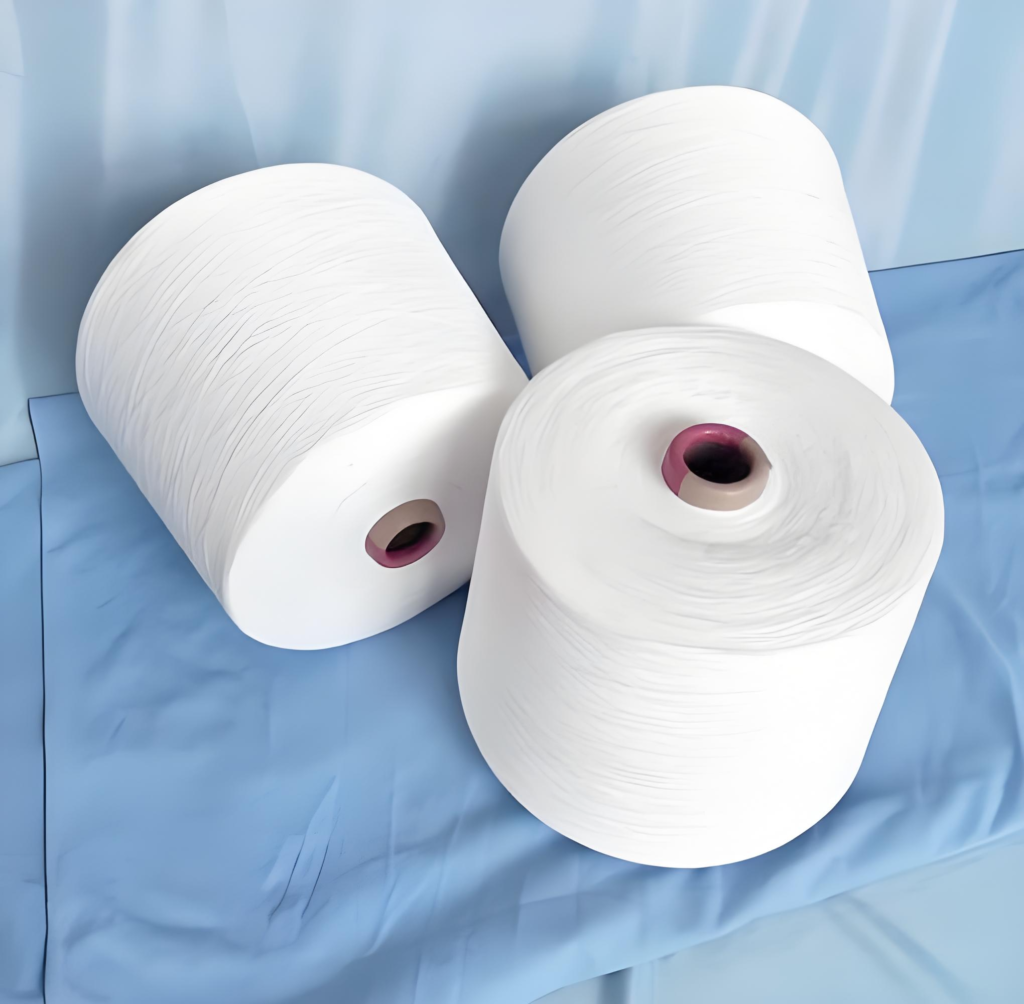
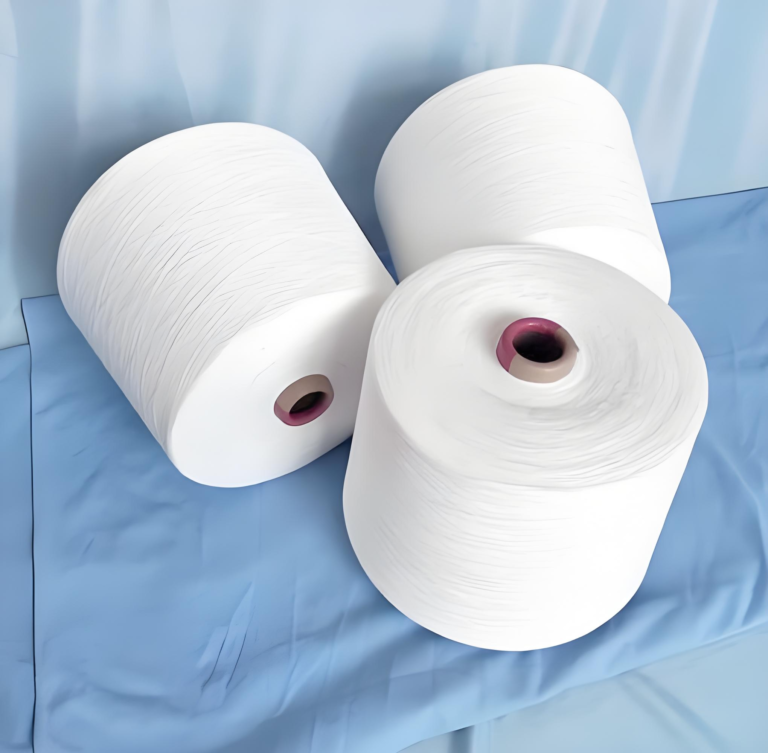
Fibers are cooled or coagulated (for solution spinning) and wound onto spools or bundled as required.
Functional Finishing
Optional treatments can add flame retardancy, UV resistance, hydrophobicity, or other functional properties to the fibers.
Common Applications
| Fiber Type | Key Benefits | Typical Uses |
|---|---|---|
| PET Fiber | High tensile strength, durability | Industrial filters, ropes, brushes |
| PA (Nylon) Fiber | Flexibility, chemical resistance | Textiles, industrial ropes |
| PP Fiber | Lightweight, resistant to chemicals | Nonwoven fabrics, ropes |
| PLA Fiber | Biodegradable, eco-friendly | Textile filaments, specialty eco-fibers |
Industry Applications
- Industrial Fibers
Filter materials, brush bristles, ropes, and reinforced composites. - Textile Fibers
Woven or knitted fabrics, clothing, home textiles, and technical textiles. - Functional Fibers
Flame-retardant fibers, UV-resistant fibers, and specialty engineered filaments. - Composite Materials
High-strength fibers used in automotive, aerospace, and construction applications.
Quality Control & Performance Testing
- Tensile & Elongation Testing
Ensures fibers meet required strength and flexibility specifications. - Diameter & Uniformity Inspection
Filament diameter and surface smoothness are strictly monitored. - Functional Property Verification
Flame resistance, UV stability, and chemical resistance testing as needed. - Batch Consistency
Production monitoring ensures uniform fiber properties across batches.
Why Choose Us
As a trusted plastic parts manufacturer, we specialize in fiber spinning, non-standard plastic fiber production, and small-batch fiber customization. From polymer selection and spinning process design to functional finishing and quality inspection, we provide complete solutions for high-performance plastic fibers.
Send us your fiber specifications or application requirements today for a free consultation and custom fiber spinning evaluation.
FAQ: Fiber Spinning Service (Continuous & Functional Plastic Fibers)
What is the difference between melt spinning and solution spinning for plastic fibers?
Melt spinning melts the polymer and extrudes it through a spinneret, then draws and solidifies the fiber by air cooling. It is applicable to PP, PET, nylon, and HDPE. Solution spinning dissolves the polymer in a solvent and extrudes into a coagulation bath; it is used for materials that cannot be melted without degradation, such as UHMW-PE (gel spinning). We use melt spinning for the thermoplastic fiber materials in our production scope.
How are functional additives incorporated into spun plastic fibers?
Additives such as UV stabilizers, antimicrobials, colorants, flame retardants, and mineral fillers are compounded into the polymer before spinning. Masterbatch compounds are the most common form of delivery. Additive selection must be compatible with the spinning temperature window and must not cause degradation or spinneret clogging.
What is the tensile strength range for melt-spun PP and PET fibers?
Standard PP monofilament typically ranges from 3–6 cN/dtex depending on draw ratio and molecular weight. High-tenacity PET fiber used in technical applications reaches 6–9 cN/dtex. Tenacity requirements should be specified alongside elongation at break, as optimizing one often comes at the expense of the other.
What industries use custom spun plastic fibers produced to your specifications?
Agricultural netting, woven geotextiles, filter media, industrial conveyor belts, rope and cordage, packaging strapping, and nonwoven fabric production are primary applications. We discuss application-specific requirements before finalizing fiber specification.
Can you supply spun fiber on custom bobbin or spool configurations?
Yes. Spool core diameter, traverse angle, package weight, and winding tension are adjustable to match downstream processing equipment requirements. We confirm winding specifications as part of the order before production to avoid package dimension mismatches with the customer’s handling equipment.
Related products: Plastic Fiber Extrusion & Spinning Services for Packaging and Agricultural Applications, Thermoplastic Plastic Processing Services (ABS, PLA, and More), Injection Stretch Blow Molding Service | High-Strength PET Bottle Manufacturing, Plastic Extrusion Services for Pipes, Profiles, and Industrial Applications, Standard Compression Molding Service | High-Performance Thermoset Components, Structural / Reinforced Rotomolding Service | High-Strength Hollow Components.
Technical Parameters
| Parameter | Typical Value / Range |
|---|---|
| Process Type | Melt Spinning / Solution Spinning |
| Supported Materials | PET, PA (Nylon), PP, PLA |
| Fiber Types | Monofilament, Multifilament, Composite Fibers |
| Fiber Diameter | 5 µm – 500 µm |
| Filament Count | Single filament to 10,000+ filaments per bundle |
| Tensile Strength | 200 – 1200 MPa (depending on material) |
| Elongation at Break | 10% – 50% |
| Production Speed | 50 – 500 m/min (material dependent) |
| Surface Finish | Smooth / Textured / Functional Coating |
| MOQ | Prototype to mass production |
| Secondary Services | Twisting, Weaving, Cutting, Coating |
| Note | Fiber properties may vary based on polymer type, spinning method, and post-processing. |
Samples
Related Manufacturing Capabilities
Co-Extrusion Service | Multi-Layer Plastic Extrusion Solutions
Home/Products/Plastic molding/Extrusion Molding/Co-extrusion/Co-Extrusion Service | Multi-Layer Plastic Extrusion Solutions Co-Extrusion Service | Multi-Layer Plastic Extrusion Solutions Intro Paragraph:Co-extrusion is an advanced plastic…
Extrusion Services | Tube, Film and Sheet Manufacturing
Home/Products/Plastic molding/Extrusion Molding/Extrusion Services | Tube, Film and Sheet Manufacturing Plastic Extrusion Service | Pipes, Films & Sheet Manufacturing Intro Paragraph:Plastic extrusion…
Is this process a fit for your part?
Send your drawing, material, quantity, finish and application requirements for a manufacturing review.