Technical Capability & RFQ
Boring Service | Precision CNC Internal Turning for Plastic Parts
Discuss This PartCapability decision data
Technical fit for CNC plastic turning
Use this capability summary to decide whether the process fits the part before discussing tooling, lead time or price.
- Best fit
- Round plastic parts, bushings, rollers and concentric features produced efficiently from rod or tube stock.
- Design focus
- Workholding, slenderness, internal bores, wall stiffness, tool pressure and thermal expansion affect concentricity.
- Material direction
- Stock-shape stability, residual stress, moisture and softness change speeds, feeds and achievable finish.
- Volume and cost logic
- Bar size, setup, cycle, material yield and secondary milling or drilling determine part cost.
- Inspection focus
- Inspect diameters, runout, concentricity, length, thread fit, burrs and surface condition.
- Compare against
- Compare turning with milling for prismatic geometry and molding when repeat volume justifies tooling.
Product Description
Boring is a precision CNC machining process used to enlarge and finish internal holes in plastic components with high accuracy and smooth surface quality. Compared with standard drilling, boring provides tighter tolerances, improved concentricity, and better dimensional consistency. As a professional plastic parts manufacturer, we provide reliable custom CNC boring services for bushings, sleeves, housings, tubes, and precision engineering plastic parts. Whether you require non-standard plastic machining or small-batch plastic parts customization, we deliver stable quality, precision tolerances, and efficient machining solutions.
Advantages of Boring
- High Internal Diameter Accuracy
CNC boring achieves precise hole dimensions and concentricity. - Smooth Internal Surface Finish
Produces clean bore surfaces for improved assembly and motion performance. - Excellent Roundness & Alignment
Ideal for precision-fit components and rotating assemblies. - Improved Hole Consistency
Better dimensional control compared with conventional drilling. - Suitable for Engineering Plastics
Compatible with POM, Nylon, PTFE, ABS, Acrylic, and other plastic materials.
Our CNC Boring Process
Material Preparation
Plastic rods, tubes, or molded blanks are prepared and securely fixed to maintain machining stability and accuracy.
Pilot Hole Machining
Initial drilling or pre-machining creates the base hole before precision boring operations begin.
Precision CNC Boring
High-precision boring tools enlarge and finish the internal diameter to achieve the required tolerance, concentricity, and surface quality.
Finishing & Inspection
Additional finishing operations such as reaming, polishing, or threading are performed as needed, followed by dimensional inspection and quality verification.
Common Plastic Materials for Boring
| Material | Key Benefits | Typical Applications |
|---|---|---|
| POM (Acetal) | Excellent dimensional stability | Precision bushings and sleeves |
| PA (Nylon) | Wear resistance and toughness | Mechanical housings and bearings |
| PTFE | Low friction and chemical resistance | Sealing and sliding systems |
| ABS | Easy machinability | Industrial components |
| Acrylic (PMMA) | Transparency and rigidity | Optical and display components |
Industry Applications
- Industrial Machinery Components
Precision bushings, bearing housings, and cylindrical mechanical parts. - Automation & Motion Systems
Internal precision bores for shafts, rollers, and linear movement assemblies. - Electronic & Electrical Components
Insulating sleeves and precision cylindrical housings. - Medical & Laboratory Equipment
High-precision plastic components with stable internal dimensions.
Quality Control & Precision Manufacturing
- Precision Diameter Inspection
Bore gauges and CMM systems verify internal dimensions and roundness. - Concentricity Control
CNC machining ensures stable alignment between inner and outer diameters. - Optimized Cutting Parameters
Machining conditions reduce burrs, deformation, and thermal stress on plastic materials. - Consistent Surface Quality
Precision tooling produces smooth internal finishes for assembly performance.
Cost Optimization & Production Efficiency
- Reduced Secondary Finishing
Precision boring minimizes additional grinding or polishing operations. - Efficient CNC Machining
Optimized tool paths improve production speed and material utilization. - Flexible Production Capacity
Supports prototypes, small-batch customization, and large-scale manufacturing. - Stable Repeatability
CNC automation ensures consistent quality across production batches.
Why Choose Us
As a trusted plastic parts manufacturer, we specialize in precision CNC boring, non-standard plastic machining, and small-batch plastic parts customization. From material selection and CNC programming to final inspection and finishing, we provide complete machining solutions for high-precision internal plastic components.
Send us your drawings or machining requirements today for a free engineering evaluation and custom CNC boring consultation.
FAQ: Boring Service (Precision CNC Internal Turning for Plastic Parts)
When is boring used instead of reaming for precision holes in plastic parts?
Boring is used when the hole diameter is too large for standard reamer sizes, when the hole must be positioned precisely by CNC axis interpolation rather than following a pre-drilled centerline, or when the hole geometry includes a taper, counterbore, or profile that a straight reamer cannot produce.
What bore diameter tolerances are achievable in CNC boring of plastic?
CNC boring on stable engineering plastics can hold bore tolerances of ±0.02–0.05 mm. For bore fits to standard bearing or shaft sizes (H7, H8, etc.), tolerances of ±0.015 mm are achievable with controlled process parameters and temperature-compensated measurement.
How is bore straightness (cylindricity) controlled in CNC boring?
Straightness is controlled by machine spindle geometry, rigid boring bar selection (minimal overhang), and maintaining consistent chip load through the bore depth. We limit boring bar overhang and use vibration-damped bars for deep bores in plastic to maintain cylindricity.
Can boring be used to produce blind bores (non-through holes)?
Yes. CNC boring can produce blind bores to controlled depth with flat or angled bottoms. Chip evacuation is more challenging in blind bores, requiring peck cycles and occasional air blast to clear chips that would otherwise cause re-cutting and surface damage.
What materials are most commonly machined by boring in plastic fabrication?
POM, PEEK, nylon, HDPE, and phenolic laminates are the most common boring materials. These are the engineering plastics most often used for bearing housings, bushings, manifold bores, and precision spacer components where bore accuracy and finish are critical.
Related products: CNC Plastic Turning Services, CNC Plastic Drilling & Reaming Services, Plastic Surface Finishing & Assembly Services, CNC Plastic Milling Services, Standard Compression Molding Service | High-Performance Thermoset Components.
Technical Parameters
| Parameter | Typical Value / Range |
|---|---|
| Process Type | CNC Boring / Internal Turning |
| Supported Materials | POM, PA (Nylon), PTFE, ABS, PE, PP, Acrylic, PC |
| Bore Diameter Range | Ø5 mm – Ø500 mm |
| Maximum Machining Depth | Up to 1000 mm |
| Dimensional Tolerance | ±0.01 mm – ±0.05 mm |
| Concentricity Accuracy | Up to 0.02 mm |
| Surface Roughness | Ra 0.4 – 3.2 μm |
| Spindle Speed | 500 – 6000 RPM |
| Machining Accuracy | High-Precision CNC Controlled |
| MOQ | Prototype to mass production |
| Secondary Services | Threading, Grooving, Reaming, Polishing |
| Note | Final specifications depend on material properties, bore depth, and component geometry. |
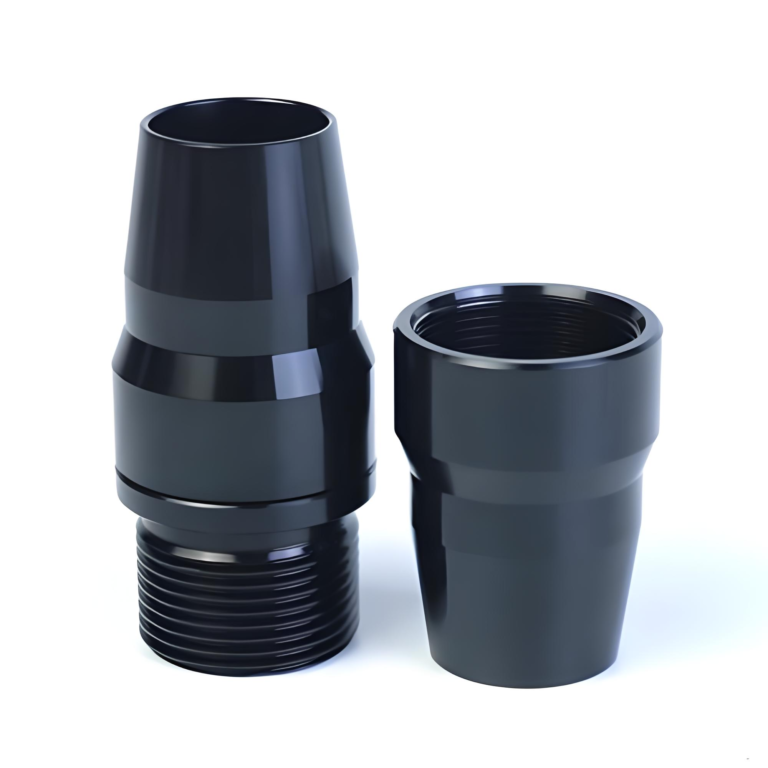
Samples
Related Manufacturing Capabilities
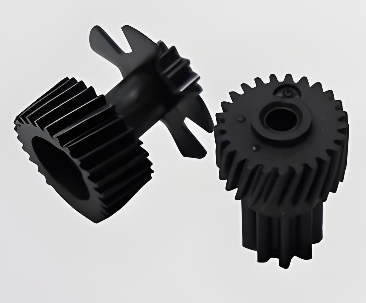
External Turning Service | Precision CNC Plastic Turning
Home/Products/CNC machining/Turning/External Turning Service | Precision CNC Plastic Turning
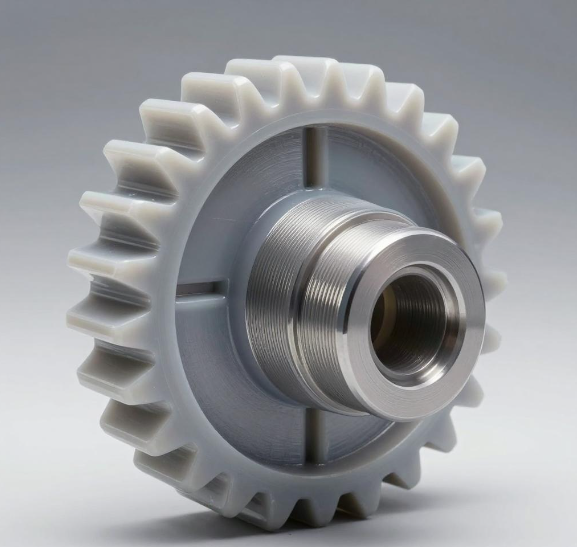
CNC Plastic Turning Services for Custom Round Parts
Home/Products/CNC machining/CNC Plastic Turning Services for Custom Round Parts Our CNC plastic turning service manufactures custom round plastic components such as bushings,…
Is this process a fit for your part?
Send your drawing, material, quantity, finish and application requirements for a manufacturing review.